The Viking Ring Fortresses: Harald Bluetooth’s Military Architecture
The Viking Age is often associated with chaotic, hit-and-run raids, but the Trelleborg-type fortresses (trelleborge) prove that the Vikings were also capable of extreme architectural precision and centralized military planning. Built during the reign of Harald Bluetooth around 980 CE, these circular citadels are among the most impressive archaeological remains in Scandinavia, serving as symbols of a newly unified Danish kingdom.
1. Geometric Perfection: The Trelleborg Design
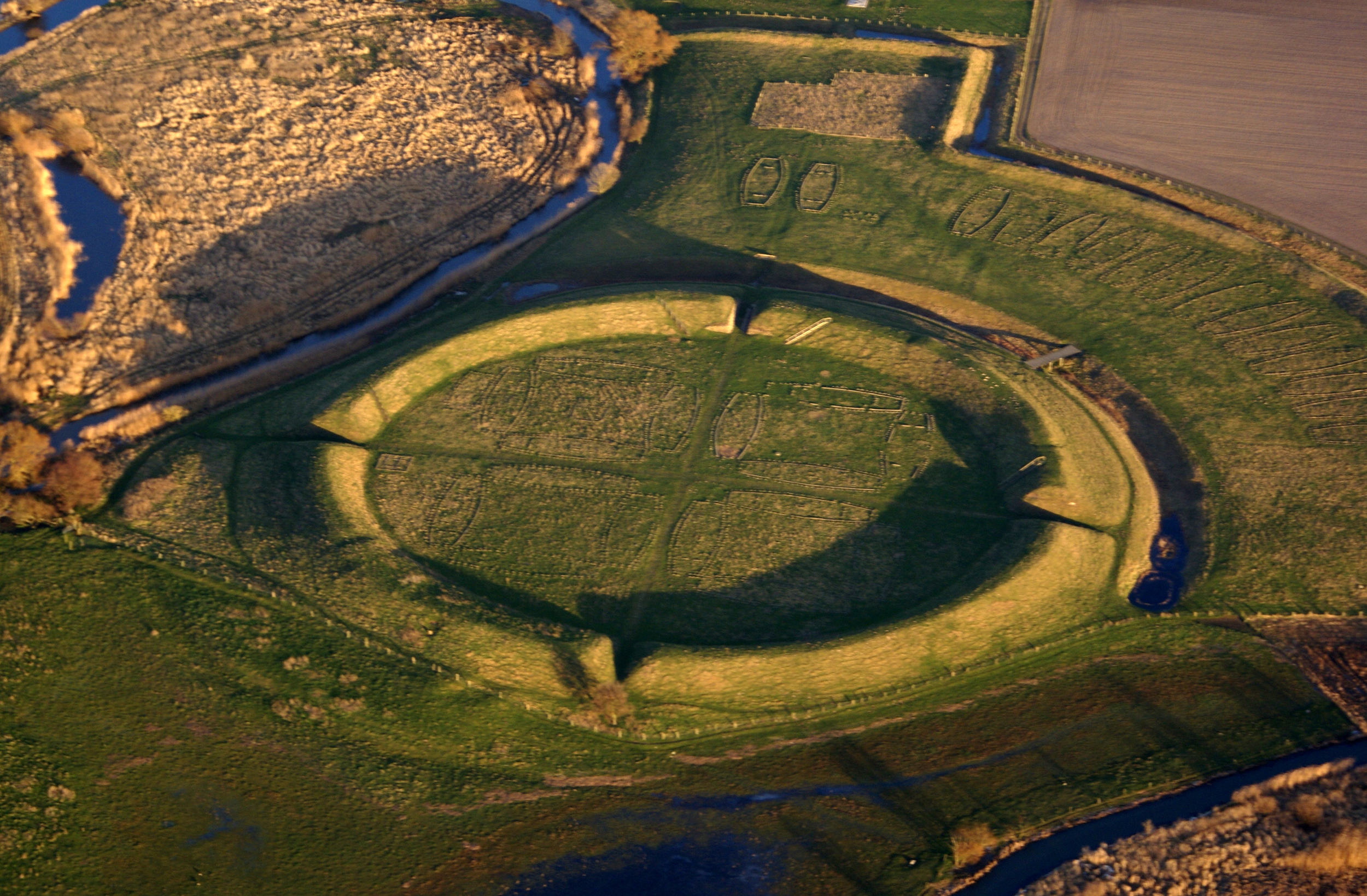
What makes these fortresses unique is their strict, mathematical symmetry. Unlike earlier hillforts that followed the natural contours of the land, the Viking ring fortresses were laid out with a geometric precision that suggests the use of a standard unit of measurement (likely the Roman foot).
The Perfect Circle: Each fortress is a perfect circle, protected by a massive earthen rampart and a v-shaped dry moat.
The Four Gates: Four gateways were positioned exactly at the four cardinal points (North, South, East, West). Straight roads connected these gates, crossing in the center of the fort.
The Quadrangle Houses: The interior was divided into four quadrants. Each quadrant contained four longhouses arranged in a square (a quadrangle), creating a total of 16 houses in the main enclosure.
2. The Longhouse: Elite Military Barracks
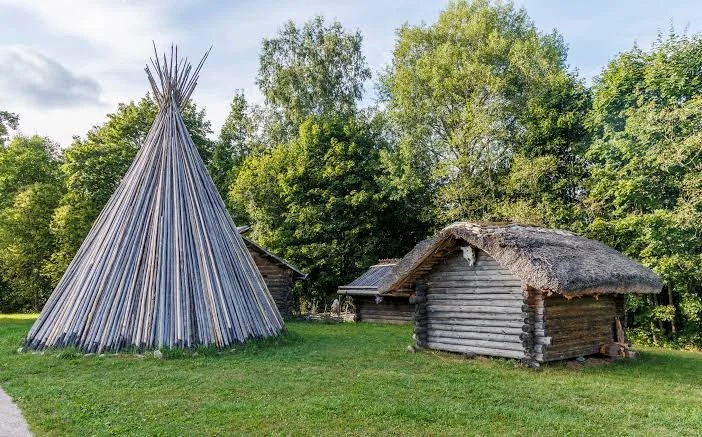
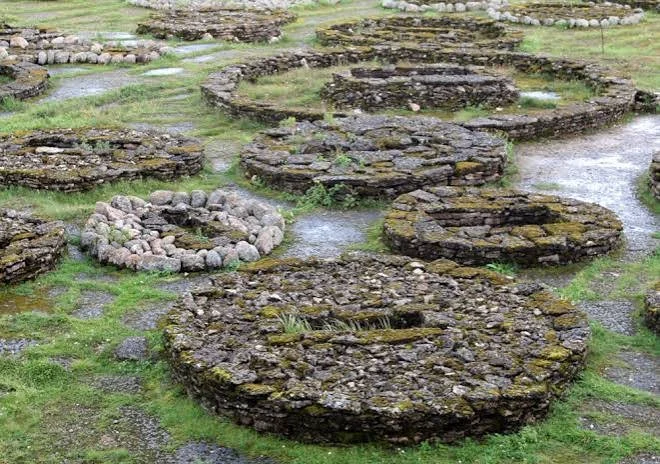
The houses within the fortresses were not mere huts. They were "Trelleborg-style" longhouses—large, elite structures roughly 30 meters (100 feet) long with bowed, ship-like walls.
Construction: They were built with heavy oak timbers. The curved walls were designed to support the massive weight of a thatched roof without the need for internal support pillars, creating a vast, open communal space.
Capacity: Each house could accommodate a crew of 70 to 80 men. Based on the number of houses at Aggersborg, archaeologists estimate the largest forts could house a standing army of up to 5,000 warriors.
3. Purpose: Conquest or Consolidation?
Historians have long debated why Harald Bluetooth built such massive structures in such a short window of time.
Defending Against the Holy Roman Empire: The fortresses may have been a defensive line against the threat of invasion from the German Emperor Otto II to the south.
Internal Control: Harald had recently converted to Christianity and was attempting to unify the warring Viking tribes under a single crown. The forts acted as royal administrative centers to collect taxes and suppress local rebellions.
Launching Pad for England: Some scholars believe the forts were training camps for the massive "Great Heathen Army" invasions of England led by Harald's son, Sweyn Forkbeard.
4. The "Short Life" of the Citadels
Remarkably, tree-ring dating (dendrochronology) shows that almost all these fortresses were built around 980 CE and abandoned or destroyed by 1000 CE.
Violent Ends: Excavations at Trelleborg revealed arrowheads embedded in the gates and mass graves of young men, suggesting the fort was taken by storm.
Shifting Power: Once the Danish kingdom was stabilized and the focus moved toward the conquest of England, the expensive upkeep of these massive "standing army" barracks likely became unnecessary.
The Viking ring fortresses were recently designated as a UNESCO World Heritage site, recognizing their status as a pinnacle of early medieval military architecture.