The Akkadian Empire: Sargon the Great and the First Multi-Ethnic State
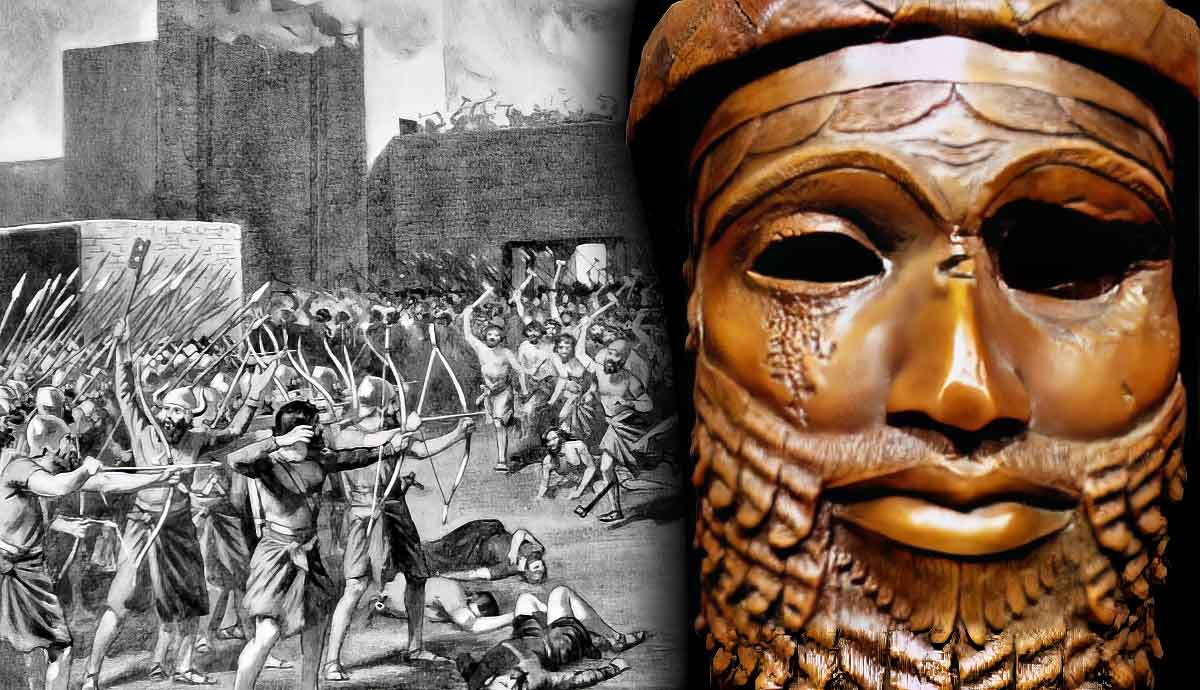
The rise of the Akkadian Empire around 2334 BCE marked a fundamental shift in human political organization. Before this period, Mesopotamia consisted of independent, often warring Sumerian city-states like Ur and Uruk. Sargon of Akkad (Sargon the Great) broke this mold by uniting these disparate cities under a single, centralized administration, creating what historians consider the world’s first true empire.
1. The Legend of Sargon
Sargon’s origin story is one of the oldest "hero" narratives in history, sharing striking parallels with later figures like Moses. According to the "Sargon Legend," he was the illegitimate son of a priestess who set him adrift in a basket on the Euphrates River. He was found and raised by a gardener and eventually rose to become the cup-bearer to the King of Kish before seizing power.
2. Engineering a Multi-Ethnic State
Sargon’s empire was revolutionary because it forced two distinct linguistic and cultural groups—the Sumerians (in the south) and the Akkadians (Semitic-speakers in the north)—into a single political entity.
Centralized Bureaucracy: Sargon replaced local hereditary rulers with "Sons of Akkad"—governors he personally appointed. This ensured loyalty was directed toward the central capital, Akkad, rather than local city-gods.
Standardization: To facilitate trade, Sargon standardized weights and measures. He also promoted Akkadian as the official language of administration, though Sumerian remained the language of religion and literature.
The First Postal System: The Akkadians developed an early postal service using clay tablets wrapped in clay "envelopes" stamped with official seals to ensure secure communication across the empire.
3. Religious Synthesis: Enheduanna
Sargon understood that military might alone could not hold the empire together. He appointed his daughter, Enheduanna, as the High Priestess of the moon god Nanna at Ur.
Enheduanna is the first author in history known by name. Her hymns successfully blended Sumerian and Akkadian deities (such as merging the Akkadian Ishtar with the Sumerian Inanna), creating a shared religious identity for the empire.
4. The Military Machine
The Akkadian army was a professional force that utilized innovative tactics to overcome the traditional Sumerian phalanx.
Composite Bows: The Akkadians are credited with the early use of the composite bow, which had a much greater range and penetrating power than the simple wooden bows used by their neighbors.
Mobile Infantry: While Sumerian warfare relied on heavy, slow-moving shield walls, Akkadian troops were lighter and more mobile, allowing them to outmaneuver opponents in open plains.
5. Naram-Sin and the "God-King"
The empire reached its zenith under Sargon's grandson, Naram-Sin. He was the first Mesopotamian ruler to declare himself divine, adopting the title "King of the Four Quarters of the World." The Victory Stele of Naram-Sin depicts him climbing a mountain and wearing a horned helmet—a symbol previously reserved only for gods.
6. The Collapse: Drought and Invasion
The Akkadian Empire lasted for roughly 140 years before collapsing around 2154 BCE.
Climate Change: Recent soil analysis suggests a massive centennial-scale megadrought hit the region. As the northern grain-producing regions dried up, the central administration could no longer feed the empire or its army.
The Gutians: Weakened by famine, the empire fell to the Gutians, a mountain people from the Zagros region, ushering in a "Dark Age" before the Sumerian Renaissance.