Introduction
Pollen provides valuable evidence for reconstructing past environments. Produced by plants during reproduction, pollen grains can be carried by wind, water, insects, and animals before settling into soil or sediment. Their microscopic structures often allow researchers to identify the plants from which they originated.
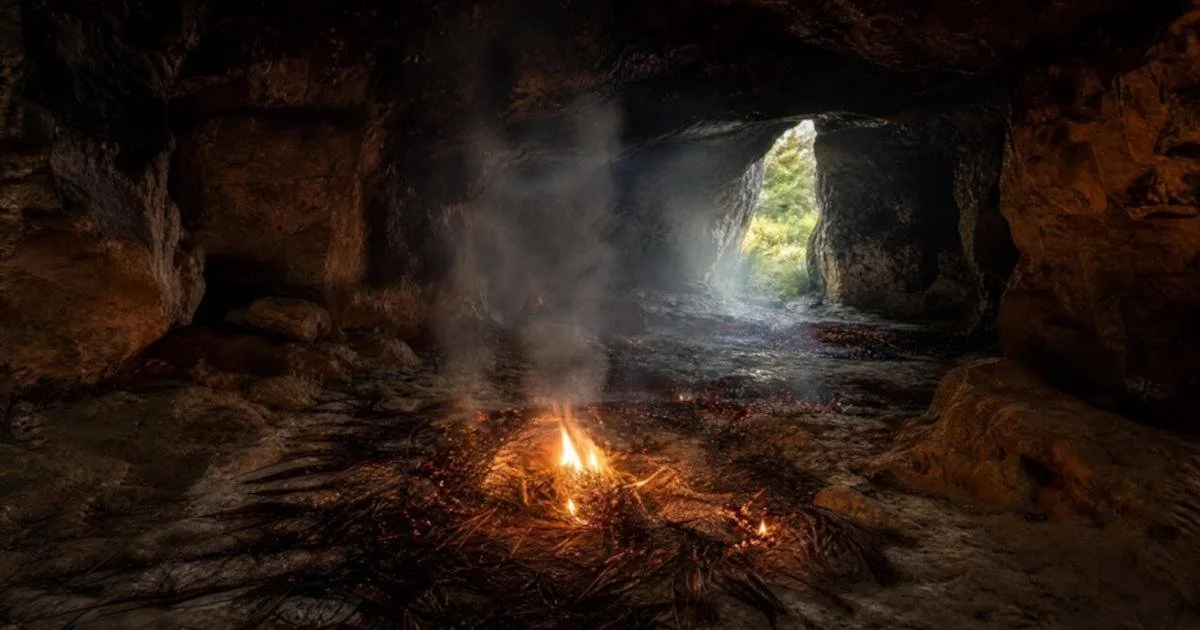
Caves and rock shelters can preserve pollen in deposits that accumulate over long periods. Cave entrances are especially interesting because they sit at the boundary between the exterior environment and sheltered interior spaces. Their sediments may record changes in vegetation, human activity, and the movement of materials into the cave.
The idea of an ancient "pollen trap" refers to a place where pollen accumulated and became preserved. However, pollen deposits do not automatically reveal when or why people occupied a cave. Researchers must distinguish natural accumulation from material introduced through human activity.
How Pollen Enters a Cave
Pollen can enter caves through several routes. Wind may carry grains through the entrance, while flowing water can transport pollen from surrounding soil and vegetation. Animals may also bring pollen into the cave on their fur, feet, or food.
People can introduce pollen indirectly through plant materials used for bedding, fuel, food, construction, or other purposes. A person entering a cave with vegetation attached to clothing or equipment may also transport pollen inside.
These different pathways can produce overlapping signals. A concentration of pollen from a particular plant might reflect nearby vegetation, seasonal flowering, or deliberate human use of plant material.
Understanding the source of the pollen is essential before interpreting it as evidence of occupation.
Why Cave Entrances Are Useful Research Locations
Cave entrances can preserve a mixture of environmental and archaeological information. They may receive windblown sediment, organic matter, animal remains, and debris from activities carried out near the entrance.
Because entrances are exposed to changing weather, they may also record shifts in vegetation and local environmental conditions.
However, not every cave entrance is a stable pollen archive. Rainfall, flooding, trampling, burrowing animals, and erosion can disturb or remove sediment. Some caves have conditions favorable for preservation, while others contain heavily mixed deposits.
Researchers must assess the integrity of the sediment before using pollen evidence to reconstruct the past.
Pollen Analysis and Plant Identification
Palynology is the study of pollen and other microscopic organic remains. Researchers extract pollen from sediment samples, prepare them for examination, and identify grains using their shape, size, and surface structure.
The resulting assemblage can indicate which plant groups were present in the surrounding landscape.
Different plants produce different quantities of pollen, and their grains disperse over different distances. Some plants are prolific pollen producers, while others contribute relatively little to the sediment record.
Consequently, pollen percentages do not translate directly into the percentage of plants growing in the landscape. Researchers must account for these differences when reconstructing vegetation.
Seasonal Occupation and Flowering Cycles
Plants flower at different times of year. In principle, pollen from species with well-understood flowering seasons can help investigate when certain plant materials entered a cave.
For example, a deposit containing pollen from plants that flower during a particular season might be consistent with activity during that period.
However, pollen can remain in the environment after flowering and may be transported from a distance. A single pollen grain rarely establishes the exact season of a human visit.
A stronger seasonal interpretation would combine pollen evidence with other indicators, such as animal remains, plant food remains, occupation layers, and environmental records.
Distinguishing Natural Deposits from Human Activity
A cave may contain pollen even when people were absent. Natural vegetation near the entrance can contribute substantial quantities of pollen to the sediment.
Researchers therefore compare samples from different depths and locations. They may examine whether a particular pollen type occurs throughout the cave deposit or appears mainly in layers associated with human activity.
Other evidence can help clarify the interpretation. Hearths, tools, food remains, plant fibers, and prepared surfaces may indicate occupation, although each has its own limitations.
The key question is whether the pollen pattern differs from what would be expected through natural accumulation alone.
Human Use of Plants
People have used plants for food, fuel, medicine, bedding, construction, and ceremonial purposes. Pollen may sometimes contribute to investigating these activities.
However, pollen alone rarely establishes a specific use. A plant associated with medicinal practices in one society may have had different uses elsewhere, and modern ethnographic parallels cannot automatically explain prehistoric behavior.
Researchers should look for converging evidence, such as identifiable plant remains, residues, tools, and a reliable archaeological context.
Where plant use is proposed, the distinction between direct evidence and interpretation should remain clear.
Dating Pollen-Bearing Sediments
Pollen itself is not always straightforward to date. Researchers may date organic material from the same sediment layer, use stratigraphic relationships, or apply other chronological methods suited to the deposit.
The association must be secure. A piece of charcoal in a pollen-bearing layer may have been redeposited from an older deposit, while roots or burrowing animals may introduce younger material into deeper sediments.
Multiple dates and careful sediment analysis can help establish a reliable sequence.
Cave Formation and Sediment Disturbance
Caves are dynamic environments. Water can carry fine sediment inward, while roof collapse can bury earlier deposits. Animals may dig burrows, and people may level floors or remove older material during repeated occupations.
These processes can mix pollen from different periods.
Micromorphology, sediment description, and detailed excavation records can help identify disturbances. Researchers may also compare pollen with other environmental indicators to test whether the results tell a consistent story.
A pollen record should not be treated as a simple chronological sequence unless its stratigraphy supports that interpretation.
What Pollen Can and Cannot Tell Us
Pollen is particularly useful for reconstructing vegetation and environmental change. It can indicate the presence of certain plant groups and help investigate changes in woodland, grassland, or cultivated landscapes.
It is less reliable as a stand-alone indicator of the exact season or duration of human occupation.
A high concentration of pollen may reflect abundant local vegetation rather than deliberate collection. A sudden change may result from natural flooding or sediment movement rather than a new human activity.
The most reliable interpretations integrate pollen analysis with archaeology, geology, and other environmental evidence.
Conclusion
Ancient pollen deposits at cave entrances provide a valuable resource for studying vegetation, environmental change, and possible patterns of seasonal occupation. Because caves can preserve layered sediments, they may record changes in the surrounding landscape over long periods.
However, pollen is transported by natural processes as well as by people. Its presence cannot independently establish that a cave was occupied during a particular season or that a plant was deliberately used.
By combining palynology with stratigraphy, dating, plant remains, animal evidence, and traces of human activity, researchers can build a more reliable picture of how caves functioned within ancient landscapes. Pollen is most informative when treated as one part of a wider archaeological record rather than as a direct calendar of human visits.