Introduction
Maritime communities developed complex systems for managing ropes, sails, cargo, fishing equipment, and navigation. Knots were essential to these activities, but their significance may have extended beyond practical fastening.
A rope could carry information through its arrangement, knots, loops, spacing, and attached objects. In some societies, cord-based systems were used to record quantities, ownership, obligations, or other information.
The term "ropenotations" is not a universally established archaeological category. It can be used as a descriptive concept for investigating whether rope arrangements and knot patterns served as forms of information storage in maritime societies.
The subject therefore connects the archaeology of ropes with the broader history of communication and practical literacy.
Rope Technology in Ancient Maritime Life
Rope was essential to ancient seafaring.
Ships required lines for anchoring, mooring, towing, rigging, cargo handling, and sail control.
Fishing communities used ropes for nets, traps, lines, and equipment maintenance.
The materials varied according to region and availability. Plant fibers such as flax, hemp, and other bast fibers were used in different historical settings. Coir, animal hair, and other materials also served particular purposes.
The properties of each fiber influenced strength, flexibility, resistance to moisture, and durability.
Knots as Practical Information
Knots were not all interchangeable.
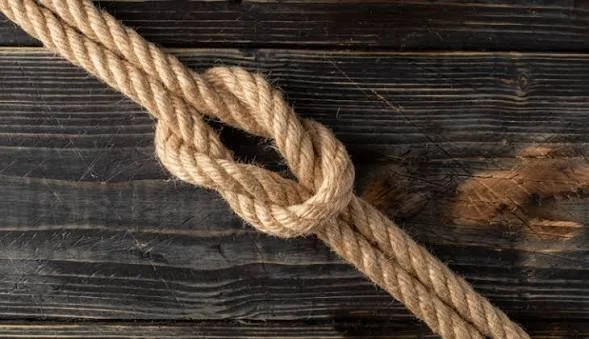
Different knot forms served different functions. Some secured loads, others joined ropes, created loops, or allowed lines to be released quickly.
Experienced sailors learned to recognize these distinctions.
A particular arrangement might communicate how equipment should be assembled or which line belonged to a specific task.
This represents practical knowledge, although it does not necessarily constitute a formal writing system.
From Knots to Notation
A notation system uses signs or arrangements to represent information in a repeatable way.
Knotted cords can potentially serve this purpose when the number, position, type, or color of knots carries a defined meaning.
The best-known historical example is the Andean khipu, a sophisticated system of knotted cords used for recording information in the Inca world and earlier Andean societies.
It demonstrates that cord-based information systems can be highly developed.
However, the existence of khipu does not prove that ancient Mediterranean sailors used an equivalent system.
Each proposed case requires its own archaeological and historical evidence.
Maritime Administration and Cargo Records
Ships and ports required systems for organizing goods.
Merchants needed to track quantities, ownership, deliveries, and obligations.
Rope tags, knots, or repeated cord arrangements could theoretically have served as practical memory aids.
A marked line might distinguish cargo belonging to one merchant from another.
A sequence of knots could potentially represent a quantity or a stage in a process.
These possibilities should not be mistaken for confirmed ancient practices without examples that can be interpreted reliably.
Archaeological Evidence for Knotted Cords
Rope is usually made from organic materials, which decay in ordinary burial conditions.
Preservation is more likely in waterlogged deposits, dry caves, salt-rich environments, or other unusual contexts.
Occasionally, rope impressions survive on pottery, metal objects, or other materials.
These impressions can reveal the texture and construction of cords even when the original fibers have disappeared.
Researchers can study fiber direction, twisting patterns, knot structure, and wear marks to reconstruct how the rope was made and used.
The Meaning of Knot Traces
A knot impression may indicate that a rope was tied around an object during transport, storage, or manufacture.
A series of impressions might reveal repeated fastening techniques.
But identifying a notation system requires more than finding a complicated knot.
Researchers would need to demonstrate that specific patterns were repeated consistently and associated with recognizable information or administrative practices.
Without this, the most cautious interpretation is that the knots represent practical maritime technology.
Maritime Literacy Beyond Writing
Literacy is often associated with the ability to read and write formal scripts.
However, ancient communities also used specialized forms of practical knowledge.
Sailors learned wind patterns, coastal landmarks, rope techniques, navigation procedures, and cargo-handling systems.
Some knowledge was communicated orally, while other information could be represented through marks, symbols, or objects.
A broader understanding of maritime literacy therefore includes the ability to interpret and transmit technical information.
Research Methods
Experimental archaeology can help investigate ancient rope technology.
Researchers produce replicas using traditional fibers and tools, then compare their properties with archaeological traces.
Microscopy can identify fiber structure and manufacturing techniques.
Wear analysis may reveal whether a rope was used repeatedly or exposed to marine conditions.
Comparative study of historical knot traditions can provide context, but modern techniques should not automatically be projected backward into antiquity.
Conclusion
Ancient rope systems were essential to maritime work and may have carried information beyond their immediate mechanical functions.
Knots could communicate practical knowledge, distinguish equipment, and support the organization of maritime activities.
The broader idea of "ropenotations" is an intriguing research framework, but a formal knot-based recording system in a particular ancient maritime society must be demonstrated through evidence.
By combining rope analysis, experimental archaeology, and the study of ancient administration, researchers can better understand how sailors managed complex activities before modern written documentation became widespread.