Introduction
Water has held religious and symbolic importance in many societies. Rivers, lakes, seas, and springs have been associated with purification, fertility, healing, divine presence, and the boundaries between ordinary and sacred spaces.
Large rivers and famous sanctuaries often receive the most attention in historical studies. Yet smaller springs may also have played important roles in local religious landscapes.
A minor spring could become a place of offerings, healing ceremonies, seasonal gatherings, or pilgrimage. Its importance did not necessarily depend on its size. Instead, the relationship between water, landscape, community memory, and religious practice could transform an ordinary natural feature into a sacred location.
What Is Sacred Topography?
Sacred topography refers to the way religious meaning becomes attached to particular places and landscape features.
A mountain peak may be associated with a deity, a cave with a supernatural presence, or a spring with healing and purification.
These associations can influence where people build sanctuaries, leave offerings, hold ceremonies, or establish routes.
Sacred landscapes are not always organized around large temples. Natural features can themselves become central to religious practice.
Why Small Springs Mattered
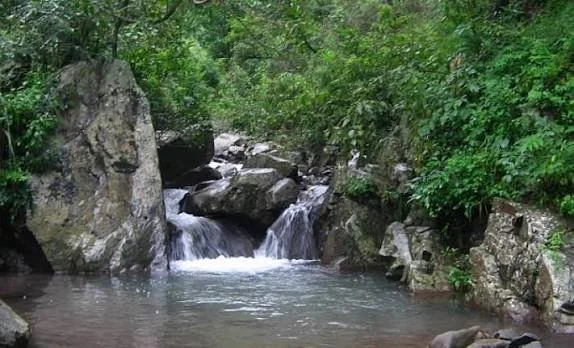
Minor springs often provided dependable water in areas where other sources were seasonal or distant.
Their practical value could encourage repeated visits.
Over time, a spring might become associated with a local tradition, protective spirit, deity, ancestor, or healing practice.
Its religious importance could develop gradually through repeated community use.
A spring that served a small village might therefore possess considerable cultural significance even if it never became a major regional pilgrimage destination.
Springs in Ancient Religious Traditions
In the ancient Mediterranean, springs and other water sources were sometimes connected with deities and ritual practices.
Some were associated with nymphs, healing powers, purification, or divination.
Offerings could include coins, pottery, figurines, and other objects.
However, not every spring with archaeological material was a sanctuary. Objects might have been lost, discarded, or deposited through ordinary activity.
The interpretation depends on the nature of the deposit and its relationship to the water source.
Architecture Around Springs
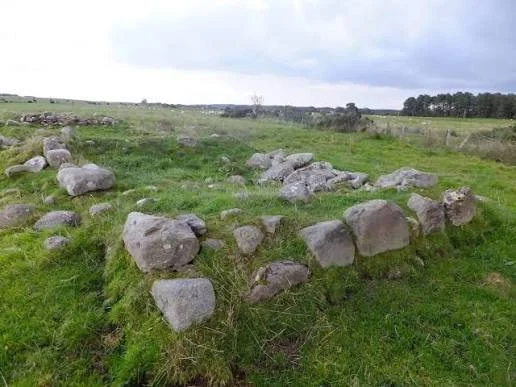
Some sacred springs were modified through construction.
Stone basins could collect water.
Channels might direct its flow.
Steps could provide access, while small enclosures or buildings could mark the location as special.
In some cases, a spring might be incorporated into a larger sanctuary.
A modest structure beside a natural water source could have served as a place for offerings, ritual washing, or shelter.
The architectural remains need to be distinguished from ordinary water-management infrastructure.
Offerings and Ritual Deposits
Archaeologists sometimes find objects near springs that may have been deliberately deposited.
Coins are particularly common in some historical water-related contexts, although their presence does not always prove a religious offering.
Figurines, small vessels, lamps, and inscribed objects may provide stronger evidence when found in a clearly structured ritual deposit.
The location and arrangement of the objects matter.
An assemblage repeatedly placed at the same point may indicate a tradition of offering, especially when associated with a known sanctuary.
Healing and Purification
Springs have often been associated with healing.
Water may have been believed to possess special properties because of its taste, temperature, color, or mineral content.
Some communities used spring water in purification ceremonies.
Others may have associated particular sources with the intervention of a deity or supernatural figure.
Archaeologists cannot directly recover ancient beliefs from water chemistry alone. Written inscriptions, votive objects, and historical accounts are needed to establish how people understood a spring.
Routes and Local Pilgrimage
A spring may have occupied an important position along a route between villages, sanctuaries, or mountain settlements.
Travelers could stop to collect water, rest, or perform a ritual.
Some routes may have developed religious importance because they connected several sacred features.
A minor spring could function as a local destination or a stopping point within a larger sacred landscape.
However, the existence of a path beside a spring does not automatically establish a pilgrimage route. Repeated ritual activity and evidence of religious destinations are necessary for that interpretation.
Environmental and Geological Evidence
The geological setting of a spring can help explain its historical significance.
Some springs emerge along faults, geological boundaries, or permeable rock layers.
Others are fed by rainfall and groundwater stored in mountain formations.
Changes in rainfall, groundwater levels, earthquakes, and land use can alter spring flow.
Environmental reconstruction can therefore reveal whether a spring was likely to have been active during a particular archaeological period.
Continuity and Changing Beliefs
A spring may remain important across several historical periods, but its meaning can change.
A natural water source associated with one ancient deity might later become linked to a Christian saint or another religious tradition.
Such continuity does not necessarily mean that the original belief survived unchanged.
Researchers examine changes in offerings, architecture, inscriptions, and ritual practices to understand how sacred meaning developed.
Conclusion
Minor springs could become important elements of sacred topography because their value extended beyond the practical provision of water.
Repeated visits, local traditions, offerings, healing practices, and connections with nearby sanctuaries could transform small natural sources into meaningful religious places.
Archaeological interpretation requires distinguishing ritual deposits from ordinary activity and understanding the environmental history of each spring.
Studying these modest sites reveals how religious landscapes were created not only around famous temples and monumental sanctuaries but also around small, familiar places woven into everyday community life.