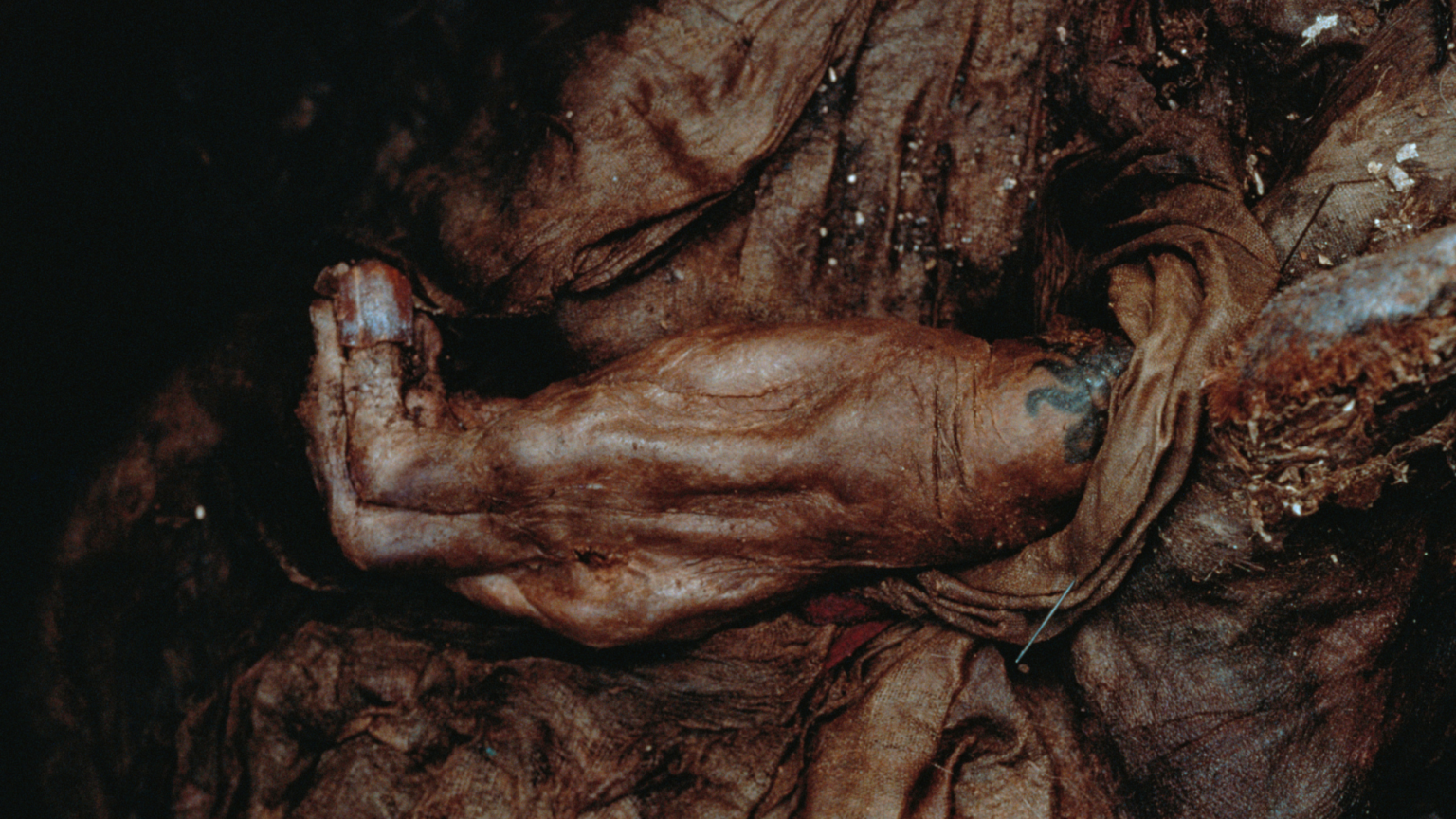
The extreme cold of northeastern Siberia has an unusual effect on time: it preserves it almost perfectly. This is how archaeologists discovered the grave of a woman who died over 250 years ago, yet whose burial still vividly reflected her life. She had been interred in a hollowed tree trunk, dressed in striking clothing meant to be seen—most notably, a red wool dress crafted from imported blankets. Horses were buried alongside her, signaling that this was no ordinary burial; it proclaimed her significance.
Genetic analysis added another layer of intrigue. A study published in Nature revealed that the woman—known as UsSergue1 and believed to be one of the last Siberian shamans—was born to closely related parents, classified as second-degree relatives. Such close parental relatedness is rare in the graves studied, raising questions about her identity and role.
UsSergue1 lived in what is now Yakutia, one of the harshest environments ever inhabited by humans. She died in her 30s during the late 18th century, after Russian authorities had begun pressuring Indigenous Yakut communities to abandon shamanism for Christianity. Her burial, with ritual items and symbolic animals, suggests that her community resisted these pressures.
“We interpret UsSergue1 as an embodiment of her clan,” explained Ludovic Orlando, a molecular geneticist at France’s National Center for Scientific Research. The lavish burial may have been intended to preserve the clan’s spiritual identity amid external control.
The genetic findings were particularly striking: among 122 Yakut individuals from graves dated between the 14th and 19th centuries, UsSergue1 displayed the strongest signs of parental relatedness. Orlando emphasized that this was not typical for shamans, indicating her lineage had significance beyond her spiritual role.
Placed in broader context, the study shows that despite centuries of Russian presence, the Yakuts’ genetic heritage has remained remarkably stable. “Our analyses reveal that Yakut genetic composition has stayed consistent from the 16th century to today,” said co-author Perle Guarino-Vignon. The region’s harsh climate likely hindered large-scale settlement and conquest. Even the oral microbiome, examined through ancient dental plaque, remained largely unchanged over centuries of external influence.