• MAIN PAGE
  • LATEST NEWS
    • Lost Cities
    • Archaeology's Greatest Finds
    • Underwater Discoveries
    • Greatest Inventions
    • Studies
    • Blog
  • PHILOSOPHY
  • HISTORY
  • RELIGIONS
    • Africa
    • Anatolia
    • Arabian Peninsula
    • Balkan Region
    • China - East Asia
    • Europe
    • Eurasian Steppe
    • Levant
    • Mesopotamia
    • Oceania - SE Asia
    • Pre-Columbian Civilizations of America
    • Iranian Plateau - Central Asia
    • Indus Valley - South Asia
    • Japan
    • The Archaeologist Editor Group
    • Scientific Studies
    • Aegean Prehistory
    • Historical Period
    • Byzantine Middle Ages
    • Predynastic Period
    • Dynastic Period
    • Greco-Roman Egypt
  • Rome
  • PALEONTOLOGY
  • About us
Menu

The Archaeologist

  • MAIN PAGE
  • LATEST NEWS
  • DISCOVERIES
    • Lost Cities
    • Archaeology's Greatest Finds
    • Underwater Discoveries
    • Greatest Inventions
    • Studies
    • Blog
  • PHILOSOPHY
  • HISTORY
  • RELIGIONS
  • World Civilizations
    • Africa
    • Anatolia
    • Arabian Peninsula
    • Balkan Region
    • China - East Asia
    • Europe
    • Eurasian Steppe
    • Levant
    • Mesopotamia
    • Oceania - SE Asia
    • Pre-Columbian Civilizations of America
    • Iranian Plateau - Central Asia
    • Indus Valley - South Asia
    • Japan
    • The Archaeologist Editor Group
    • Scientific Studies
  • GREECE
    • Aegean Prehistory
    • Historical Period
    • Byzantine Middle Ages
  • Egypt
    • Predynastic Period
    • Dynastic Period
    • Greco-Roman Egypt
  • Rome
  • PALEONTOLOGY
  • About us

Mass Grave of Women and Children Shows Brutality of Iron Age Culture

February 26, 2026

2,800-Year-Old Mass Grave in Serbia Reveals Dark Chapter of Iron Age Violence

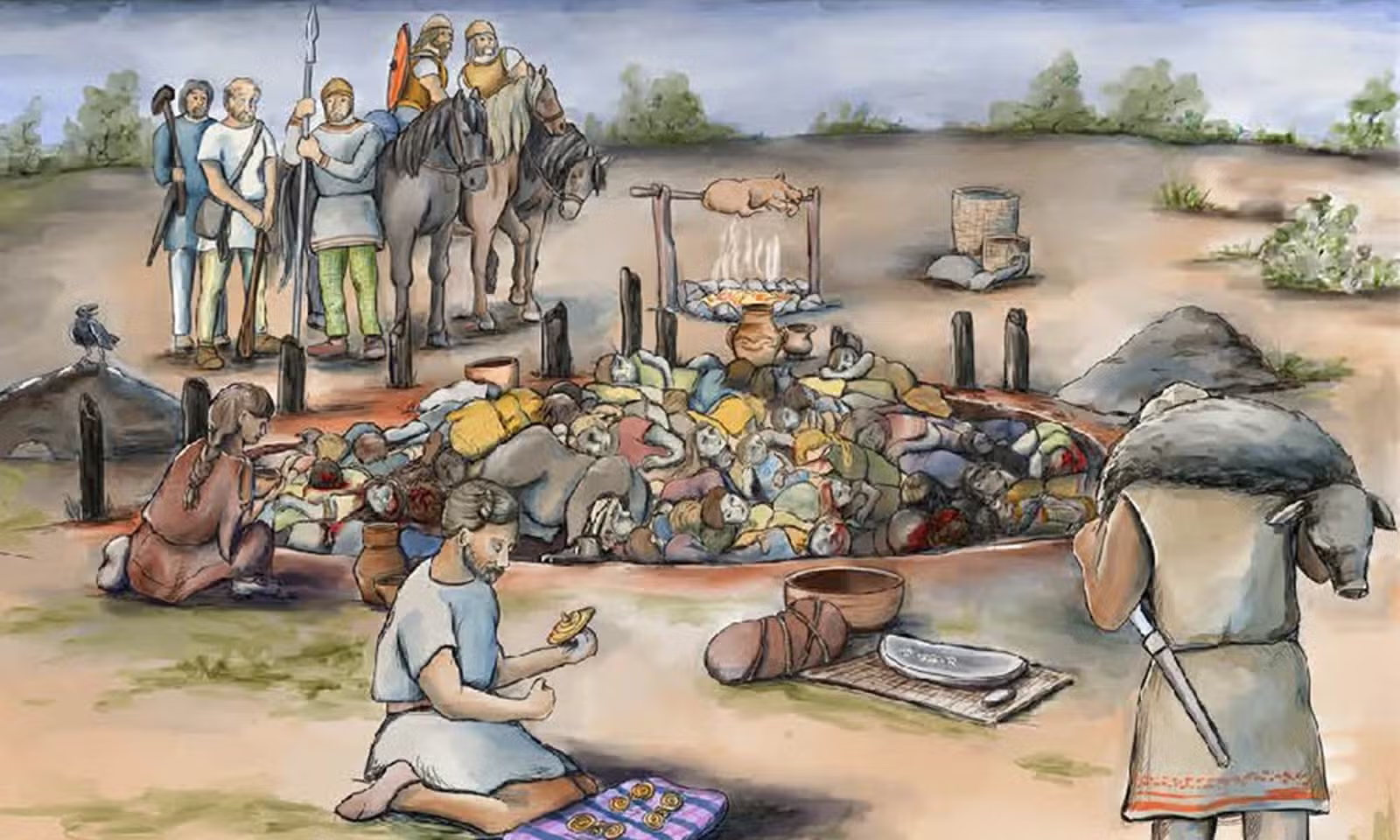
Archaeologists at Gomolava, northern Serbia, have uncovered a 2,800-year-old mass grave containing the remains of 77 people, revealing a stark glimpse into life—and death—during the Iron Age. The findings were detailed in a study recently published in Nature Human Behavior.

Victims and Violence

Examination of the remains shows that the victims were almost all women and children, many of whom were brutally killed:

  • Children (ages 1–12): 40

  • Adolescents: 11

  • Adults (mostly women): 24

Most showed signs of bludgeoning and stabbing, indicating a violent massacre rather than natural death or accidental causes.

A Shocking Genetic Discovery

Unlike typical prehistoric mass graves, genetic analysis revealed that the victims were not related, even distantly. Isotope analysis of their teeth suggested diverse childhood diets, implying they came from different settlements and were likely captured rather than being local villagers.

“Gomolava genuinely took us by surprise… not even their great-great-grandparents were related. This was highly unusual for a prehistoric mass grave,” said co-author Barry Molloy from University College Dublin.

Evidence of Ritual and Mourning

Despite the horrific killings, the victims were buried with care. They were laid in a disused semi-subterranean house along with personal belongings, such as:

  • Bronze jewelry

  • Ceramic pottery

  • A butchered calf with burnt seed offerings

“Not only had the bodies not been looted, but offerings were made in what must have been a respectful ritual,” Molloy explained.

The burial suggests that, even amid extreme violence, there was a form of commemoration or mourning.

Context of the Massacre

Researchers believe the killings occurred as communities were reoccupying abandoned Bronze Age settlements. The event may have served as a macabre warning to neighboring groups, demonstrating power and control over contested landscapes.

“As things recovered in this area moving into the Iron Age, reasserting control over landscapes could include widespread and extremely violent episodes between competing groups,” said Molloy.

Significance

The Gomolava mass grave represents one of the most unusual prehistoric burial sites studied to date. It provides a rare glimpse into:

  • The scale and nature of Iron Age violence

  • Social dynamics and inter-community conflict

  • Ritual practices associated with death and commemoration

While grisly, the site highlights both the brutality and the cultural complexity of early European societies, offering invaluable insights into protohistoric life, death, and human behavior.
Research confirms Old Irish Goat herds today are closely related to 3000 year old goats in Armagh and Carrickfergus →
Featured
image_2026-02-26_124441857.png
Feb 26, 2026
Mass Grave of Women and Children Shows Brutality of Iron Age Culture
Feb 26, 2026
Read More →
Feb 26, 2026
image_2026-02-26_123149804.png
Feb 26, 2026
Research confirms Old Irish Goat herds today are closely related to 3000 year old goats in Armagh and Carrickfergus
Feb 26, 2026
Read More →
Feb 26, 2026
image_2026-02-26_122357014.png
Feb 26, 2026
40,000-year-old missing chapter in human history revealed in major finding
Feb 26, 2026
Read More →
Feb 26, 2026
image_2026-02-26_122143279.png
Feb 26, 2026
Durham Uni announces a new partnership with Historic England
Feb 26, 2026
Read More →
Feb 26, 2026
image_2026-02-26_121020248.png
Feb 26, 2026
Syria, Egypt discuss expanding tourism cooperation
Feb 26, 2026
Read More →
Feb 26, 2026
image_2026-02-26_115755652.png
Feb 26, 2026
Georgia Trust for Historic Preservation Announces Its 2026 List of State's 10 Places in Peril
Feb 26, 2026
Read More →
Feb 26, 2026
read more

Powered by The archaeologist