Introduction
Wetlands have long supported human communities by providing fish, birds, plants, and other resources. Rivers, marshes, lakes, and coastal lagoons can produce abundant food, but many aquatic resources spoil quickly after capture. Preserving fish can therefore be essential when catches exceed immediate needs or when communities want to transport food to other settlements.
Smoking is one possible preservation method. It exposes fish to smoke and, depending on the process, heat, helping dry the flesh and sometimes reducing microbial activity. The title's reference to fish-smoking ramps suggests specialized structures associated with preparing fish for smoking or moving fish through a processing area.
Such structures must be identified carefully. Archaeologists cannot assume that every sloped feature near a wetland was a smoking ramp, and smoke residues alone may have several possible sources.
Why Preserve Fish?
Fresh fish can deteriorate rapidly, particularly in warm conditions. Preservation extends the period during which food can be stored and consumed.
Different methods include drying, salting, fermenting, and smoking. These methods may be used separately or in combination.
Smoking can change the surface and flavor of fish while contributing to drying. The effectiveness of the process depends on the temperature, duration, airflow, moisture content, and type of fuel.
Preservation also allows communities to manage seasonal abundance. Fish caught during a productive period may be saved for times when catches are smaller or when travel makes fresh food difficult to obtain.
How Fish Smoking Works
Traditional smoking processes vary widely. In some methods, fish is exposed primarily to smoke at relatively low temperatures. In others, heat cooks the fish while smoke contributes flavor and preservation effects.
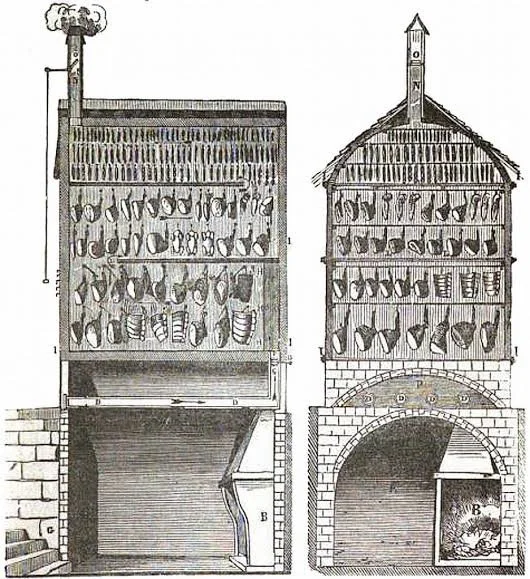
Fish may be hung, laid on racks, placed in chambers, or arranged above a fire. The choice depends on the species, the equipment available, and local environmental conditions.
A ramp could hypothetically provide access to a raised platform, connect a shoreline with a processing area, or support the movement of materials. But the term "smoking ramp" should be used only when archaeological evidence supports that function.
What Would a Smoking Structure Look Like?
A smoking installation might leave traces of repeated burning, heat-altered surfaces, ash deposits, postholes, rack supports, or a built chamber. Depending on construction materials, the structure could have been made from stone, clay, wood, or combinations of these.
Organic materials such as wooden racks may disappear unless conditions favor preservation. Stone foundations may survive, but their function can be ambiguous.
A sloping stone feature could have served as a walkway, drainage structure, loading area, retaining wall, or part of another installation. Its shape alone cannot establish a fish-smoking function.
Detecting Smoke Residues
Scientific analysis can investigate residues associated with burning. Charcoal, soot, and heat-altered materials may indicate repeated exposure to fire.
Organic residue analysis may sometimes identify compounds associated with fish processing or particular types of fuel. However, residues can be contaminated or altered through burial and conservation.
A deposit containing fish bones and charcoal is not automatically evidence of smoking. The bones may represent food preparation beside a hearth, while the charcoal may come from cooking or another activity.
Researchers must establish whether the evidence is spatially and chronologically connected.
Fish Bones and Processing Patterns
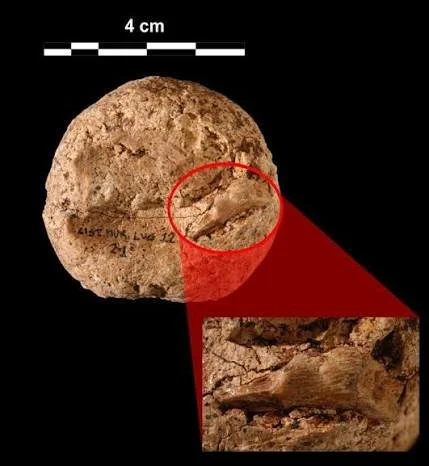
Fish remains can reveal which species were used and how they were processed. Bone size, species identification, cut marks, and the distribution of skeletal parts may help reconstruct butchery and consumption.
Large quantities of fish remains at a site might indicate intensive processing, but they could also reflect long-term occupation or repeated meals rather than preservation for storage.
Evidence for smoking becomes stronger when fish remains are found in a consistent relationship with a suitable installation and other traces of preservation activity.
Even then, researchers must consider whether the fish were smoked, dried, cooked, or prepared through another method.
Wetland Archaeology and Preservation
Wetlands can preserve materials that usually decay in ordinary archaeological contexts. Waterlogged deposits may retain wood, plant fibers, and other organic remains when oxygen levels are low enough to slow decomposition.
At the same time, wetland conditions can complicate interpretation. Water movement may transport artifacts and bones, while seasonal flooding can mix deposits from different periods.
Researchers need detailed stratigraphic and sediment analysis to understand whether materials were deposited where they were originally used.
Changes in wetland extent can also affect how a site functioned. An installation that now lies inland may once have stood beside a water channel.
Fuel and Environmental Knowledge
Smoking requires fuel, and the choice of fuel influences the process. Wood species differ in burning behavior, while wet or dry materials produce different smoke and heat conditions.
Archaeologists may analyze charcoal to identify the types of wood used. This can provide information about fuel selection and local vegetation.
However, charcoal may have come from several activities. A site could contain cooking fuel, heating fuel, and industrial fuel in the same deposit.
The identification of fuel should therefore be connected to a specific feature only when the contextual evidence supports that relationship.
Storage, Transport, and Exchange
Preserved fish can become part of wider economic networks. Dried or smoked fish may be easier to transport than fresh fish, particularly over routes where refrigeration is unavailable.
A wetland community could supply neighboring settlements, trading centers, or seasonal gatherings. Evidence for such exchange might include fish remains at distant sites, differences in species distribution, or documentary references where available.
However, fish remains at another settlement do not prove that the fish were smoked at a particular wetland site. Similar species may have been obtained independently, and preservation methods often leave limited direct evidence.
Distinguishing Food Preservation from Other Activities
One challenge is that the same place may have served multiple purposes. A hearth could have been used to cook meals, dry plants, process animal products, or dispose of waste.
A raised platform might have supported equipment unrelated to fish smoking. Smoke deposits can accumulate from repeated domestic fires.
Researchers must consider the full range of possible activities and look for converging evidence before assigning a specialized function.
Conservation and Research Ethics
Wetland deposits can be highly vulnerable when exposed to oxygen or changes in moisture. Excavation may cause organic remains to deteriorate quickly unless appropriate conservation measures are in place.
Research plans should include documentation, sampling strategies, and long-term storage conditions. Where sites are associated with living communities, local knowledge and heritage concerns should be included in the investigation.
Conclusion
Ancient wetland fish-smoking installations offer a valuable subject for studying food preservation, seasonal resource management, and the relationship between aquatic environments and human settlement. Structural remains, fish bones, charcoal, and chemical residues can help researchers investigate how fish may have been processed and stored.
Yet a smoking ramp cannot be identified through shape or smoke residue alone. The interpretation requires careful analysis of the feature's construction, associated materials, environmental setting, and chronology.
When multiple lines of evidence converge, such installations may reveal how communities converted seasonal catches into food that could last longer and travel farther. They can also illuminate the practical knowledge that supported life in wetlands, where the abundance of aquatic resources created both opportunities and challenges for long-term food security.