Archaeologists conducting work on the Taman Peninsula in Russia’s Krasnodar Region have revealed an impressive example of ancient innovation: skates made from horse bones that were likely used to travel across frozen bodies of water during winter. This finding offers valuable insight into how people living in the area thousands of years ago adapted to seasonal environmental conditions and provides rare evidence of everyday activities, movement, and exchange in the ancient Black Sea region.
A Discovery Made Through Rescue Excavations
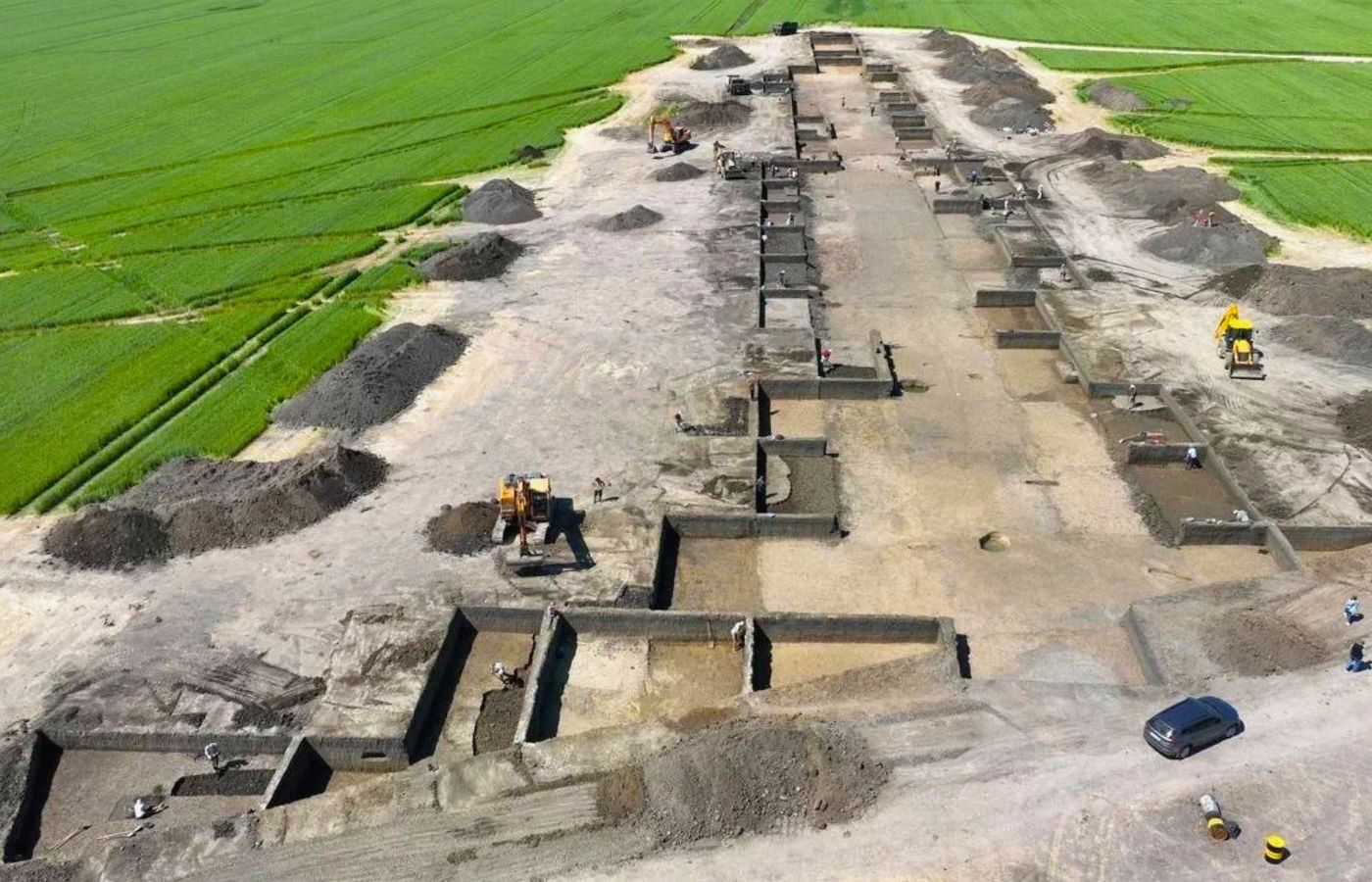
The artifacts were uncovered by specialists from the Laboratory of Archaeological Technology at the Institute for the History of Material Culture of the Russian Academy of Sciences (IIMK RAS). Their work formed part of extensive rescue excavations carried out in 2024 along the planned route of a fuel pipeline in the Temryuk District—an area known for its dense concentration of archaeological sites spanning from antiquity to the medieval era.
The sites examined—Sady-1 and 2, Armature Plant-1, Mingrelskoye, Khabl-Mingrelskoye, Sheptalskoye-Levoberezhnoye, and Yastrebovskoye-Berezhnoe—represent a distinctive cultural landscape that once lay within the borders of the Bosporan Kingdom. Investigating such a broad group of locations allowed researchers not only to record individual objects, but also to reconstruct wider aspects of daily life, economic practices, and environmental adaptation among the area’s ancient populations.
Understanding the Bone Skates Through Wear Patterns and Context
One of the most striking discoveries was a set of deliberately shaped horse bones found at the Yastrebovskoye-Berezhnoe site. Close analysis revealed clear signs of heavy, localized wear, suggesting repeated and intentional use. Based on their form, polished surfaces, and archaeological setting, the researchers identified the objects as bone runners or skates—tools intended to help people move across icy terrain.
The team explained that the bones came from large animals such as horses or cattle, chosen for their strength and density, which would have been capable of supporting a person’s weight. This discovery highlights not only craftsmanship, but also a keen understanding of materials and the surrounding environment.
Crossing the Frozen Kerch Strait
The location of the finds further supports this interpretation. In ancient times, Black Sea water levels were higher than today, and many settlements were situated closer to the shores of the Kerch Strait, the natural passage separating the Taman Peninsula from Crimea. During particularly harsh winters, the strait could freeze over, forming temporary ice routes.
Using bone skates would have made it much easier for people to cross frozen surfaces, likely to support trade, communication, seasonal travel, or other economic activities. This practical solution shows how communities creatively adapted to both the challenges and opportunities presented by their environment.
As IIMK RAS archaeologist Elizaveta Kondrashova explained, artifacts are studied not in isolation, but as part of their wider archaeological context. By integrating zoological, anthropological, and radiocarbon evidence, researchers are able to reconstruct detailed accounts of past lives—revealing what people used, produced, consumed, and how they interacted with the world around them.
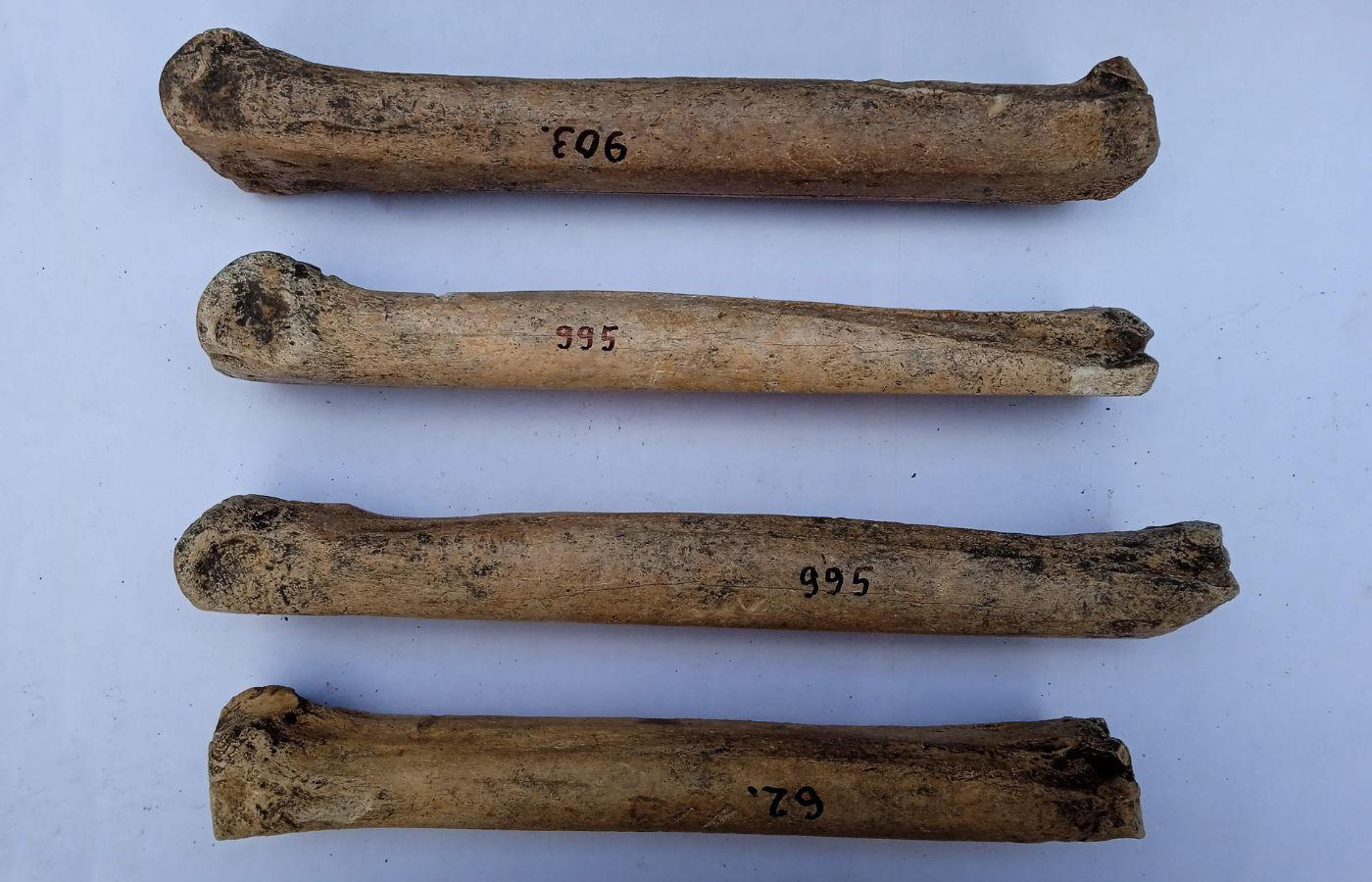
Fragments of horse metapodial bones used to make the runners for ice skates.
Indications of a Sophisticated Bone-Crafting Practice
The bone skates are just one example of an advanced tradition of bone working in the area. A detailed study of more than 2,000 animal bone remains showed that ancient craftspeople made use of almost every part of domesticated animals. The remains included cattle, sheep, goats, horses, pigs, and even roe deer, a species that no longer inhabits the region today.
Using these bones, artisans created a variety of functional and decorative objects such as needles, awls, ornamental pieces, knife handles, personal adornments, and arrow tips. This careful and efficient use of animal resources points to a strong level of technical skill and an in-depth understanding of skeletal structure.
Reconstructing Daily Life Along the Bosporan Frontier
Beyond the skates themselves, the discovery helps researchers better understand everyday life on the Taman Peninsula during ancient times. The region functioned as an important cultural meeting point, influenced by local customs, long-distance trade, and contact between steppe communities and the Greek cities of the Bosporan Kingdom.
The evidence shows that these communities were not merely surviving in their surroundings but actively developing ways to adapt and prosper. Through practices such as animal husbandry, skilled craftsmanship, and innovative travel across frozen terrain, the ancient inhabitants of Taman demonstrated impressive ingenuity and adaptability.