Archaeological Survey in Lipina Nowa Uncovers Centuries of History
Archaeologists and history enthusiasts from the Search and Exploration Association 'Krecik' have completed the first stage of an official field survey in Lipina Nowa, revealing a remarkable range of artifacts spanning the Roman period through the 20th century.
These discoveries will soon join the collections of the Muzeum Zamojskie w Zamościu, where specialists will carry out further analysis and conservation.
A Permitted and Systematic Survey
Operating under a permit issued by the Lublin Voivodeship Conservator of Monuments, Zamość Delegation, valid through 2025, a three-member team conducted careful metal detector surveys across selected plots in the village.
The team included Michał Tracz, Zbigniew Oszczępałski, and Andrzej Saputa, who worked methodically to document and recover artefacts while preserving the integrity of the site.
Roman-Period Fibula
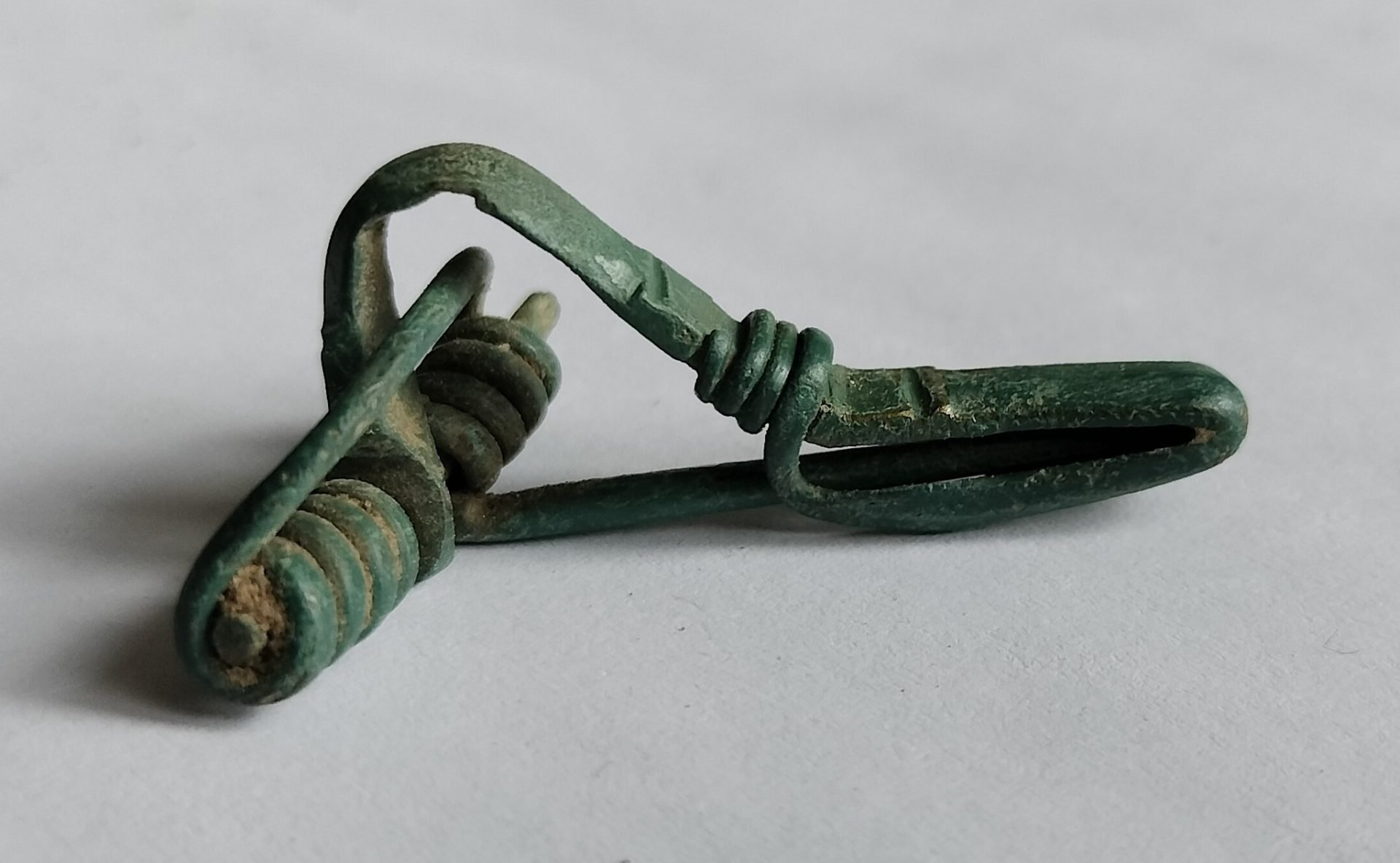
Among the most notable finds is a bronze fibula, or cloak brooch, dating to the late Roman period. Remarkably well-preserved, the fibula was classified by Professor Barbara Niezabitowska-Wiśniewska of the Institute of Archaeology, Maria Curie-Skłodowska University as belonging to Almgren Group VI, type A.162.
This typology, defined by a profiled bow and foot, places the fibula between the second half of the 3rd century and the first half of the 4th century AD. Such a find provides evidence of cultural connections and exchange networks in the region during antiquity.
Medieval Weaponry and Dress Accessories
The survey also uncovered artifacts from the medieval period. Among them is an iron “star” blade, identified as a caltrop. These devices were used as anti-cavalry or anti-personnel field defenses from the late 12th to 15th centuries. Measuring approximately 6 by 5 centimetres, the caltrop features a mounting aperture at its base. Analysis was conducted by Andrzej Maziarz of the Arsenal Museum of Fortifications and Weaponry, Zamość.
Additional medieval items include bronze accessories, such as a belt buckle and a ring, dated to the 12th–13th centuries, offering further insight into dress and material culture of the time.
These discoveries highlight the long and varied history of Lipina Nowa, demonstrating the region’s role as a crossroads of cultural interaction across centuries—from Roman trade networks to medieval daily life and defensive practices.