The Four Heavens: A New History of the Ancient Maya
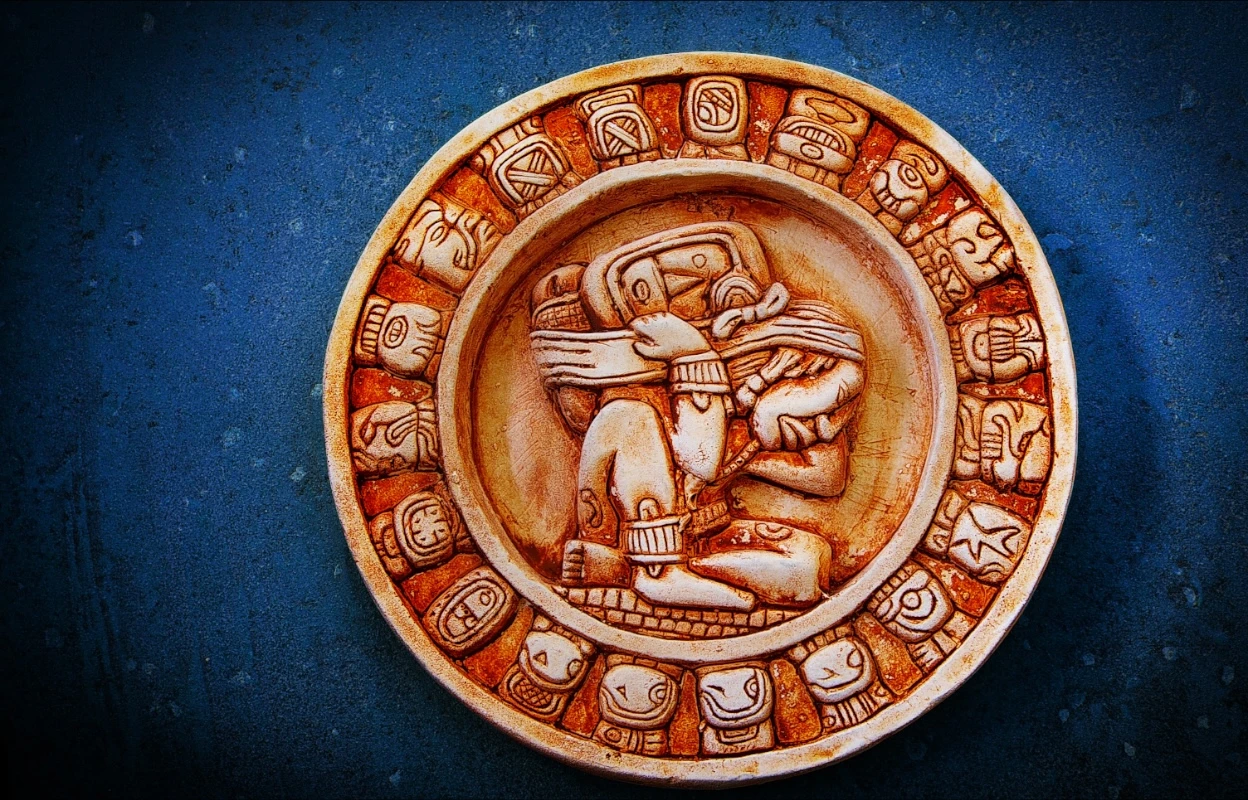
For much of the twentieth century, the history of the ancient Maya remained largely inaccessible. Their towering ceremonial pyramids and intricate artworks—created across parts of Mesoamerica during the Classic Maya period (AD 150–900)—had fascinated outsiders since the arrival of Spanish conquistadors in the sixteenth century. Yet their hieroglyphic writing system remained undeciphered. Not even the millions of modern speakers of Maya languages could read the ancient script.
In The Four Heavens, David Stuart presents a sweeping and accessible account of Maya civilization, drawing on decades of breakthroughs in archaeology and epigraphy. It is the first major effort in over twenty years to synthesize this rapidly expanding body of knowledge for general readers.
A Scholar Who Grew Up With the Maya
Stuart’s connection to the ancient Maya began early. Raised by archaeologist parents in a village on Mexico’s Yucatán Peninsula, he learned to speak Yucatec Maya as a child. His early immersion in both the language and archaeology shaped his career.
As a teenager, he began collaborating with renowned Mayanist Linda Schele to interpret inscriptions from the ancient city-state of Palenque in Chiapas. At just 12 years old, Stuart delivered his first academic paper at an international conference in Palenque in 1978. By 18, he had become the youngest-ever recipient of a MacArthur Fellowship.
Today, Stuart is a leading authority on Maya art and writing, teaching in the United States and continuing to shape the field.
A New Vision of Maya Civilization
The book’s title refers to a key concept in Maya cosmology. The sky, according to ancient belief, was divided into four directional “sides,” structured around the Sun’s daily and yearly movements. This cosmological framework provides a symbolic lens through which Stuart reexamines Maya history.
Drawing on twenty-first-century archaeological discoveries and newly deciphered texts, he challenges long-standing stereotypes. Earlier scholars often portrayed the Maya as peaceful, isolated people governed by aloof priests concerned mainly with abstract timekeeping and ritual.
Stuart rejects this outdated image. Instead, he depicts a politically dynamic world composed of powerful royal courts connected through marriage alliances, shifting partnerships, rivalries, and warfare. Religion was central—but it existed alongside ambition, diplomacy, and conflict.
Rethinking the “Peaceful Theocracy”
One influential voice in mid-twentieth-century Maya studies was J. Eric S. Thompson. In the early 1950s, Thompson promoted an interpretation of the Maya as a largely peaceful theocracy. He emphasized their sophisticated calendar and spiritual outlook, arguing that their inscriptions were not phonetic or syllabic in nature—unlike Egyptian hieroglyphs, which had been deciphered in the 1820s.
According to Stuart, this interpretation idealized the Maya and overlooked the possibility that their writing system encoded spoken language.
The Script That Sparked Debate
In the 1950s, Russian linguist Yuri Knorosov proposed a bold alternative theory: that Maya hieroglyphs were partly syllabic. His insight was based on a sixteenth-century manuscript in which a Yucatec Maya informant attempted to explain the script to a Spanish friar. Although the exchange was confused, Knorosov recognized patterns that suggested phonetic elements.
Thompson dismissed this interpretation—possibly influenced by Cold War politics, which complicated the acceptance of Soviet scholarship in Western academia.
Over time, however, Knorosov’s approach proved correct. The eventual decipherment of Maya writing transformed the field, revealing detailed accounts of royal lineages, wars, ceremonies, and political intrigue.
Bringing the Maya to Life
In The Four Heavens, Stuart weaves these scholarly revolutions into a compelling narrative for modern readers. The book presents the Maya not as mysterious jungle dwellers frozen in time, but as complex historical actors navigating power, belief, and identity in a vibrant and interconnected world.
By combining fresh archaeological evidence with decades of epigraphic breakthroughs, Stuart offers a richer, more human portrait of one of the ancient world’s most remarkable civilizations.