• MAIN PAGE
  • LATEST NEWS
    • Lost Cities
    • Archaeology's Greatest Finds
    • Underwater Discoveries
    • Greatest Inventions
    • Studies
    • Blog
  • PHILOSOPHY
  • HISTORY
  • RELIGIONS
    • Africa
    • Anatolia
    • Arabian Peninsula
    • Balkan Region
    • China - East Asia
    • Europe
    • Eurasian Steppe
    • Levant
    • Mesopotamia
    • Oceania - SE Asia
    • Pre-Columbian Civilizations of America
    • Iranian Plateau - Central Asia
    • Indus Valley - South Asia
    • Japan
    • The Archaeologist Editor Group
    • Scientific Studies
    • Aegean Prehistory
    • Historical Period
    • Byzantine Middle Ages
    • Predynastic Period
    • Dynastic Period
    • Greco-Roman Egypt
  • Rome
  • PALEONTOLOGY
  • About us
Menu

The Archaeologist

  • MAIN PAGE
  • LATEST NEWS
  • DISCOVERIES
    • Lost Cities
    • Archaeology's Greatest Finds
    • Underwater Discoveries
    • Greatest Inventions
    • Studies
    • Blog
  • PHILOSOPHY
  • HISTORY
  • RELIGIONS
  • World Civilizations
    • Africa
    • Anatolia
    • Arabian Peninsula
    • Balkan Region
    • China - East Asia
    • Europe
    • Eurasian Steppe
    • Levant
    • Mesopotamia
    • Oceania - SE Asia
    • Pre-Columbian Civilizations of America
    • Iranian Plateau - Central Asia
    • Indus Valley - South Asia
    • Japan
    • The Archaeologist Editor Group
    • Scientific Studies
  • GREECE
    • Aegean Prehistory
    • Historical Period
    • Byzantine Middle Ages
  • Egypt
    • Predynastic Period
    • Dynastic Period
    • Greco-Roman Egypt
  • Rome
  • PALEONTOLOGY
  • About us
No results found

Badbea: Caithness's Clearance Village

September 9, 2026

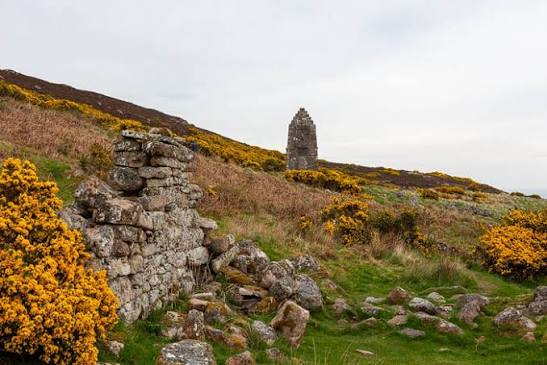
Badbea is one of the most evocative surviving landscapes associated with the Highland Clearances.

Situated on a steep coastal slope in Caithness, the abandoned settlement preserves the remains of homes occupied by families who had been displaced from traditional Highland communities.

Its harsh environment became part of the story of survival, migration, and forced relocation.

The Settlement

Badbea was established in the late eighteenth century by people displaced during Highland estate clearances.

The settlement's inhabitants faced difficult environmental conditions.

The land was poor, exposed, and steep.

Life on the Edge

Residents had to adapt to the coastal environment.

Agriculture was difficult.

People relied on combinations of:

  • small-scale cultivation;

  • livestock;

  • fishing;

  • gathering;

  • and other forms of subsistence.

The Cliff

Badbea's dramatic location is one of its defining characteristics.

The settlement sits on a steep coastal landscape overlooking the sea.

Strong winds and difficult terrain made everyday life challenging.

Clearance Communities

Badbea illustrates an important aspect of the Clearances.

People were not always transported directly overseas.

Some displaced families were relocated within Scotland.

They often ended up on marginal lands where agricultural opportunities were limited.

Archaeological Remains

Today the settlement contains traces of:

  • houses;

  • walls;

  • fields;

  • enclosures;

  • and paths.

These remains allow visitors to reconstruct the physical structure of the community.

The Memorial

A memorial at Badbea commemorates the people who lived there and their descendants.

It connects archaeology with family history.

Emigration

Like many Highland communities, Badbea became part of a larger migration story.

Some residents eventually emigrated.

Their descendants can be found in communities around the world.

Historical Significance

Badbea is important because it makes the Clearances tangible.

Instead of encountering the Clearances only through written documents, visitors can see the actual landscape where displaced families attempted to rebuild their lives.

Conclusion

Badbea: Caithness's Clearance Village is a powerful archaeological and historical reminder of the Highland Clearances.

Its exposed landscape and ruined houses reveal the difficult conditions faced by families who lost access to their traditional homes.

The site stands as a memorial to resilience, displacement, and the global consequences of Highland migration.
← Strathnaver Clearances Sites: Sutherland's Deserted VillagesHelmsdale: Sutherland's Emigration Memorial Site →
Featured
image_2026-09-01_150407961.png
September 9, 2026
Dunadd Fort: Argyll's Inauguration Rock Carvings
September 9, 2026
Read more →
September 9, 2026
image_2026-09-01_150445885.png
September 9, 2026
Kilmartin Glen: Argyll's 5,000-Year Megalithic Landscape
September 9, 2026
Read more →
September 9, 2026
image_2026-09-01_150523753.png
September 9, 2026
Nether Largie: Argyll's Clyde Tomb Alignment
September 9, 2026
Read more →
September 9, 2026
image_2026-09-01_150612586.png
September 9, 2026
Ri Cruin: Argyll's Bronze Age Cairn Circle
September 9, 2026
Read more →
September 9, 2026
image_2026-09-01_150753980.png
September 9, 2026
Barnaluasgan: Argyll's Standing Stones
September 9, 2026
Read more →
September 9, 2026
image_2026-09-01_150644895.png
September 9, 2026
Ballymeanoch: Argyll's Kerbed Cairn
September 9, 2026
Read more →
September 9, 2026
read more

Powered by The archaeologist