Introduction
Charcoal is among the most common archaeological materials recovered from ancient settlements and open-air sites. It can preserve evidence of cooking, heating, craft production, landscape management, and other activities involving fire.
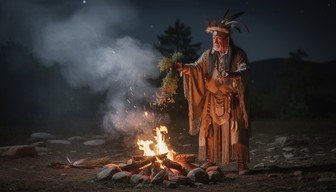
In certain archaeological contexts, charcoal deposits may also be associated with ritual practices. Repeated fires, unusual arrangements of burned materials, and deposits containing selected objects can suggest that fire played a ceremonial role.
However, charcoal is not automatically evidence of ritual activity. Natural wildfires, domestic hearths, agricultural burning, and industrial processes can all produce charcoal. Identifying ritual fires therefore requires a careful examination of the material, its location, and its relationship to other archaeological evidence.
Understanding Charcoal in Archaeology
Charcoal forms when organic material, particularly wood, burns under conditions where oxygen is limited or combustion is incomplete.
Unlike many organic materials, charcoal can survive for thousands of years under suitable burial conditions. Its microscopic structure may preserve information about the tree species used as fuel.
Archaeologists study charcoal to reconstruct ancient vegetation, identify fuel preferences, and understand how people managed their environments.
The amount, distribution, and composition of charcoal deposits can also provide information about how frequently fires occurred and what activities may have produced them.
Domestic and Ritual Fires
Domestic fires were essential to everyday life. They provided heat, light, cooked food, and supported household activities.
Ritual fires, by contrast, may have been established for ceremonies, offerings, commemorations, or other culturally significant events.
The distinction is not always straightforward. A household hearth could also have religious significance, while a fire used during a public ceremony might serve practical purposes as well.
Researchers therefore avoid classifying a fire as ritual based solely on its size or location. Instead, they investigate whether the surrounding evidence indicates behavior that differs from ordinary domestic or industrial activity.
Charcoal Composition and Wood Selection
The species of wood used in a fire can reveal information about human choices.
Some woods burn for longer periods, while others ignite more easily or produce particular types of smoke. Communities may have selected fuel according to availability, practical performance, or cultural preference.
Charcoal identification involves examining the microscopic anatomical structure of burned wood. Different tree species preserve recognizable patterns in their cellular organization.
If a deposit contains unusual or repeatedly selected species, researchers may investigate whether the choice had a practical or symbolic explanation.
However, an unusual wood type does not prove ritual use. It may simply have been the most accessible fuel in the surrounding landscape.
Spatial Patterns at Open-Air Sites
The location of charcoal deposits is particularly important.
A large concentration of charcoal in a clearly defined area may indicate a hearth or repeated burning location. Several separate concentrations could represent multiple fire events.
Researchers map these deposits in relation to buildings, pathways, burial areas, monuments, and other archaeological features.
Repeated burning in the same location may suggest that a place held long-term importance. If fires were associated with unusual objects or carefully arranged deposits, a ceremonial interpretation may become more plausible.
Nevertheless, repeated fires can also result from ordinary activities such as cooking, metalworking, or waste disposal.
Ash, Burned Objects, and Associated Materials
Charcoal rarely provides the entire story. Archaeologists also examine ash, burned soil, heated stones, pottery fragments, animal remains, and other materials associated with a fire.
Micromorphology can reveal how layers of ash and sediment formed. This technique involves examining thin sections of soil under a microscope to identify microscopic deposits and traces of human activity.
Phytoliths, which are microscopic mineral structures produced by plants, may help identify plant materials associated with burning. Chemical analysis can also reveal changes caused by heating and combustion.
When these materials occur together in a patterned deposit, they may provide stronger evidence for a specific activity than charcoal alone.
Ritual Deposits and Structured Burning
Some ceremonial fires may have involved deliberate arrangements of objects or materials.
Researchers might encounter burned offerings, selected animal remains, broken pottery, or deposits placed in particular locations after a fire had been extinguished.
The order in which materials were deposited can be important. A carefully prepared layer containing charcoal, ash, and selected objects may indicate deliberate actions rather than accidental accumulation.
Even so, archaeologists must consider alternative explanations. Waste disposal, craft production, and rebuilding activities can also create unusual deposits.
Natural Wildfires and Environmental Burning
Natural wildfires can produce charcoal deposits that resemble human-made burning features.
Lightning, drought, and changing vegetation can cause fires over large areas. These events may leave charcoal in soil layers far from settlements.
Researchers distinguish natural and human-related fires by examining the distribution of charcoal, the presence of hearth structures, associated artifacts, and evidence of repeated localized burning.
Sediment cores and charcoal records from lakes or wetlands can help reconstruct regional fire history. Such evidence may reveal whether a particular archaeological deposit occurred during a period of widespread landscape burning.
Dating Charcoal Deposits
Radiocarbon dating can help establish when wood was burned.
However, charcoal dating requires careful interpretation. Wood may have been old before it was burned, especially if the fuel came from the interior of a long-lived tree.
This creates the possibility of an "old wood" effect, in which the radiocarbon age of the sample is older than the actual fire event.
Researchers therefore select appropriate charcoal fragments and compare dates from multiple materials whenever possible.
Stratigraphic relationships are also important because charcoal may have been moved, redeposited, or disturbed after the original burning event.
Conclusion
Charcoal signatures can contribute significantly to the study of ritual fires at open-air archaeological sites. The species of wood, distribution of burned deposits, microscopic soil evidence, associated objects, and chronology can help researchers reconstruct how ancient communities used fire.
However, charcoal alone cannot establish ritual activity. A convincing interpretation requires several independent lines of evidence that distinguish ceremonial burning from domestic, industrial, agricultural, and natural fires.
Through careful analysis, charcoal becomes more than the remains of burned wood. It becomes evidence of how people interacted with their environment, organized communal activities, and potentially expressed cultural or religious beliefs.