Introduction
The islands of Oceania contain an extraordinary variety of burial traditions shaped by geography, ancestry, religion, social organization, and relationships with the sea. In some island societies, small offshore islands may have served as places for burial, remembrance, or ceremonial activity.
The idea of little islands functioning as neutral burial grounds is particularly interesting because an island could provide a location separated from everyday settlement life. It might also offer a shared space for families or communities whose relationships were complicated by territorial boundaries, conflict, or customary restrictions.
However, the term "neutral" must be used carefully. An island used for burial was not necessarily open to everyone or politically neutral. Establishing that status requires evidence of shared access, customary agreements, oral histories, or other indications that multiple communities recognized the location as a common mortuary place.
Islands as Mortuary Landscapes
Small islands can have distinctive cultural significance. Their separation from larger settlements may make them appropriate for activities associated with ancestors, death, remembrance, and spiritual beliefs.
In some societies, burial locations are selected according to family ancestry, clan affiliation, social rank, or customary ownership. An offshore island might therefore be associated with a particular lineage rather than an entire population.
In other circumstances, a small island could become a shared burial location. Its accessibility by boat might allow different communities to reach it without establishing a cemetery within another group's residential territory.
The meaning of such a place would depend on local customs rather than geography alone.
Geography and Burial Decisions
The physical characteristics of an island could influence its use as a burial site. Elevation, soil depth, vegetation, freshwater availability, coastal exposure, and distance from inhabited settlements would all affect its suitability.
A relatively stable island with accessible ground might provide a practical location for graves. Other islands could be unsuitable because of erosion, flooding, unstable coral formations, or limited space.
The surrounding sea could also influence access. Calm-water channels might allow regular visits, while dangerous reefs or strong currents could restrict movement to particular seasons.
These geographical conditions could shape who was able to use a burial island and how frequently relatives returned to it.
Neutrality, Customary Access, and Community Relationships
A burial island could potentially serve as a shared place where different communities maintained mortuary practices without placing graves directly within each other's territory.
Such an arrangement might emerge through customary agreements, kinship relationships, intermarriage, or long-standing traditions.
However, shared burial does not automatically mean political neutrality. Communities may have maintained different rights over particular sections of an island, or access may have been restricted to certain families.
To establish genuine neutrality, researchers would need evidence that the island was recognized as a common or protected mortuary space. Oral histories, genealogies, customary land agreements, and accounts of disputes could be particularly valuable.
Archaeological Evidence
Burial sites on small islands can be difficult to identify and interpret. Graves may be shallow, disturbed by vegetation, or damaged by coastal erosion.
Archaeologists investigate burial arrangements, skeletal remains, grave goods, stone markers, and the relationship between graves and the surrounding landscape.
The distribution of burials may reveal whether an island was used continuously or only during particular periods. Differences in burial orientation, construction, and associated objects may also indicate that multiple communities used the location.
Nevertheless, similarities in burial practices do not independently prove that the deceased belonged to the same cultural group.
Ancestry and Isolated Burial Places
Small islands may have served as places where communities maintained relationships with ancestors.
Burial locations can preserve genealogical connections and reinforce claims to land, fishing areas, or customary authority.
In some societies, the dead remain part of the social landscape. Descendants may visit graves, conduct ceremonies, maintain monuments, or make offerings.
An island cemetery could therefore function as more than a place for depositing human remains. It might represent a continuing relationship between living communities, ancestors, and territory.
Sea-Level Change and Coastal Preservation
Oceania is particularly important for studying the effects of changing sea levels on archaeological landscapes.
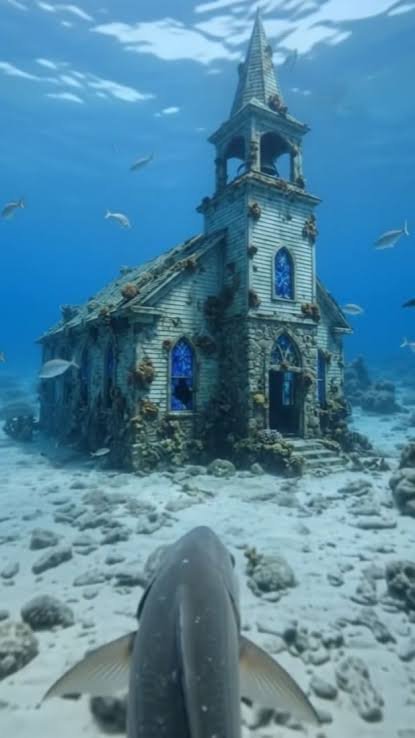
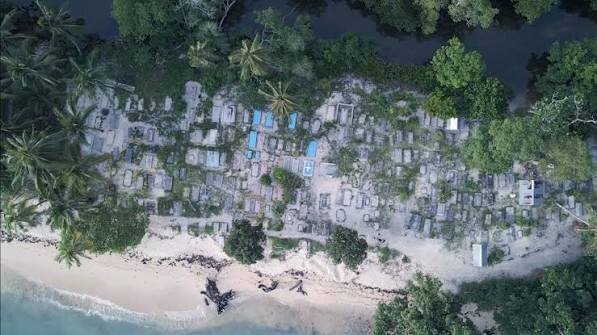
Many Pacific islands are low-lying and vulnerable to coastal erosion, storm surges, and long-term environmental change. Burial sites that were once located inland may now lie close to the shoreline or beneath shallow water.
Rising sea levels can damage graves and displace archaeological materials. In some cases, erosion may expose previously buried remains.
Researchers must therefore consider whether the present shape of an island resembles its ancient landscape. A burial ground that appears isolated today may once have been connected to a larger coastal settlement or landform.
Ethical Considerations
Research involving human remains requires careful consultation with descendant communities.
Archaeologists must respect local customs, cultural restrictions, and the wishes of families and traditional authorities. Excavation should not be treated as automatically justified simply because a burial site is scientifically interesting.
Non-invasive methods, including mapping, ground-penetrating radar where suitable, and coastal surveys, may help document sites while minimizing disturbance.
Community participation is especially important when investigating places that remain connected to living traditions.
Conclusion
Small islands in Oceania may have served as important burial landscapes, including in circumstances where different communities shared access to a mortuary location. Their separation from major settlements, maritime accessibility, and cultural significance could make them suitable places for remembrance and ancestral practices.
However, the description of such islands as neutral burial grounds must be supported by evidence rather than assumed from their geography. Archaeology, oral history, customary knowledge, and environmental reconstruction can help establish how these places were used and what they meant to the communities connected with them.