For centuries historians believed that the earliest cities emerged around 3000 BCE with the rise of civilizations in Mesopotamia and Egypt. However, archaeological discoveries in recent decades have dramatically pushed this timeline further back.
One of the most famous examples is Göbekli Tepe in southeastern Turkey. Dating to roughly 9600 BCE, this extraordinary site contains massive stone pillars arranged in circular enclosures. These pillars are decorated with carvings of animals and abstract symbols.
What makes Göbekli Tepe remarkable is that it was constructed thousands of years before the invention of agriculture in the region. Traditionally, archaeologists believed that large monuments could only be built by settled farming societies with complex social structures. Yet Göbekli Tepe suggests that hunter-gatherer groups were capable of organizing massive building projects long before permanent cities existed.
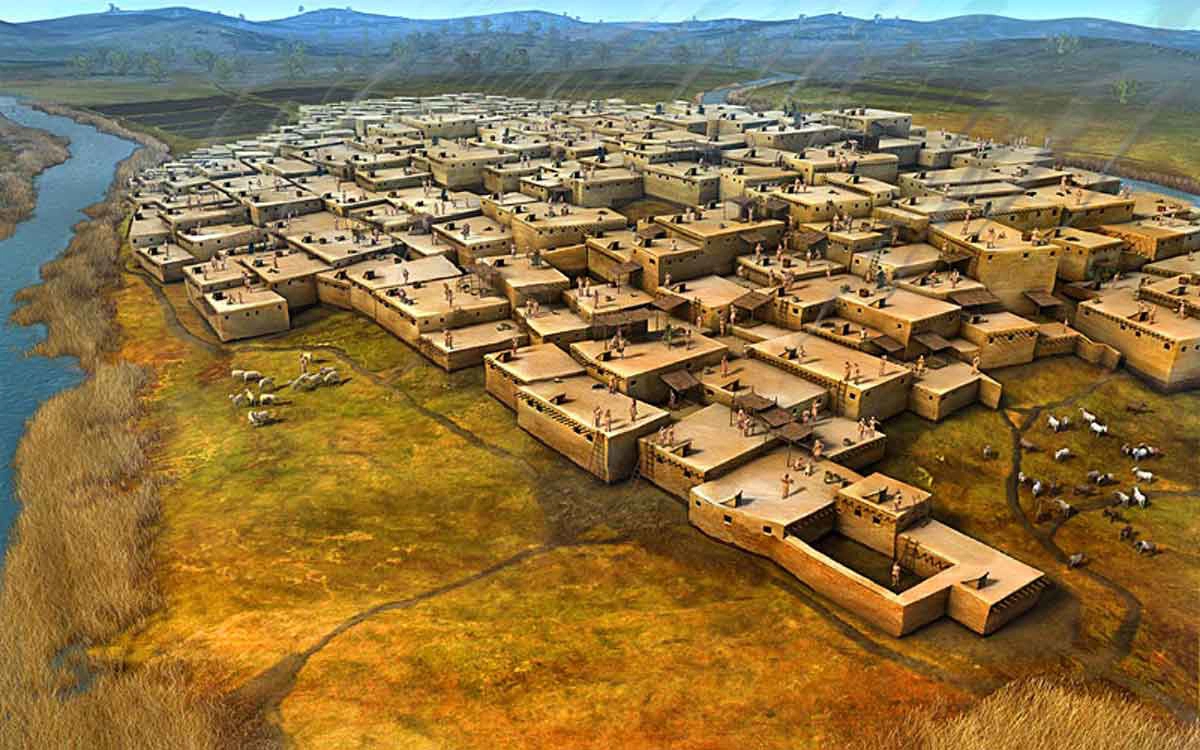
Another ancient settlement that challenges traditional timelines is Çatalhöyük, one of the largest Neolithic communities ever discovered. Dating back to around 7500 BCE, this densely populated settlement featured closely packed mudbrick houses with rooftop entrances and elaborate wall paintings.
Meanwhile, sites such as Jericho reveal evidence of stone walls and defensive towers built as early as 8000 BCE. These discoveries suggest that complex settlements appeared thousands of years earlier than previously believed.
Together, these sites indicate that the transition from small villages to organized communities may have been far more gradual and diverse than traditional historical models suggested. Instead of a single “birthplace of civilization,” humanity’s first cities may have emerged independently in multiple regions around the world.