Introduction
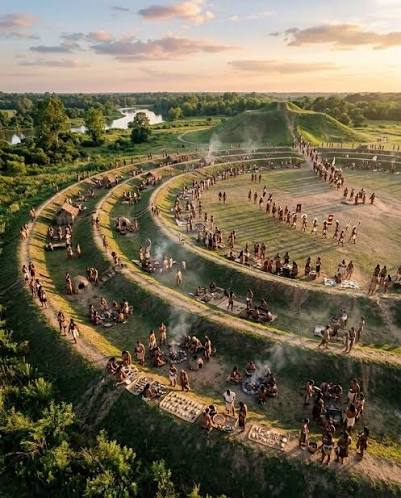
The Claiborne Mounds, located in Louisiana's Lower Mississippi Valley, represent an important prehistoric ceremonial center dating to approximately 1500 BCE, or about 3,500 years ago. The site is notable not only for its earthen mounds but also for evidence of engineered canals and drainage systems that demonstrate the remarkable environmental knowledge of Late Archaic Native American communities. Situated within a landscape of rivers, wetlands, and seasonal floodplains, the inhabitants developed innovative methods of controlling water while supporting ceremonial activities, transportation, and settlement. These discoveries reveal that prehistoric societies were capable of modifying their environment through planned hydraulic engineering long before the arrival of European settlers.
Canal Construction and Water Management
Archaeological investigations have identified a network of shallow canals and artificial drainage features associated with the Claiborne Mounds. These canals were excavated by hand using stone, bone, and wooden tools, connecting nearby waterways with the ceremonial complex. They likely served multiple functions, including directing excess floodwater away from important structures, improving drainage around the mounds, and providing convenient transportation routes for canoes carrying people, construction materials, and trade goods.
The canals also helped stabilize the surrounding landscape by reducing erosion during seasonal flooding. Combined with elevated earthen platforms, these hydraulic systems allowed the inhabitants to maintain year-round ceremonial spaces despite the challenging environmental conditions of the Mississippi floodplain.
Ceremonial and Economic Functions
The Claiborne Mounds functioned as an important gathering place where surrounding communities assembled for religious ceremonies, seasonal festivals, trade, and social interaction. The nearby canals facilitated the movement of goods and visitors from neighboring settlements, strengthening regional exchange networks. Archaeologists have recovered stone tools, projectile points, shell ornaments, and other artifacts indicating that the site participated in long-distance trade extending across much of the southeastern United States.
The combination of ceremonial earthworks and engineered waterways suggests that water itself held symbolic as well as practical significance. Rivers and canals likely formed part of ritual processions while simultaneously supporting communication and economic exchange.
Engineering Significance
The construction of canals alongside monumental earthworks demonstrates an advanced understanding of hydrology and landscape management. Rather than simply adapting to seasonal flooding, the inhabitants actively reshaped their environment to improve drainage, transportation, and access to ceremonial spaces. These achievements illustrate that early Native American communities possessed practical engineering knowledge that allowed them to thrive within complex wetland ecosystems.
Conclusion
The Claiborne Mounds highlight the ingenuity of Louisiana's prehistoric inhabitants in combining monumental earthwork construction with effective water management. Their canals, drainage systems, and ceremonial mounds demonstrate sophisticated planning, environmental adaptation, and regional cooperation approximately 3,500 years ago. Together, these features provide important evidence of the engineering skills and cultural achievements of the early mound-building societies of the Lower Mississippi Valley.