Introduction
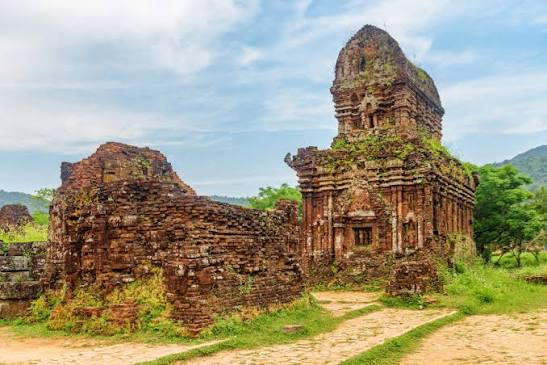
Nestled in a valley beneath Cat’s Tooth Mountain (Hòn Quặp) in Quảng Nam Province, central Vietnam, Mỹ Sơn Sanctuary served as the spiritual heartland of the Champa Kingdom from the 4th to the 14th century CE. Dedicated to Shiva (Bhadresvara), this UNESCO World Heritage complex features over seventy brick towers (kalan) reflecting a thousand years of Cham religious architecture.
It was the principal religious center of the Champa Kingdom from the 4th to the 13th centuries CE. Nestled within a mountain valley in central Vietnam, the sanctuary consists of dozens of brick temple towers dedicated primarily to the Hindu god Shiva. Constructed over several centuries by successive Cham rulers, the temples served as places of worship, royal ceremonies, and commemorative monuments honoring deceased kings. The Cham builders demonstrated exceptional architectural skill by constructing brick structures with remarkably thin joints whose bonding techniques remain only partially understood today. Intricate sandstone carvings depict Hindu deities, celestial dancers, sacred animals, and scenes from Indian epics such as the Ramayana. Mỹ Sơn illustrates the profound influence of Indian religion, art, and architecture on Southeast Asia while preserving the distinctive artistic identity of the Cham civilization
Construction Innovations
The red-brick towers of Mỹ Sơn were built using a distinct mortarless masonry technique. Cham builders stacked fired clay bricks using an organic resin binder (dầu rái tree resin) and carved elaborate bas-reliefs directly into the completed brick walls before applying a final surface firing to seal the structure.
Conclusion
Mỹ Sơn Sanctuary remains the longest-utilized site of religious architecture in Southeast Asia, standing as a monumental testament to Cham spiritual and architectural artistry.