Introduction
Coastal communities have developed ingenious ways to obtain food from marine environments. Among the most enduring examples are stone fish traps, structures built to take advantage of tides, coastal currents, and the movement of fish through shallow water. Across the world, fish traps have taken many forms, from simple stone lines to carefully arranged enclosures that retain fish as the tide retreats.
West Africa's long Atlantic coastline offers a valuable setting for investigating the relationship between coastal engineering, subsistence, social organization, and ritual practice. However, the existence, age, and cultural significance of particular stone fish traps must be established through local archaeological evidence rather than assumed from their appearance.
How Stone Fish Traps Work
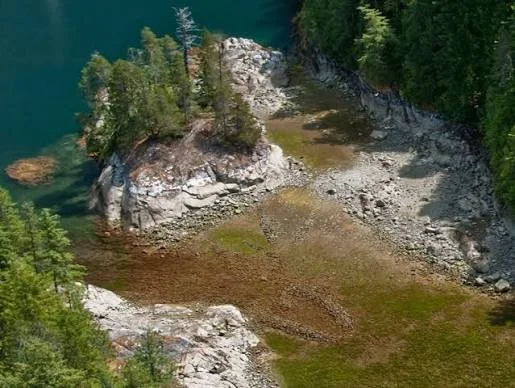
Stone fish traps generally rely on the predictable movement of water. Builders arrange stones into walls, semicircular barriers, or enclosures along suitable shorelines. During high tide, fish may swim over or through the structures. As the water level falls, the barriers can restrict their movement, allowing people to collect fish in shallow pools or enclosed spaces.
The effectiveness of a trap depends on several factors:
Tidal range: A substantial change in water level can expose the trap at low tide.
Coastal topography: Sheltered bays, rocky platforms, and shallow inlets may provide suitable locations.
Stone availability: Local geology determines which materials can be collected and moved.
Fish behavior: Trap placement must account for the movement and size of target species.
Maintenance: Storms, erosion, and shifting sediment can damage the structure.
Some traps require relatively little construction, while others demand considerable knowledge of local tides and coastal conditions.
Engineering Knowledge in Coastal Communities
Building a functional trap involves more than stacking stones. Builders must understand how waves, currents, and tides affect the structure. They must also recognize which coastal locations offer the best chance of catching fish.
Such knowledge can be developed through repeated observation and transmitted across generations. Experienced fishers may understand how seasonal conditions influence fish movement, when a trap should be repaired, and which gaps must remain open for water to flow.
Stone traps can therefore represent accumulated environmental knowledge. Their construction may reflect practical experimentation rather than formal engineering in the modern sense.
Fishing and Community Organization
Large traps can require cooperation. Collecting suitable stones, building barriers, clearing channels, and repairing storm damage may involve multiple households or groups.
Where access to a trap is shared, communities may establish rules about ownership, maintenance, harvesting times, and the distribution of catches. These arrangements can help prevent disputes and ensure that the structure remains useful.
However, the size of a fish trap does not automatically reveal the social organization behind it. A substantial structure might have been built gradually by many generations, while a smaller one could have been maintained by a single household.
Archaeologists must investigate construction phases, use patterns, and local historical traditions before drawing conclusions about labor and authority.
Food Security and Seasonal Adaptation
Coastal fishing can provide an important supplement to farming, livestock keeping, gathering, and trade. Stone traps may be especially useful when tidal conditions make fish accessible without requiring boats or specialized equipment.
They can also help communities diversify their food sources. If catches are preserved through drying, smoking, or salting, the benefits of a successful fishing period may extend beyond the day of harvest.
Nevertheless, fish traps do not guarantee a stable supply. Storms, changing water temperatures, habitat loss, pollution, and shifts in fish populations can affect their productivity.
Could Stone Fish Traps Have Ritual Significance?
The title also raises the question of ritual. In many societies, fishing has been connected with seasonal ceremonies, offerings, restrictions, and community traditions. Certain fishing locations may hold cultural significance beyond their economic value.
A stone trap might be associated with customary rules about when fishing is permitted or how the catch should be shared. A community could also connect particular coastal places with ancestors or local histories.
Yet a structure's practical function does not prove that it was built for ritual purposes. Archaeologists would need additional evidence, such as documented ceremonial practices, distinctive deposits, repeated patterns of offerings, or reliable oral histories.
It is also possible for a structure to have both practical and cultural significance. These functions are not mutually exclusive.
Dating Coastal Structures
Determining the age of stone fish traps can be difficult because stone itself is not easily dated. Researchers may examine associated organic remains, sediment deposits, nearby archaeological sites, historical maps, and changes in the shoreline.
Radiocarbon dating may be possible when suitable organic material is securely associated with a construction or use phase. However, material found nearby may be older or younger than the structure itself.
Coastal landscapes are also dynamic. Sea levels change, shorelines erode, and sediment accumulates. A trap that now appears far inland or underwater may once have occupied a different tidal environment.
Environmental and Heritage Protection
Modern coastal development can damage traditional fishing structures. Ports, seawalls, tourism facilities, sand extraction, and changes in water flow may affect their survival.
Recording these structures can help communities and researchers understand their historical importance. Documentation should include local knowledge, photographs, measurements, environmental conditions, and information about continued use.
Research must also respect community rights. Traditional fishing knowledge may belong to local practitioners, and publicizing a site could create problems if it attracts uncontrolled tourism or threatens access to resources.
Conclusion
Coastal stone fish traps provide a compelling example of how human communities have adapted to marine environments through practical knowledge and collective labor. Their design can reveal an understanding of tides, fish behavior, coastal geology, and the maintenance of shared resources.
For West Africa, each proposed site must be studied within its own environmental and cultural context. Archaeology can investigate when a trap was constructed and how it functioned, while oral histories and ethnographic research may clarify its social significance.
The relationship between engineering and ritual remains an important question, but it should be established through evidence rather than assumption. These structures may ultimately reveal not only how people caught fish, but also how coastal communities organized work, managed food resources, and maintained meaningful relationships with the sea.