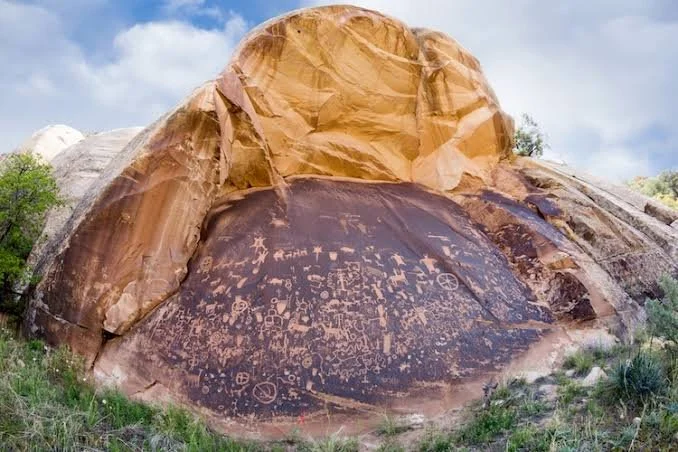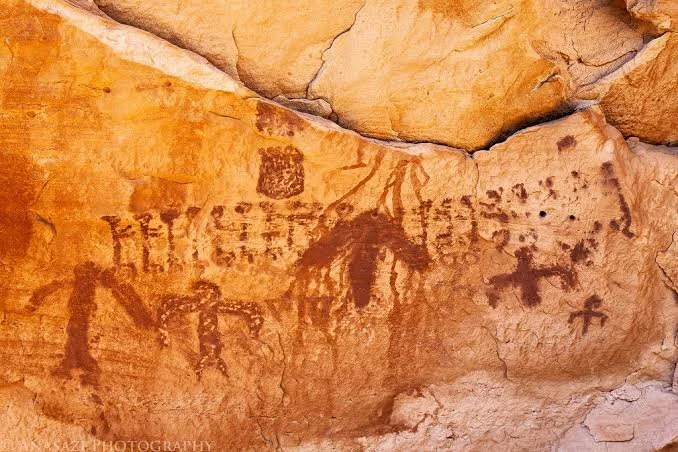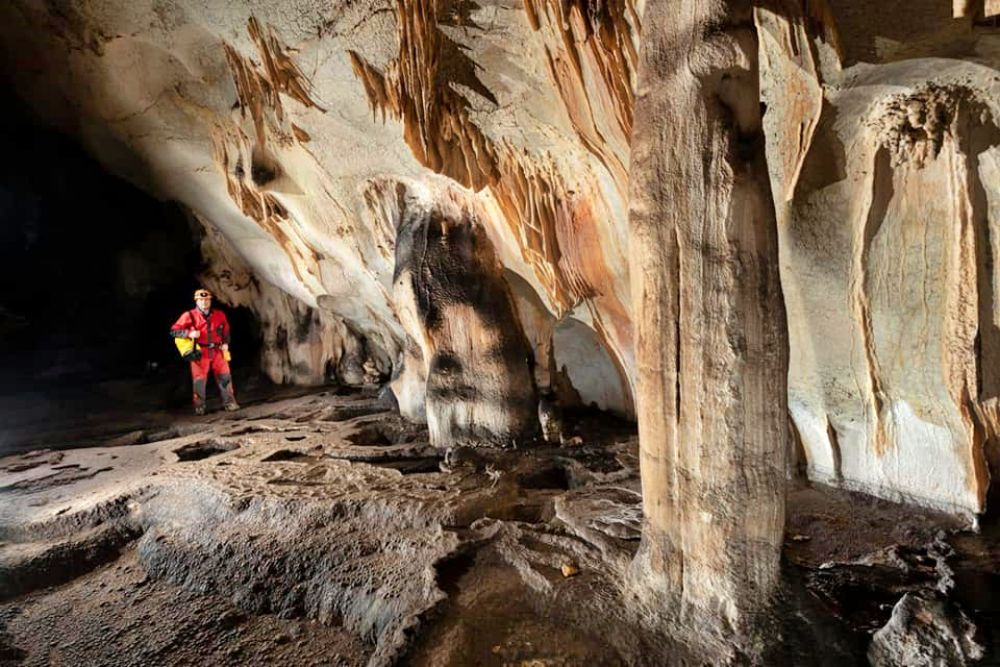
Cueva de la Pileta is one of the most remarkable prehistoric cave art sites in Spain. Located near Benaoján in the province of Málaga, Andalusia, the cave contains an extensive collection of paintings, engravings, and archaeological evidence created over long periods of prehistory.
The importance of Cueva de la Pileta lies not only in the number of images preserved on its walls but also in the variety of pigments, artistic techniques, and cultural traditions represented within the cave.
Its artwork demonstrates that prehistoric people possessed detailed knowledge of natural materials. They understood how minerals and organic substances could be collected, processed, and transformed into pigments capable of surviving for thousands of years.
The paintings of La Pileta provide an extraordinary record of human creativity and technological knowledge.
The Discovery of Cueva de la Pileta
The modern discovery of the cave occurred in the early twentieth century.
Local exploration revealed a complex underground system containing archaeological remains and prehistoric artwork.
The discovery attracted the attention of researchers because of the quantity and quality of the paintings.
Over time, Cueva de la Pileta became recognized as one of the important cave art sites of southern Spain.
The cave's images belong to different periods, demonstrating that the underground space was revisited and used across long stretches of prehistoric time.
A Cave Used Across Generations
One of the most fascinating aspects of La Pileta is that its artistic record was not necessarily created by a single group of people.
Prehistoric caves could remain culturally significant for generations.
Different communities may have returned to the same underground spaces, creating new images near older ones.
This means that cave walls can preserve a kind of visual history.
A prehistoric person entering the cave may have encountered images created centuries or even thousands of years earlier.
The older art may have influenced later traditions, or its original meaning may already have been forgotten.
The Importance of Prehistoric Pigments
Pigments were essential to the creation of cave paintings.
Prehistoric artists did not have manufactured paints.
Instead, they used materials obtained from the environment.
The most common colors in prehistoric cave art were based on substances such as:
red ochre,
yellow ochre,
iron oxides,
manganese minerals,
charcoal,
and other naturally occurring compounds.
The choice of material determined the color and durability of the image.
Red Ochre
Red ochre was one of the most widely used pigments in prehistory.
Its color comes primarily from iron oxide minerals.
Prehistoric people could collect ochre from natural deposits and process it into a usable powder.
The material could then be mixed with a binding substance or applied directly.
Red was particularly important in prehistoric symbolic traditions.
Red ochre has been found in:
cave art,
burials,
personal decoration,
and other archaeological contexts.
The repeated use of this pigment across different regions demonstrates its cultural importance.
However, its exact symbolic meaning varied and cannot always be reconstructed.
Black Pigments
Black images could be created using different materials.
Charcoal was one possibility.
Manganese-rich minerals were another.
These substances could produce dark and durable markings on cave walls.
The use of different black pigments demonstrates that prehistoric artists understood the properties of available materials.
In some cases, researchers can analyze the chemical composition of pigments to determine their geological source.
This may provide information about where artists obtained their materials and how far they traveled.
How Were Pigments Prepared?
The creation of a pigment was often a multi-stage process.
An artist or craftsperson might first collect a suitable mineral.
The material could then be:
Broken into smaller pieces.
Crushed into powder.
Ground more finely using stone.
Mixed with another substance if necessary.
Transported to the location where the image would be created.
The final mixture may have been combined with:
water,
animal fat,
plant substances,
or other binding materials.
The exact ingredients used depended on the particular pigment and artistic technique.
Methods of Applying Paint
Prehistoric artists used several methods to apply pigments.
Some images could be created using fingers.
Others may have involved primitive brushes made from plant fibers, animal hair, or other materials.
Pigment could also be blown onto the wall.
This technique could produce outlines, shading, or hand stencils.
Another method involved rubbing pigment directly onto the rock surface.
The diversity of techniques demonstrates experimentation and technical knowledge.
Animals in the Art of La Pileta
Like many European cave art sites, Cueva de la Pileta contains images associated with animals.
Animals were central to the lives of prehistoric hunter-gatherers.
They provided:
food,
hides,
bone,
antler,
and other materials.
They also played an important role in the symbolic world of prehistoric communities.
The depiction of animals in cave art may therefore have reflected both practical knowledge and cultural meaning.
Artists needed to observe animal anatomy closely.
Even highly stylized images could preserve recognizable features such as:
horns,
legs,
body shape,
and movement.
Abstract Symbols and Signs
Not all prehistoric cave art depicts recognizable animals.
Many caves contain:
dots,
lines,
geometric forms,
grids,
hand marks,
and other abstract symbols.
These marks may have represented systems of communication or cultural traditions.
However, modern researchers cannot automatically translate them.
A repeated symbol may have had a meaning understood by the people who created it but lost over thousands of years.
This uncertainty is one of the central challenges of interpreting prehistoric art.
Light and the Underground Environment
Creating art deep inside a cave required artificial light.
Prehistoric people could not rely on sunlight once they moved far from the entrance.
They needed to carry or maintain light sources.
Possible sources included:
torches,
burning wood,
and stone lamps fueled by animal fat.
The use of light would have influenced the artistic process.
Flickering flames could make shadows move across the uneven surface of the cave walls.
Natural cracks and contours may even have been incorporated into images.
The physical experience of creating or viewing cave art was therefore very different from looking at a modern painting in a brightly lit gallery.
Why Did People Enter Deep Caves?
The creation of art in deep caves required effort.
People had to travel into darkness, carry materials, and maintain light.
This suggests that the activity had enough importance to justify the difficulty.
Researchers have proposed that deep cave spaces may have been used for:
rituals,
ceremonies,
storytelling,
teaching,
initiation,
artistic activity,
or other social practices.
However, there is no universal explanation for all cave art.
Different caves and images may have served different purposes.
Dating the Art of Cueva de la Pileta
Dating prehistoric cave art is complex.
Some pigments, particularly charcoal, may sometimes be dated directly using radiocarbon methods.
Mineral pigments such as ochre and manganese are more difficult to date directly.
Researchers may therefore rely on a combination of:
archaeological context,
stylistic comparison,
associated artifacts,
radiocarbon dating,
and other scientific techniques.
The images at La Pileta represent a long chronological tradition rather than a single artistic event.
This makes the cave particularly valuable for studying change over time.
Artistic Skill and Prehistoric Knowledge
The paintings of Cueva de la Pileta demonstrate that prehistoric artists possessed substantial technical knowledge.
They understood:
which minerals produced particular colors,
how to grind and process raw materials,
how to apply pigments,
how to work in dark environments,
and how to use cave surfaces as part of an image.
This knowledge would have been transmitted socially.
Younger members of a community may have learned techniques by observing more experienced individuals.
The production of art therefore may also have involved teaching and the preservation of cultural knowledge.
Cueva de la Pileta Within Iberian Prehistory
Spain contains one of the richest concentrations of prehistoric cave art in the world.
The Iberian Peninsula preserves evidence from many different periods and cultural traditions.
Cueva de la Pileta forms part of this larger archaeological landscape.
Together, Spanish cave sites demonstrate that prehistoric artistic traditions were geographically widespread and chronologically long-lasting.
They also reveal regional differences.
Artists in different areas selected different subjects, pigments, techniques, and locations.
This diversity demonstrates that prehistoric art was not a single universal tradition.
It consisted of many cultural practices developed by different communities.
The Preservation of Ancient Pigments
The survival of prehistoric paintings for thousands of years is remarkable.
Cave environments can protect artwork from:
rain,
wind,
direct sunlight,
and extreme temperature changes.
However, cave art remains vulnerable.
Human visitation can alter humidity and carbon dioxide levels.
Touching walls can damage pigments.
Microorganisms may also affect the surface.
Modern conservation therefore attempts to balance scientific study and public access with the need to preserve fragile artwork.
Why Cueva de la Pileta Is Important
Cueva de la Pileta provides evidence for several major aspects of prehistoric life:
artistic creativity,
knowledge of minerals,
pigment preparation,
symbolic behavior,
technological skill,
and the long-term cultural use of caves.
The site demonstrates that prehistoric hunter-gatherers possessed sophisticated knowledge of the natural world.
They were able to identify useful materials, process them, and transform them into lasting visual images.
Conclusion
Cueva de la Pileta stands as one of Spain's most important monuments to prehistoric creativity. Its paintings and engravings preserve evidence of generations of human activity, while its pigments reveal a sophisticated understanding of natural materials.
Red ochre, black minerals, charcoal, and other substances were not simply collected and applied randomly. Their use required knowledge, preparation, experimentation, and skill.
The prehistoric artists of La Pileta entered a difficult underground environment carrying light, materials, and cultural knowledge. They transformed the cave walls into a lasting visual record whose complete meaning may never be recovered.