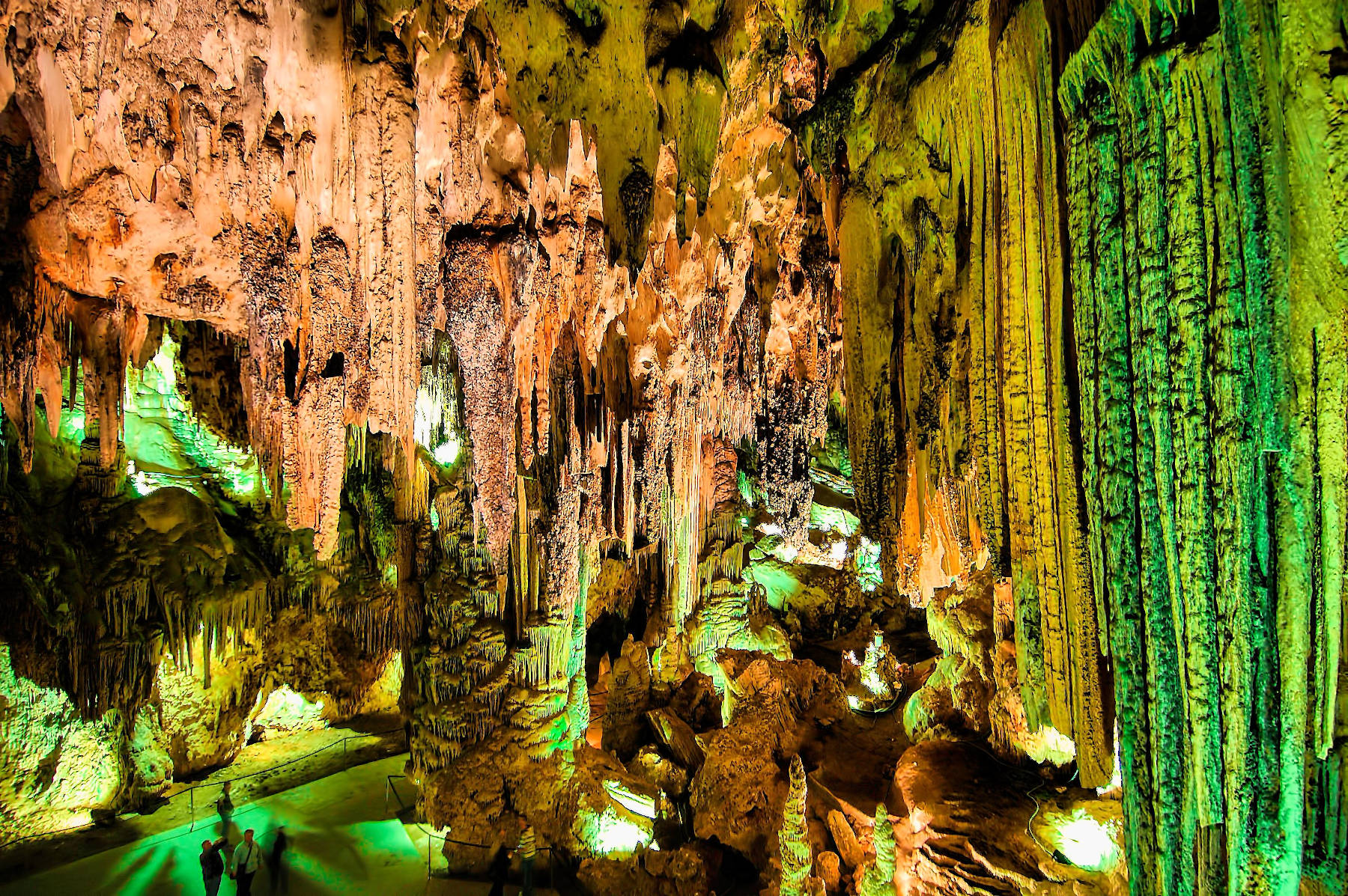
Cueva de Nerja, or Nerja Cave, is one of the most important prehistoric sites in southern Spain. Located near the town of Nerja in Andalusia, the vast cave system contains impressive geological formations as well as evidence of human activity extending across different periods of prehistory.
The cave is particularly significant because of the presence of prehistoric paintings and other archaeological remains. Some discussions of its earliest artistic evidence have proposed extremely ancient dates, including possible ages approaching 42,000 years. However, the chronology of some of the oldest images has been the subject of scientific debate and continuing research.
For this reason, Cueva de Nerja is important not only as a site of prehistoric art but also as an example of the challenges involved in dating ancient cave paintings.
The Discovery of Cueva de Nerja
The modern discovery of Nerja Cave occurred in 1959 when local young people entered sections of the cave system that had not previously been known to the public.
The discovery quickly attracted scientific attention.
The cave contained enormous chambers, spectacular stalactites and stalagmites, and evidence that humans had visited and used parts of the system during prehistoric times.
Subsequent archaeological research revealed a long sequence of occupation and activity.
The cave became an important site for studying the prehistoric populations of southern Iberia.
The Cave as a Prehistoric Landscape
Cueva de Nerja is not simply a single chamber containing paintings.
It is an extensive underground system with different spaces that could have been used in different ways.
The deeper parts of caves often differ dramatically from the entrance areas.
Near the entrance, natural light may have allowed ordinary activities to take place.
Further inside, darkness would have required artificial illumination.
The decision to travel into these darker areas may therefore have had practical, symbolic, or cultural significance.
The Prehistoric Paintings
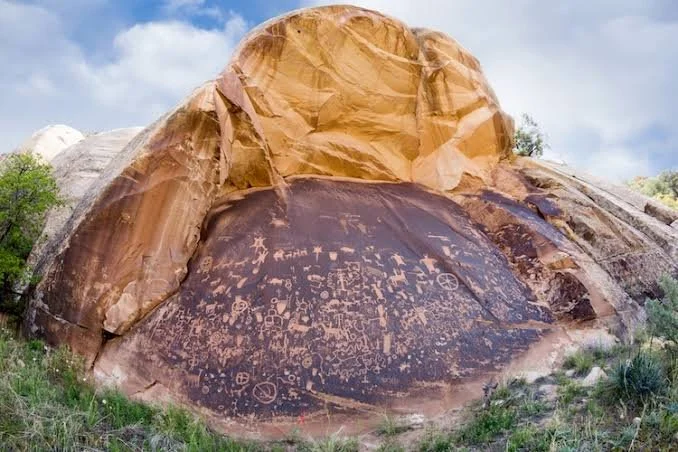
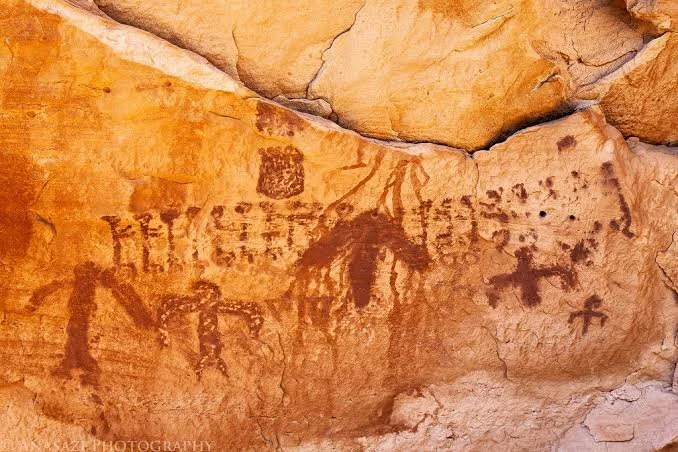
The cave contains painted and engraved images created by prehistoric populations.
The subjects and marks found in cave art can include:
animals,
abstract symbols,
lines,
dots,
geometric forms,
and other deliberate images.
In the case of Nerja Cave, some of the most discussed images have been associated with seal-like forms.
These paintings became internationally famous when scientific investigations raised the possibility that they could be extremely ancient.
The Debate Over the 42,000-Year Date
One of the most fascinating aspects of Cueva de Nerja concerns attempts to determine the age of some of its paintings.
Dating cave art is difficult.
A painting may contain pigments that cannot easily be dated directly. If the image was made with mineral pigments such as iron oxide, standard radiocarbon dating may not be possible because the pigment itself contains no organic carbon.
Researchers may therefore attempt to date materials associated with the image, such as mineral formations that developed over or beneath the artwork.
This process can provide a minimum or maximum age, depending on the relationship between the formation and the painting.
Some results associated with the paintings of Nerja have produced very early dates, leading to discussion about whether some images might have been created tens of thousands of years ago.
However, an early date obtained from associated material does not automatically provide a precise direct date for the painting itself.
For this reason, interpretations of the oldest art at Nerja require caution.
Could Neanderthals Have Created Some of the Art?
If some cave images in Europe were created before or during the earliest arrival of modern humans in a particular region, this raises an important question:
Could Neanderthals have created symbolic art?
For many years, symbolic behavior was considered primarily a characteristic of Homo sapiens.
However, archaeological discoveries have increasingly challenged this simple distinction.
Evidence from Europe has shown that Neanderthals were capable of complex behavior involving:
pigments,
personal ornaments,
deliberate markings,
and other possible forms of symbolic expression.
The possibility of very ancient paintings at Nerja therefore contributed to broader debates about Neanderthal creativity.
Nevertheless, determining the exact creator of a specific painting requires strong chronological evidence.
The relationship between Neanderthals, modern humans, and early European cave art remains an active field of archaeological research.
Pigments Used in Cave Art
Prehistoric artists used materials obtained from the natural environment.
Common pigments included:
red ochre, containing iron oxides,
yellow and brown mineral pigments,
manganese-based black pigments,
charcoal,
and other naturally occurring substances.
The pigment could be applied in different ways.
Artists might:
use fingers,
apply pigment with a simple brush,
rub pigment onto the rock,
use pads or other tools,
or blow powdered pigment through the mouth or a tube.
Each method could create a different visual effect.
Why Did Prehistoric People Paint Caves?
The exact purpose of prehistoric cave art remains uncertain.
Archaeologists have proposed many interpretations.
These include:
ritual activity,
communication,
storytelling,
territorial identity,
teaching,
spiritual beliefs,
social memory,
or artistic expression.
No single explanation can necessarily account for every image at every site.
Cave art developed across different cultures and thousands of years.
Its meaning may have changed over time.
A painting created in one period could have had a completely different purpose from an image created thousands of years later.
Cueva de Nerja and the Upper Paleolithic
The Upper Paleolithic was a period of major cultural development in Europe.
During this era, modern human populations developed increasingly diverse forms of:
stone technology,
bone and antler craftsmanship,
personal ornaments,
figurative art,
and symbolic communication.
Iberia became one of the major regions for the preservation of prehistoric cave art.
The mountains and limestone landscapes of Spain contain numerous caves with archaeological evidence from different periods.
Nerja is part of this much larger cultural landscape.
Human Occupation Beyond Cave Art
The importance of Cueva de Nerja extends beyond its paintings.
Archaeological deposits provide evidence about the people who used the cave over time.
Such evidence can include:
stone tools,
animal bones,
shells,
charcoal,
pottery from later periods,
and other materials.
These remains help researchers reconstruct changes in human activity.
A cave may be used differently from one generation to another.
One period may involve temporary shelter, while another may involve ritual activity or storage.
Climate and Prehistoric Southern Spain
The location of Nerja in southern Iberia was important during periods of dramatic climatic change.
The Iberian Peninsula served as a significant region for human and animal populations during the Ice Age.
Although conditions changed considerably, southern Europe could provide environments different from the colder regions farther north.
Human communities adapted to local resources.
They hunted animals, collected plant materials, and made use of coastal environments where available.
The Mediterranean landscape therefore played an important role in prehistoric survival.
The Scientific Challenge of Dating Cave Art
Dating prehistoric art remains one of archaeology's greatest challenges.
Researchers may combine several approaches, including:
radiocarbon dating,
uranium-thorium dating,
stratigraphy,
microscopic analysis,
chemical analysis of pigments,
and stylistic comparison.
Each method has limitations.
A scientific date must also be interpreted in relation to the archaeological context.
For example, dating a mineral crust that formed after a painting can demonstrate that the painting is older than the crust, but it may not reveal exactly how much older.
This distinction is essential when discussing extremely ancient claims.
Why Cueva de Nerja Is Important
Nerja Cave is important because it connects several major questions in prehistoric archaeology.
These include:
When did humans create cave art?
How can ancient paintings be dated?
Did Neanderthals engage in symbolic expression?
How did prehistoric communities use caves?
How did human artistic traditions develop over thousands of years?
The site demonstrates that archaeology is not always about finding simple answers.
Sometimes the most important discoveries generate new questions.
Conclusion
Cueva de Nerja remains one of Spain's most fascinating prehistoric sites.
Its vast underground spaces preserve evidence of human activity extending across long periods of history, while its paintings contribute to major debates about the origins and development of symbolic behavior.
Claims concerning paintings that may approach 42,000 years in age have generated considerable scientific interest, but the precise chronology of some of the earliest images remains complex and requires careful interpretation.
Regardless of the final dating of individual paintings, Nerja Cave stands as a powerful record of prehistoric creativity. Its walls preserve traces of people who entered the darkness of the underground world and deliberately transformed stone surfaces into lasting visual expressions.