Storm Harry and the Rediscovery of a Lost Ancient City
On Monday night and into Tuesday, Storm Harry battered the Mediterranean, unleashing hurricane-force winds and towering waves that left scenes of destruction across coastal regions. In Tunisia, the storm triggered severe flooding, damaged infrastructure, and reshaped parts of the coastline — but it also revealed something extraordinary.
In Nabeul, a coastal city in northeastern Tunisia, the scale of the rainfall was unprecedented. The region typically receives just over 50 mm of rain during the entire month of January, yet 151 mm fell in a single day — nearly three times the monthly average. As floodwaters surged and coastlines were stripped back by powerful waves, remnants of the ancient world began to emerge.
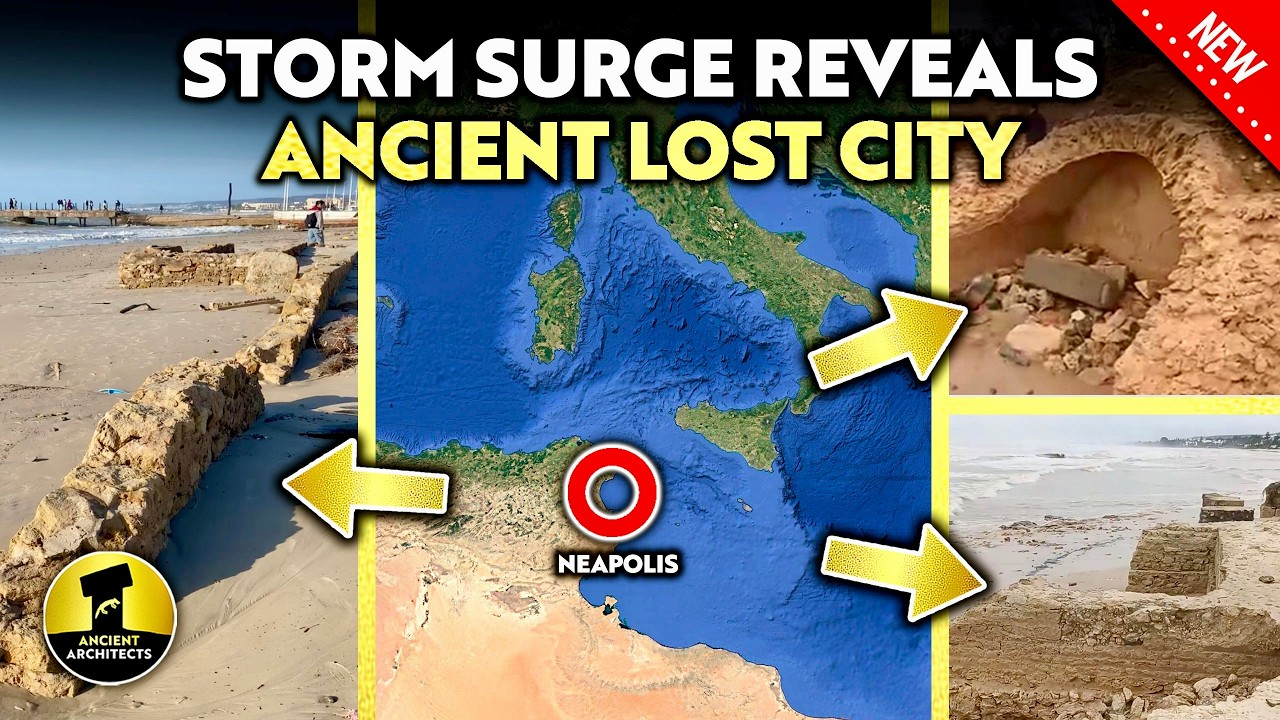
What captured global attention wasn’t only the storm’s devastation, but what the freak weather uncovered: submerged remains believed to belong to the lost ancient city of Neapolis.
Neapolis was once an important Roman-era city, known from historical texts but long thought to be lost beneath the sea. The storm surge and erosion exposed underwater structures, streets, and architectural features that align with ancient descriptions of the city. For archaeologists and historians, this unexpected revelation has offered rare physical evidence of a place that had lived largely in legend.
Extreme weather events are often discussed only in terms of destruction, but in rare cases like this, they also reshape our understanding of history. Storm Harry reminded us that the past is never truly gone — sometimes it lies hidden just beneath the surface, waiting for the right moment to reappear.
Watch the video below to learn more about the ancient city of Neapolis and exactly what has been discovered: