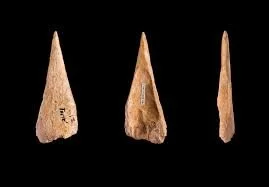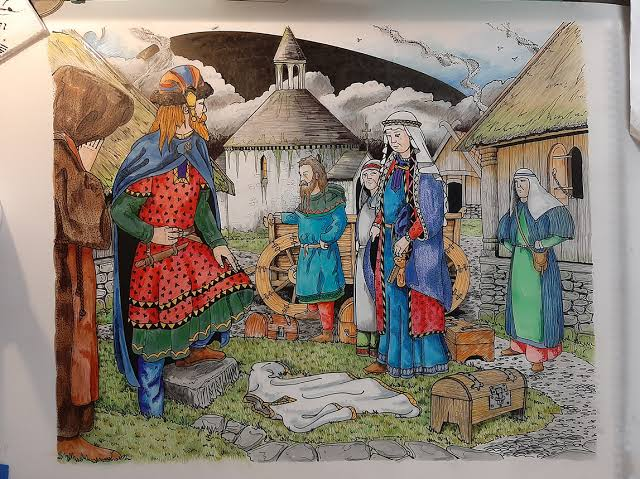
Earl's Bu represents the agricultural foundations of Norse society in Orkney.
While the earls and political leaders of the islands are often remembered through historical narratives, archaeology reveals that their power ultimately depended upon farms, livestock, labor, and control over productive land.
The Meaning of a Norse Farmstead
A Norse farmstead was a complex economic unit.
It could contain:
a main dwelling;
animal shelters;
storage facilities;
workshops;
fields;
and grazing areas.
Agriculture
Orkney's climate favored pastoral farming.
Livestock were central to household survival.
Cattle provided:
meat;
milk;
hides;
and social wealth.
Sheep supplied wool and meat.
Farming Technology
Norse farmers used relatively simple tools compared with modern agriculture.
Important implements included:
iron knives;
sickles;
hoes;
axes;
and wooden tools.
Agriculture required extensive labor.
Marine Resources
Farming was supplemented by the sea.
Fishing provided protein and other resources.
Coastal communities also exploited:
shellfish;
seabirds;
eggs;
and occasionally marine mammals.
Social Hierarchy
The term “Earl's Bu” emphasizes the connection between agriculture and elite power.
An earl's authority depended upon access to productive estates and the ability to collect resources.
A prosperous farm could therefore have political importance.
Trade
Farm production could support trade.
Surplus:
wool;
hides;
livestock;
dried fish;
and other products
could enter wider exchange networks.
Imported goods, meanwhile, provide evidence of Orkney's participation in international commerce.
Household Life
Farmsteads were also homes.
Families cooked, ate, slept, worked, and socialized within these buildings.
Archaeology can reveal this domestic life through hearths, animal bones, tools, pottery, and other remains.
Conclusion
Earl's Bu: Orkney's Viking Farmstead represents the agricultural foundation of Norse society.
The site illustrates an essential historical principle: political power depended upon control of land, livestock, labor, and food production.
The great political centers of Norse Orkney could exist only because hundreds of farming communities sustained.