Refurbished monuments to Amenhotep III unveiled in Luxor
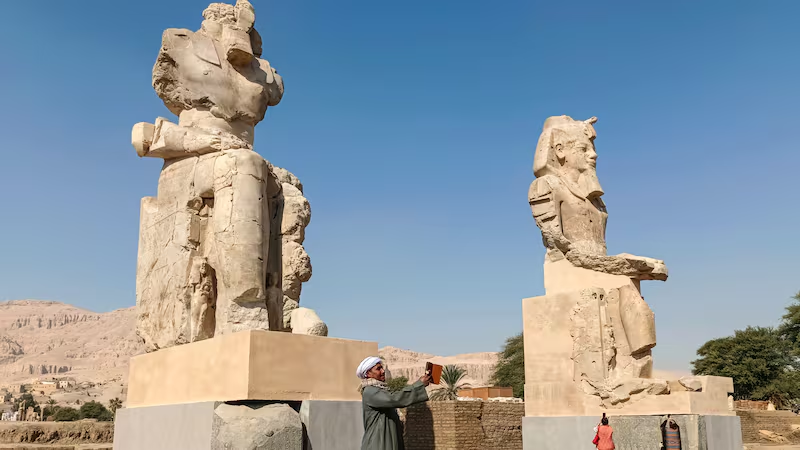
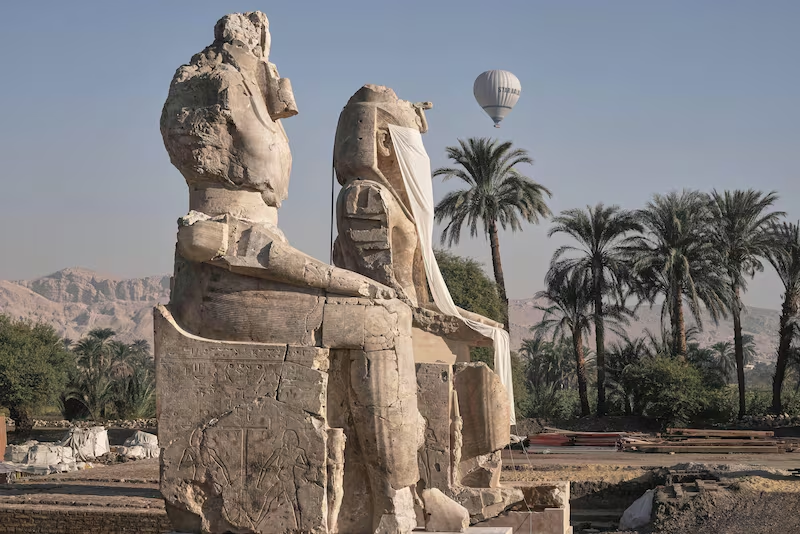
Egypt has unveiled two restored statues of Pharaoh Amenhotep III in Luxor, more than 3,200 years after they were toppled by an earthquake, in an effort to boost tourism.
The giant alabaster Colossi of Memnon were reassembled in a 20-year renovation project. Mohamed Ismail, secretary-general of the Supreme Council of Antiquities, described the event as a celebration of the completion and re-erection of the statues.
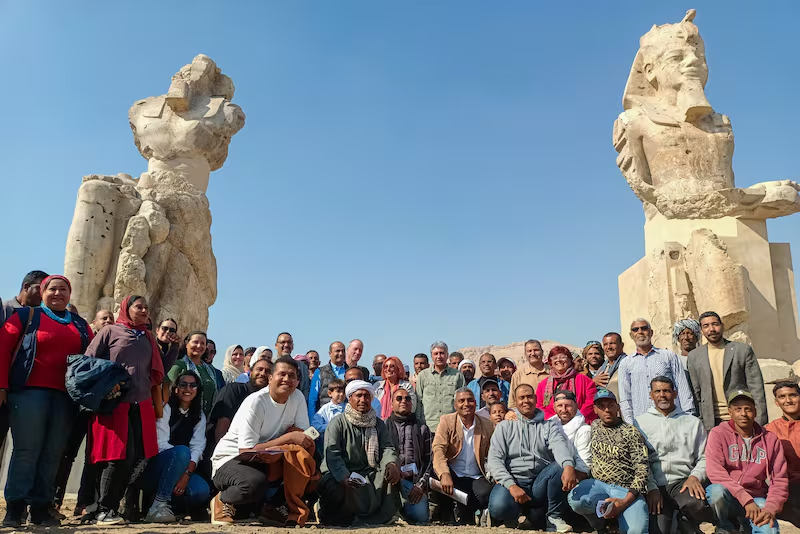
Mr. Ismail emphasized the statues’ importance to Luxor, a city famed for its ancient temples and artifacts, noting that the restoration aims to “revive how this funerary temple of King Amenhotep III looked long ago.”
Amenhotep III, a notable pharaoh of the New Kingdom—Egypt’s most prosperous era—ruled from 1390 to 1353 BC, a period marked by peace, wealth, and major construction projects, including his funerary temple where the Colossi of Memnon stand.
The colossi were toppled by a powerful earthquake around 1200 BC, which also damaged the temple. Over time, the statues were fragmented and partially quarried, with some blocks reused in other temples. Archaeologists have now retrieved and reassembled these blocks to restore the colossi, according to the Antiquities Ministry.
In the late 1990s, an Egyptian-German team led by German Egyptologist Hourig Sourouzian began work in the temple area, focusing on restoring the colossi. “This project aims … to save the last remains of a once-prestigious temple,” she said.
The statues depict Amenhotep III seated with his hands on his thighs, facing east toward the Nile and the rising sun. He wears a headdress topped with double crowns and a pleated royal kilt, symbols of his divine authority. Two smaller statues at his feet represent his wife, Tiye.
Measuring 14.5 and 13.6 metres, the colossi stand at the entrance to the king’s temple on the Nile’s western bank. They were carved from Egyptian alabaster sourced from Hatnub quarries in Middle Egypt.
The Luxor unveiling took place six weeks after the opening of the long-delayed Grand Egyptian Museum, a major government project aimed at boosting tourism and supporting the economy. The museum is located near the Giza Pyramids and the Sphinx.
Egypt’s tourism, heavily reliant on its pharaonic heritage, suffered during years of political unrest following the 2011 protests and the coronavirus pandemic. Recent recovery efforts have been aided by tourists from countries such as Russia and Ukraine, despite ongoing geopolitical tensions.