Introduction
The Minoan civilization of Bronze Age Crete is known for its palatial architecture, elaborate pottery, metalworking, religious imagery, and extensive maritime connections. Food production and the management of agricultural resources were also essential parts of Minoan economic life.
Honey was particularly valuable in the ancient Mediterranean. It served as a sweetener, food ingredient, preservative, and possible component of religious offerings. Beeswax also had practical uses in sealing, modeling, lighting, and craft production.
The idea of honeycomb molds discovered in a cellar in Heraklion raises an interesting archaeological question: how might ancient Cretans have processed, stored, or represented honey and other bee products?
There is no established basis for identifying a particular modern Heraklion cellar as the location of a Minoan honeycomb workshop. Nevertheless, archaeological evidence from Crete and the wider Aegean provides a useful foundation for exploring the subject.
1. Honey in Minoan Society
Honey was an important natural product in ancient Mediterranean economies.
Before the widespread availability of refined sugar, honey provided a concentrated source of sweetness. It could be consumed directly, mixed with other ingredients, or used in food preparation.
In Bronze Age Crete, honey may also have had ceremonial significance. Offerings and food-related practices were important elements of religious activity, although the precise role of honey in individual Minoan rituals must be established through contextual evidence.
Honey production would have depended on knowledge of seasonal flowering, bee behavior, suitable habitats, and the collection of honeycomb.
2. Evidence for Ancient Beekeeping in Crete
Archaeological and iconographic evidence provides information about the importance of bees and bee products in Minoan culture.
Bees appear in Aegean artistic and symbolic traditions, while archaeological finds associated with beekeeping offer clues about the management of honey-producing insects.
Small ceramic vessels and specialized containers may have been used to store honey or other products, although identifying their contents requires residue analysis.
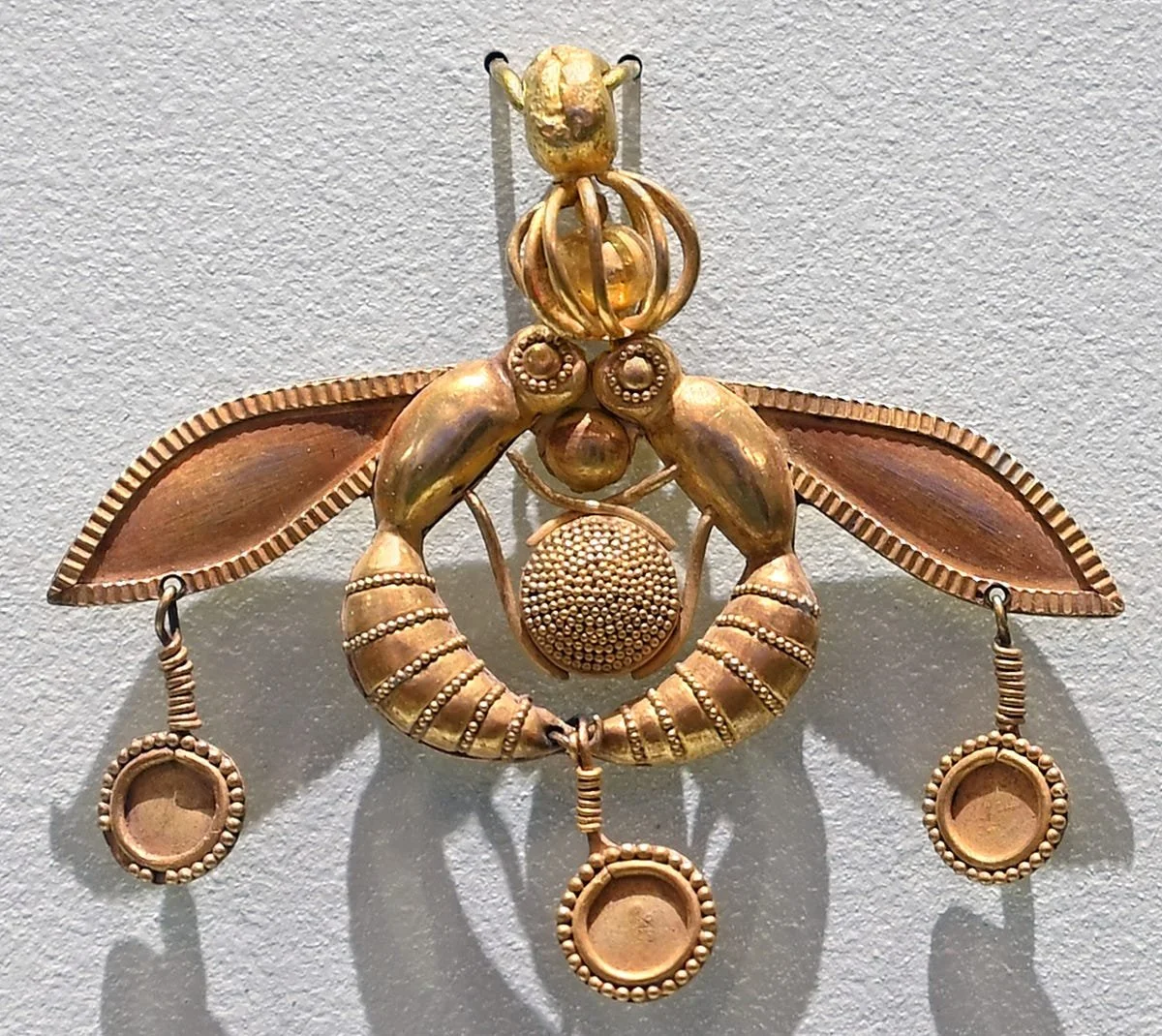
The famous gold pendant depicting bees from the Malia region demonstrates the cultural importance of bee imagery in Minoan art. It should not, however, be interpreted as direct evidence for a particular honey-production workshop.
3. Understanding Honeycomb and Mold Technology
Honeycomb is produced naturally by bees using wax secreted by worker bees.
A mold used to create an artificial honeycomb would therefore serve a different purpose from a container used to store natural honey.
Archaeologists must distinguish among several possibilities: equipment for processing honey, vessels for storing honey, molds for producing wax objects, and decorative objects depicting comb patterns.
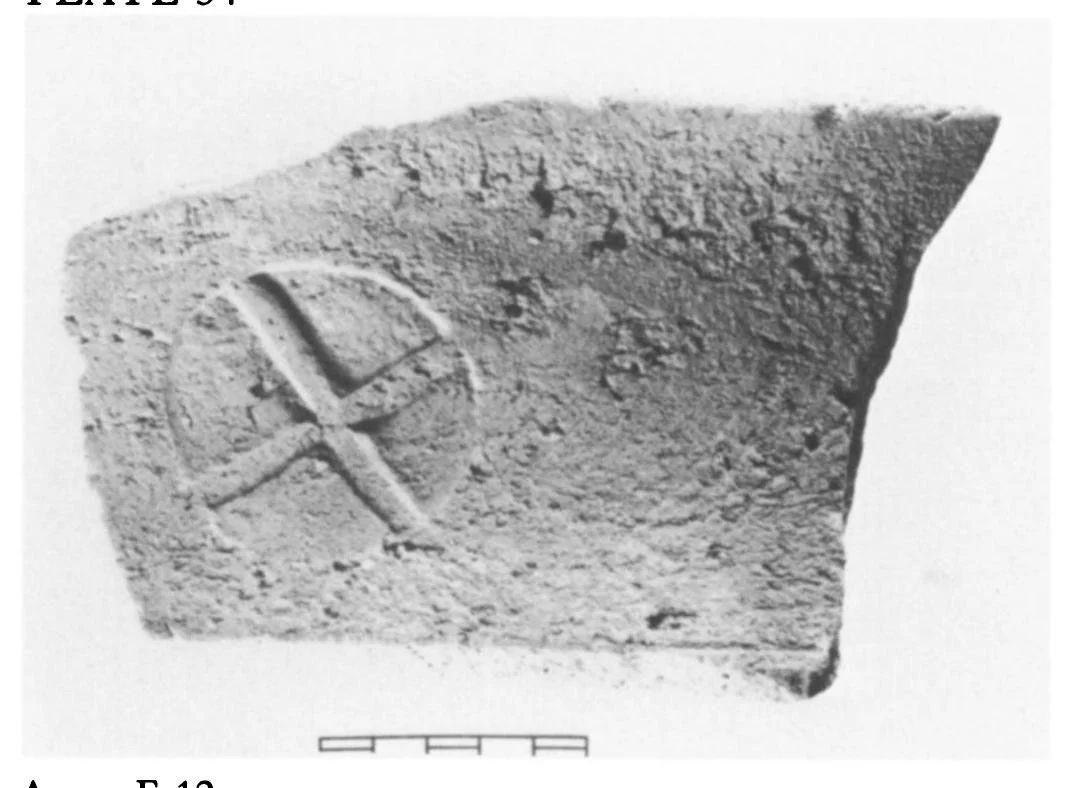
A ceramic object with repeated hexagonal impressions might resemble honeycomb, but its function cannot be determined from appearance alone.
The interpretation would require evidence of manufacturing traces, residues, use-wear, and comparable objects from securely dated contexts.
4. Beeswax and Minoan Craft Production
Beeswax was a versatile material in the ancient world.
It could be used for sealing containers, waterproofing surfaces, modeling small objects, and preparing materials for metalworking through lost-wax casting.
In the lost-wax technique, an object was modeled in wax and covered with a heat-resistant mold. The wax was then removed, leaving a cavity into which molten metal could be poured.
This technology provides a plausible connection between beekeeping products and Minoan craft production.
However, an object used in lost-wax casting should not be described as a honeycomb mold simply because it contains impressions or patterned surfaces.
5. The Archaeological Context of Heraklion
Modern Heraklion occupies an area with a long history of human occupation.
The wider region contains important Minoan archaeological sites, including Knossos, while the city itself has undergone extensive development through ancient, medieval, Ottoman, and modern periods.
Cellars and underground storage spaces can sometimes preserve older architectural remains beneath later buildings.
Yet a cellar's location in a historically important region does not establish that its contents are Minoan. Secure stratigraphy, diagnostic artifacts, and scientific dating are necessary.
6. Identifying Ancient Honey Residues
Chemical residue analysis can help determine whether a vessel or object was associated with honey or other bee products.
Researchers may investigate organic compounds, wax residues, and traces of substances that could have been stored or processed in a container.
Lipid analysis can provide information about certain organic materials, although identifying honey specifically can be difficult because its composition changes over time and may be altered by burial conditions.
Researchers may also compare results with residues from known beekeeping and food-storage contexts.
7. Storage and Processing of Honey
Honey could be stored in ceramic vessels, containers made from organic materials, or other suitable receptacles.
The choice of container would depend on local manufacturing traditions, availability of materials, and intended use.
Honeycomb might be processed by separating wax from honey, filtering impurities, or storing the comb intact.
Archaeological vessels with sticky residues or unusual surface deposits could potentially be associated with these activities, but chemical confirmation is necessary.
8. Honey and Religious Practices
Honey may have been used in offerings, ceremonial meals, or other forms of religious activity in ancient Mediterranean societies.
Its natural sweetness and association with bees could have contributed to symbolic meanings involving abundance, fertility, and nourishment.
However, the exact meaning of honey in Minoan religious practice remains difficult to reconstruct.
Researchers should avoid assigning specific religious interpretations to an artifact without supporting archaeological, iconographic, or textual evidence.
9. Conservation of Organic Residues
Organic materials such as wax and honey-related residues can survive under certain archaeological conditions, but their preservation varies considerably.
Heat, moisture, microbial activity, and soil chemistry may alter their composition.
When residues are discovered, conservators and archaeometric specialists must document their condition before sampling.
Careful laboratory analysis can provide information that is no longer visible through ordinary inspection.
Conclusion
The study of possible Minoan honeycomb molds in Heraklion offers an opportunity to explore the relationship between beekeeping, food production, and craft technology in Bronze Age Crete.
Honey and beeswax could have served several economic and cultural purposes, from food storage to metalworking and ritual activities.
Although a specific discovery in a Heraklion cellar remains unverified, archaeological evidence from Minoan Crete provides a strong basis for investigating ancient bee-product technologies. The combination of residue analysis, artifact study, and secure excavation context is essential for identifying their original functions.