Introduction
Gnezdovo, located near modern Smolensk in western Russia, was one of the most important archaeological settlements associated with the tenth-century world of early Rus'.
The site developed near the Dnieper River and occupied a strategically important position along routes connecting the Baltic Sea with Byzantium and the Black Sea.
Gnezdovo's importance comes from its extraordinary combination of settlement remains, workshops, imported objects, weapons, jewelry, and burial mounds.
Together, these discoveries reveal a society deeply connected to long-distance trade.
The Dnieper Trade Route
The Dnieper River was one of the great transportation corridors of medieval eastern Europe.
It connected northern regions with the Black Sea.
Merchants and travelers could move south toward Byzantine territories and the Black Sea, while goods and cultural influences could travel north.
Gnezdovo was positioned directly along this network.
A Major Commercial Settlement
During the tenth century, Gnezdovo developed into a substantial settlement.
Its population participated in trade and specialized craft production.
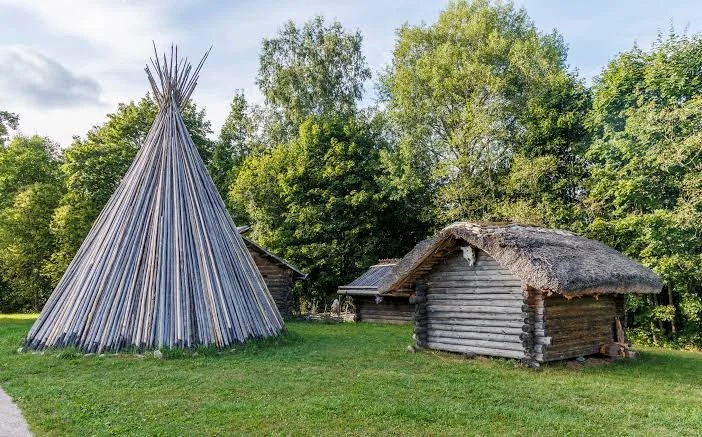
The site contained residential areas, workshops, and other structures associated with economic activity.
Its size and diversity distinguish it from an ordinary rural settlement.
Scandinavian Connections
Gnezdovo contains numerous artifacts associated with Scandinavian culture.
Weapons, jewelry, and other objects demonstrate contact with Scandinavia.
Scandinavian merchants and warriors were likely among the people moving along the Dnieper trade route.
At the same time, local Slavic and other eastern European populations were also present.
Byzantine Connections
The southern trade routes brought Gnezdovo into contact with Byzantium.
Archaeologists have discovered objects reflecting Byzantine influence.
Such finds demonstrate that cultural exchange occurred alongside commercial exchange.
The movement of luxury objects also provides evidence for the wealth generated by long-distance trade.
Burial Mounds
One of Gnezdovo's most distinctive features is its extensive collection of burial mounds.
These mounds, or kurgans, preserve evidence of burial practices among the community.
Grave goods can include:
weapons;
jewelry;
tools;
imported objects;
household equipment;
personal ornaments.
These artifacts help archaeologists reconstruct social status, cultural identity, and trade connections.
Weapons and Warriors
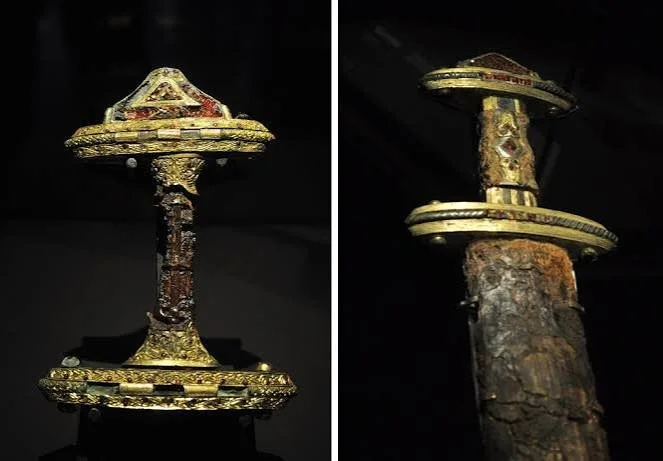
Weapons discovered at Gnezdovo indicate the presence of a warrior population.
Swords, spearheads, axes, shields, and other equipment reflect the military culture of the period.
However, warriors were not necessarily independent raiders.
They could also function as guards, political retainers, merchants, or members of elite households.
Craft Production
Gnezdovo was an important manufacturing center.
Craftspeople produced objects from iron, bronze, silver, bone, antler, and other materials.
Metalworking was particularly important.
The discovery of furnaces, slag, tools, and unfinished objects demonstrates local production.
Silver and Coinage
Silver objects and coins provide valuable evidence of Gnezdovo's participation in international exchange.
Coins could originate from different regions, including Islamic territories and Byzantium.
Their presence demonstrates the enormous geographical reach of tenth-century trade.
The Multicultural Character of Gnezdovo
Perhaps the most important lesson from Gnezdovo is that early Rus' society was culturally diverse.
Scandinavian, Slavic, Finnic, Baltic, Byzantine, and other influences could intersect along major trade routes.
Cultural identity was not necessarily fixed.
People adopted objects, technologies, artistic styles, and customs from communities with which they interacted.
Political Significance
Gnezdovo's location along the Dnieper route made it strategically important.
Control over such settlements allowed emerging political authorities to influence trade.
The relationship between Gnezdovo and Smolensk remains an important subject of archaeological and historical research.
The site clearly belonged to a broader regional system of political and economic power.
Archaeological Importance
Gnezdovo is one of the most important archaeological sites for understanding tenth-century eastern Europe.
Unlike written chronicles, which tend to focus on rulers and major political events, archaeology reveals the activities of merchants, craftspeople, warriors, and ordinary residents.
The combination of settlement evidence and burial archaeology is particularly valuable.
Conclusion
Gnezdovo was one of the great crossroads of the early medieval eastern European world.
Its location along the Dnieper connected the Baltic with Byzantium and the Black Sea.
Its workshops reveal sophisticated craft production, while its burial mounds preserve evidence of social hierarchy, warfare, and cultural interaction.
The site's archaeological record demonstrates that the formation of early Rus' was driven not only by political rulers but also by merchants, craftspeople, travelers, and communities participating in enormous international networks.
Gnezdovo therefore stands as one of the clearest archaeological examples of how trade helped shape the medieval world of eastern Europe.