Introduction
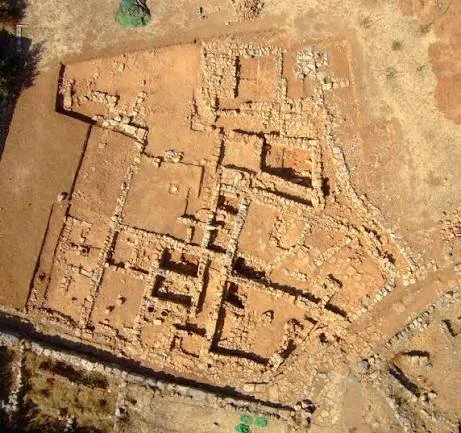
Knossos is one of the most important archaeological sites of Bronze Age Crete. Its monumental architecture, administrative records, wall paintings, and extensive material culture provide valuable evidence of Minoan society.
Writing and recordkeeping played important roles in the administration of the palace and associated communities. The Linear A script, which remains undeciphered, and the later use of Linear B provide evidence of complex systems of communication and information management.
One intriguing archaeological subject is the possibility of small stones used for preparing or holding writing materials in a side yard near Knossos.
The term "ink-stone" requires careful definition. It could refer to a stone ink container, a surface used for grinding pigments, or another object associated with writing. A specific Minoan ink-stone discovery in a Knossos side yard should not be presented as verified without excavation records.
This article examines writing technology, pigment preparation, and the archaeological challenges of identifying such objects.
1. Writing in Minoan Crete
Minoan Crete developed sophisticated systems of administration and recordkeeping during the Bronze Age.
The Linear A script was used by Minoan communities, particularly in administrative and religious contexts. Its language remains undeciphered.
During the Late Bronze Age, Linear B became associated with Mycenaean administration on Crete and elsewhere in the Aegean.
Clay tablets provide much of the surviving evidence for these writing systems.
The existence of written administration raises important questions about the tools, materials, and working environments used by ancient scribes.
2. Clay Tablets and Writing Equipment
Many Minoan and Mycenaean administrative records were written on clay tablets.
These tablets were commonly inscribed using pointed tools while the clay was still moist.
They did not require liquid ink in the same way that papyrus or parchment manuscripts did.
This distinction is essential when interpreting possible writing equipment from Bronze Age Crete.
A stone object associated with writing might have been used for preparing pigments, grinding materials, or another activity rather than holding ink for written documents.
3. What Could an Ink-Stone Be?
The expression "ink-stone" can describe several different objects.
A stone ink container might have a depression or cavity designed to hold a liquid writing medium.
A grinding stone could be used to prepare pigments by crushing mineral materials into fine powder.
A small stone palette might provide a surface for mixing or applying pigments.
These objects have different functions, and their identification depends on physical characteristics and archaeological context.
Researchers should avoid using the term "ink-stone" as a definitive classification until supporting evidence is available.
4. Pigments and Minoan Artistic Production
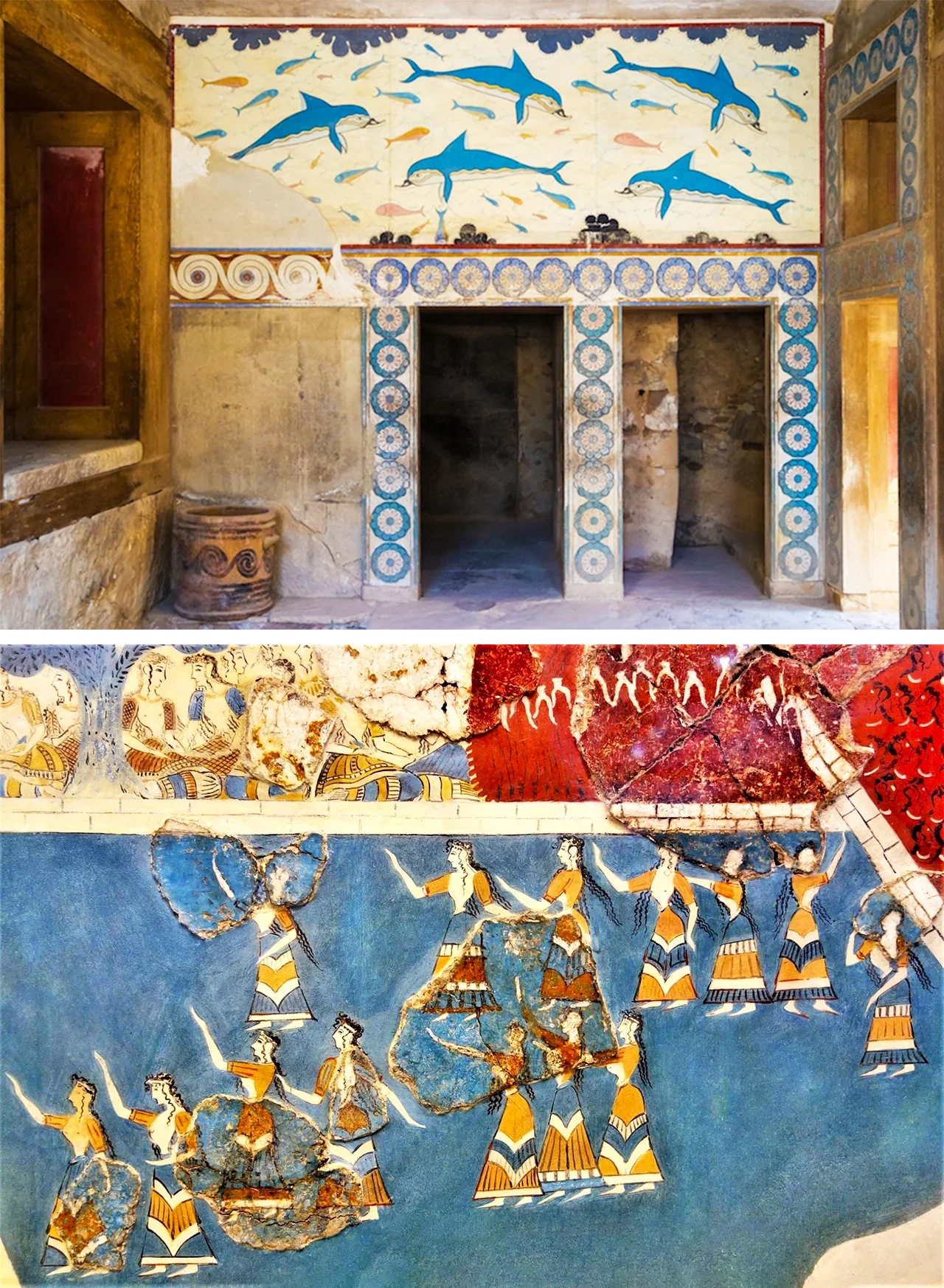
Minoan art made extensive use of colored pigments.
Wall paintings, pottery decoration, and other artistic traditions required materials that could produce stable and recognizable colors.
Mineral pigments included materials that could generate red, yellow, black, and other shades.
Preparing these substances often involved grinding, mixing, and applying them to suitable surfaces.
Small stone tools and palettes could therefore have played a role in pigment preparation, even if they were not used for writing.
5. The Archaeological Importance of a Side Yard
Side yards and courtyards were important spaces within ancient settlements.
They could serve as work areas, storage spaces, circulation zones, or locations for domestic and craft activities.
A small collection of tools found in a yard might indicate localized production.
However, archaeological deposits in outdoor spaces are often disturbed by later construction, weathering, and movement of materials.
The position of an artifact must be examined in relation to the surrounding architecture and stratigraphy.
6. Identifying Writing-Related Objects
Researchers investigate possible writing equipment through shape, material, surface finish, and use-wear.
A stone object with a shallow cavity might have been used to hold pigment, liquid, or another substance.
Microscopic examination can reveal traces of grinding or repeated abrasion.
Chemical residue analysis may identify mineral pigments or other compounds preserved within the object's surface.
Comparisons with securely identified ancient palettes and containers can help establish possible functions.
7. Scientific Analysis of Residues
Residue analysis can provide valuable information about the materials processed using stone objects.
X-ray fluorescence may identify the elemental composition of mineral pigments.
Raman spectroscopy can help characterize certain pigment compounds.
Microscopic examination can reveal particles embedded in surface depressions.
However, contamination from soil, modern handling, and later use can complicate the results.
Researchers must interpret chemical evidence alongside the object's archaeological context.
8. The Organization of Minoan Craft Production
Minoan communities developed a range of specialized crafts, including pottery production, metalworking, textile manufacture, and artistic decoration.
Some activities were associated with palace institutions, while others may have been organized through household production or independent workshops.
The discovery of pigment-processing tools near an administrative or residential building could contribute to understanding how artistic work was organized.
However, proximity to a palace does not automatically demonstrate centralized production or royal ownership.
9. Preservation and Future Investigation
Small stone objects are relatively durable, but their surface details can be damaged through erosion, cleaning, and improper handling.
Researchers document suspected tools using photography, microscopy, and three-dimensional scanning.
Residue sampling should be limited and conducted using appropriate contamination controls.
Further comparisons with objects from other Minoan sites may help clarify whether similar tools were used for pigment preparation, writing-related activities, or other craft processes.
Conclusion
The possibility of Minoan ink-stones in a side yard near Knossos offers an interesting opportunity to explore the material technologies behind ancient writing and artistic production.
Although clay tablets were central to Minoan administrative recordkeeping, pigment preparation and other forms of material processing may have involved small stone tools.
A particular ink-stone discovery remains unverified without archaeological documentation. Careful examination of object form, residues, wear patterns, and context is necessary before assigning a precise function.