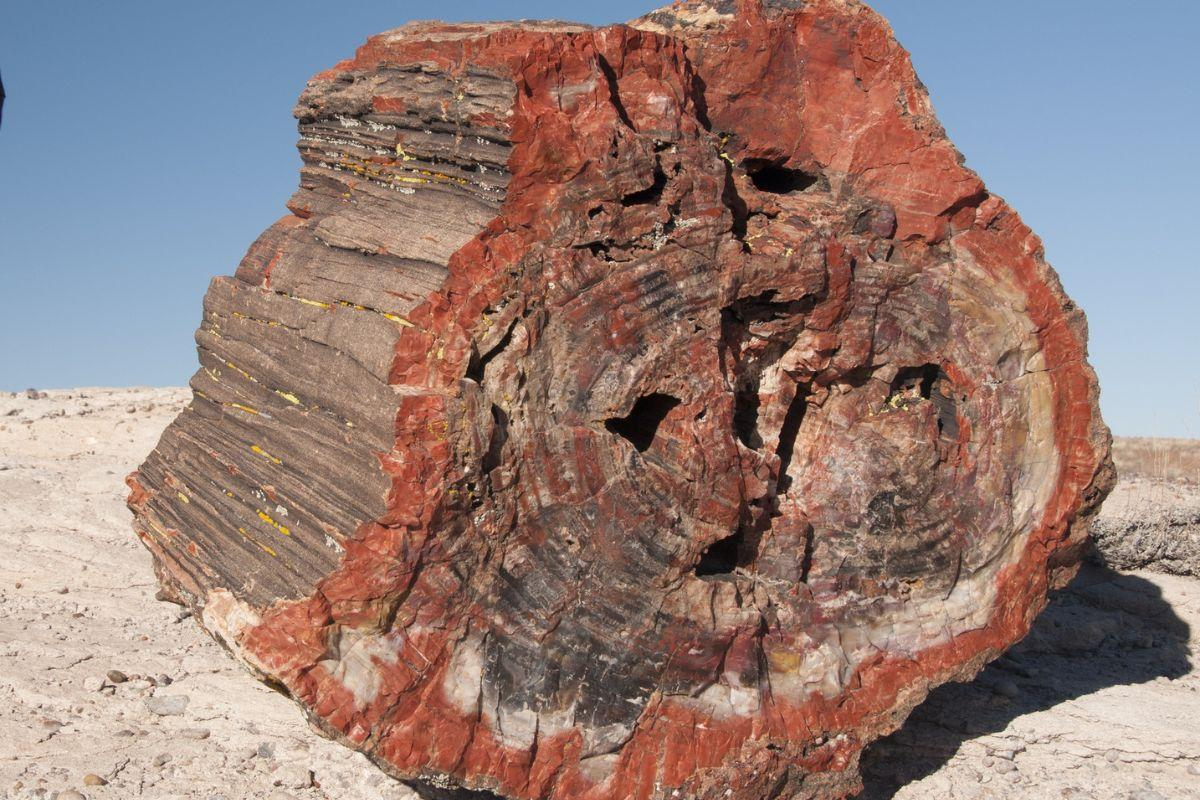
Petrified wood and the preservation of ancient forests
Petrified wood is formed when buried wood is gradually replaced or impregnated by minerals, allowing its structure to survive long after the original organic material has decayed. This process can preserve features such as growth rings, cellular structure, and the general shape of the original tree.
Petrification commonly occurs when wood is buried in sediment and exposed to mineral-rich groundwater. Over long periods, mineral deposition and chemical changes may preserve the structure of the wood in a fossilized form.
The resulting specimen can retain remarkably detailed features of the original plant, providing information about ancient vegetation and environmental conditions.
Geological conditions required for petrification
The preservation of petrified wood depends on several factors. Rapid burial may protect the wood from decay, while groundwater carrying dissolved minerals can contribute to its preservation.
The mineral composition of the petrified material varies. Silica is common in petrified wood, although other minerals may also occur depending on the geological environment.
The process does not necessarily preserve every part of the original tree equally. Different conditions can produce varying degrees of mineral replacement and structural preservation.
The geological landscape around Meteora
Meteora is famous for its towering rock formations, monasteries, and distinctive geological landscape. The region's rocks and landforms reflect long-term processes involving sediment deposition, geological uplift, erosion, and weathering.
The presence of petrified trees near the base of Meteora, as suggested by the title, would require independent geological verification. Petrified wood is not established simply by the presence of unusual rock fragments or tree-like shapes.
Scientific significance of a hypothetical discovery
If petrified wood were found in a securely documented geological context near Meteora, it could contribute to the study of ancient vegetation, sedimentary environments, and the region's geological history.
Researchers would need to examine the specimens, identify their mineral composition, document their structure, and determine the geological formation in which they occur.
Such a discovery would be valuable because fossilized wood can provide evidence of past ecosystems, climatic conditions, and the environmental history of a region.