Basalt and volcanic rock formation
Basalt is a dark-colored volcanic rock commonly formed when relatively low-viscosity lava cools at or near the Earth's surface.
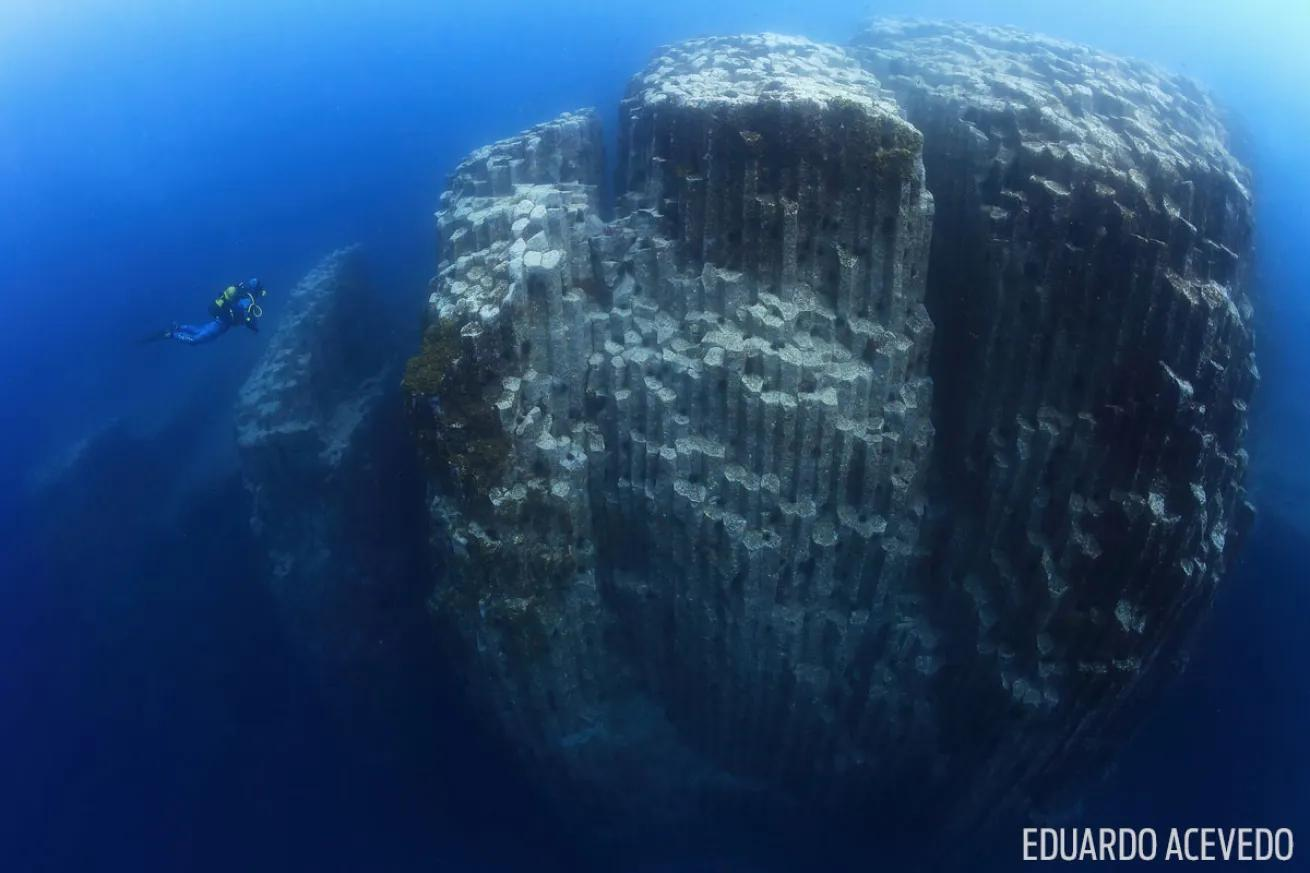
Under certain cooling conditions, basalt can develop columnar jointing. This phenomenon occurs when contraction during cooling produces fractures that divide the rock into polygonal columns.
Columnar joints are often associated with volcanic lava flows, although similar structures can occur in other types of igneous rock.
The formation of columnar structures
As lava cools, it contracts. If the cooling and contraction occur relatively evenly, fractures can develop in patterns that create columns.
The shape and size of the columns depend on several factors, including the cooling rate, the thickness of the lava body, the composition of the rock, and the thermal conditions.
Many columnar formations display polygonal cross-sections, frequently hexagonal, but the geometry can vary.
Submerged geological environments
Basalt columns can occur along coastlines and underwater where volcanic formations have been affected by marine processes, sea-level changes, erosion, or the inundation of former land surfaces.
A submerged formation may be difficult to interpret because marine erosion, sediment accumulation, biological growth, and water movement can obscure its structure.
The presence of column-like rocks in a Saronic cove would not automatically establish that they are basalt. Their composition and geological origin would need to be examined.
Geological importance
A hypothetical submerged basalt formation in the Saronic Gulf would be significant because it could contribute to understanding the regional geological history, volcanic processes, and changes in coastal environments.
Geologists would investigate the rock through field observations, sampling where permitted, petrographic analysis, mapping, and comparison with regional geological formations.
The subject also illustrates the importance of underwater geological research, which can reveal formations that are not easily accessible through land-based surveys.