New evidence of wolves and humans living together on Swedish island points to likely prehistoric domestication
Prehistoric wolf remains discovered on a Baltic island indicate that humans may have cared for wolves thousands of years before dogs fully domesticated, according to a recent study.
Archaeologists uncovered the remains, dated between 3,000 and 5,000 years ago, in the Stora Förvar cave on Stora Karlsö, Sweden. The cave showed extensive use by Stone Age and Bronze Age seal hunters and fishers, researchers from Stockholm University reported.
Since the 2.5 sq km island had no native land mammals, the wolves were likely brought there by humans, probably via boats.
While dogs evolved from wolves during the Old Stone Age, the timing and number of domestication events remain unclear. Some theories suggest wolves gradually adapted to human presence, while others propose humans hand-reared wolf pups from an early age. No remains of wolves from the earliest stages of domestication have yet been found.
The new findings suggest that humans and wolves coexisted on Stora Karlsö, pointing to early human efforts at wolf domestication.
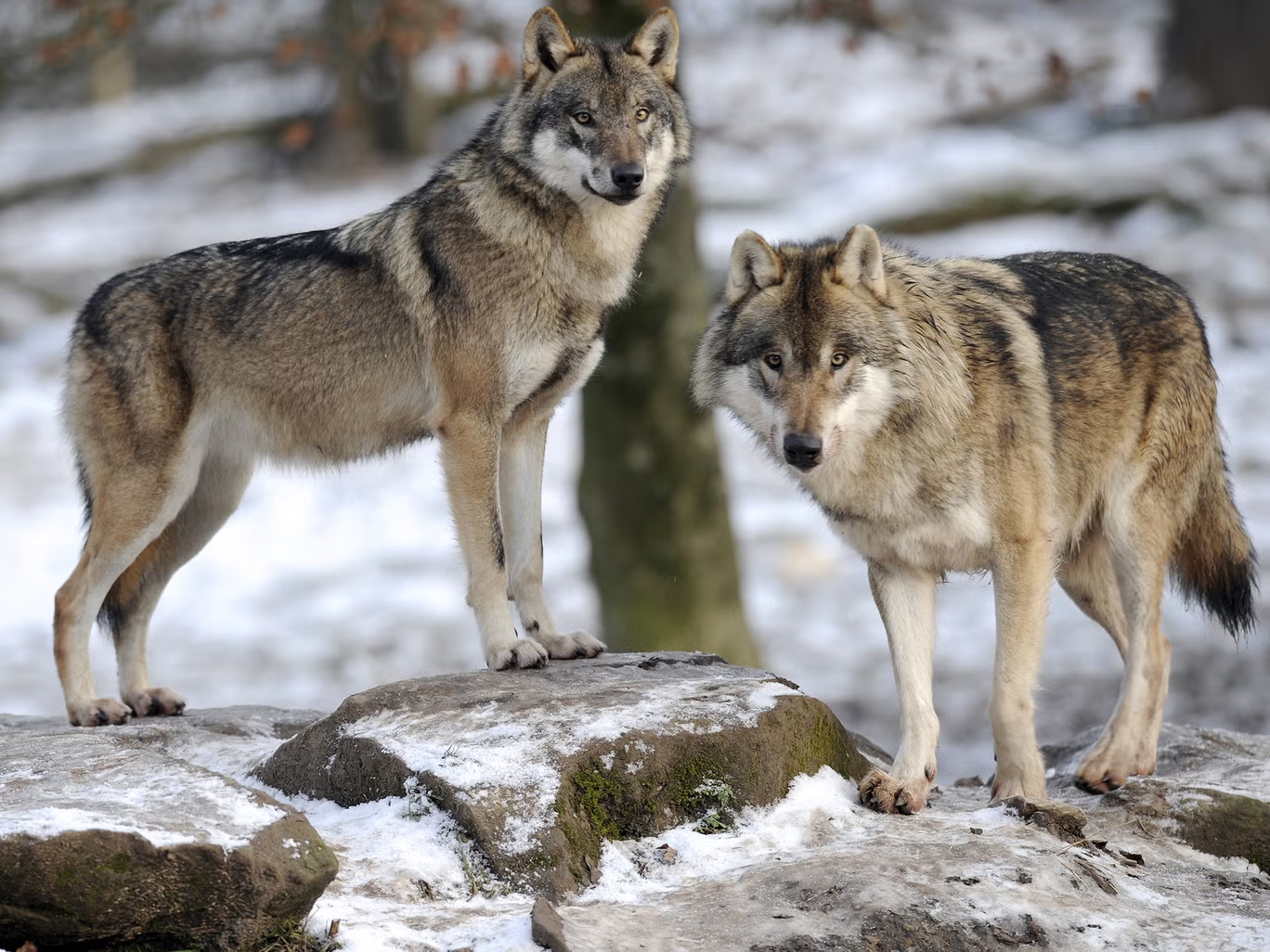
Modern domesticated dogs are theorised to be the ancestors of Grey wolves
DNA analysis of two bones from the cave confirmed the animals were wolves, not dogs, and several features indicate they had close contact with humans.
One wolf appeared to have survived a limb injury that would have made hunting difficult, suggesting it received human care.
“This discovery of wolves on a remote island is completely unexpected,” said Linus Girdland-Flink from the University of Aberdeen, a co-author of the study published in PNAS.
“Not only did they have ancestry similar to other Eurasian wolves, but they also seemed to live alongside humans, eating their food, in a location they could only have reached by boat.”

A view from the Stora Förvar cave on the island of Stora Karlsö in Sweden
Although it’s unclear whether the wolves were tamed, kept in captivity, or managed differently, the findings show that human–wolf relationships were more complex than previously thought.
The interactions at the cave suggest close cooperation, pointing to early domestication experiments that didn’t directly lead to modern dogs, scientists say.
“While we can’t rule out that these wolves had low genetic diversity for natural reasons, it indicates humans were interacting with and managing wolves in ways we hadn’t considered,” said Anders Bergström from the University of East Anglia.
“This case raises the possibility that, in certain environments, humans could keep wolves in their settlements and found value in doing so,” added Pontus Skoglund from the Francis Crick Institute.