Discovery highlights ancient city of Amos' role as key cultural and commercial hub linking Near East, Mediterranean
MUGLA, Türkiye
Archaeologists have unearthed a silver necklace depicting a lion and an eight-pointed star, believed to represent the Assyrian goddess Ishtar, at the ancient city of Amos in southwestern Türkiye.
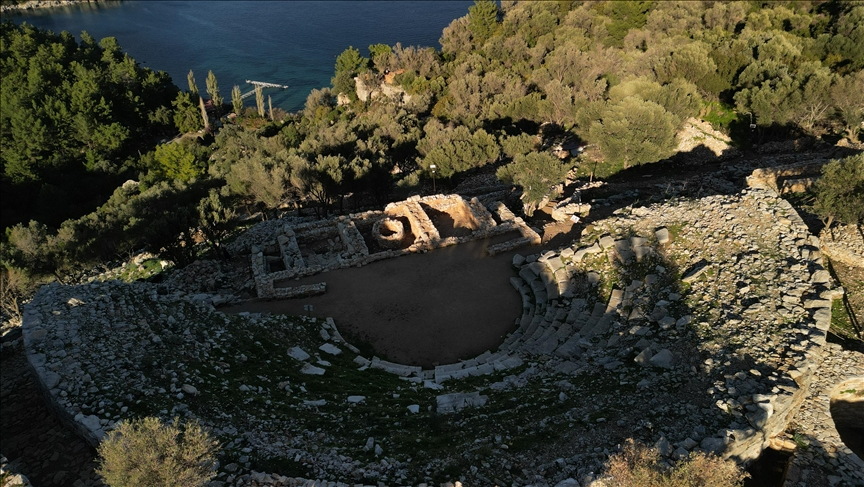
The 2,200-year-old site on Asarcik Hill in the Marmaris district has been under continuous excavation throughout 2025, led by Mehmet Gurbuzer of Mugla Sitki Kocman University. Gurbuzer noted that each excavation season yields exciting discoveries, with this year’s find highlighting Amos’s cultural, economic, and commercial significance.
Ishtar—known as Inanna in Sumerian culture—symbolizes power, and the necklace suggests that Amos was closely connected to major civilizations of its time. Advanced cultural elements from the Near East reached the Mediterranean through trade and military relations by the 7th century BCE, positioning Amos as a strategic port city.
Excavations are set to continue in 2026, focusing on residential areas and the Temple of Apollo Samnaios. The site, officially recognized by a 2022 presidential decree, is part of the Ministry of Culture and Tourism’s Heritage for the Future Project, supported by local organizations including the Marmaris Chamber of Commerce and Marmaris Municipality.
Amos was first excavated in 1948 by British archaeologist G.E. Bean. Early finds, including lease contracts documenting land rentals, helped establish the city’s importance in ancient economic and academic contexts.