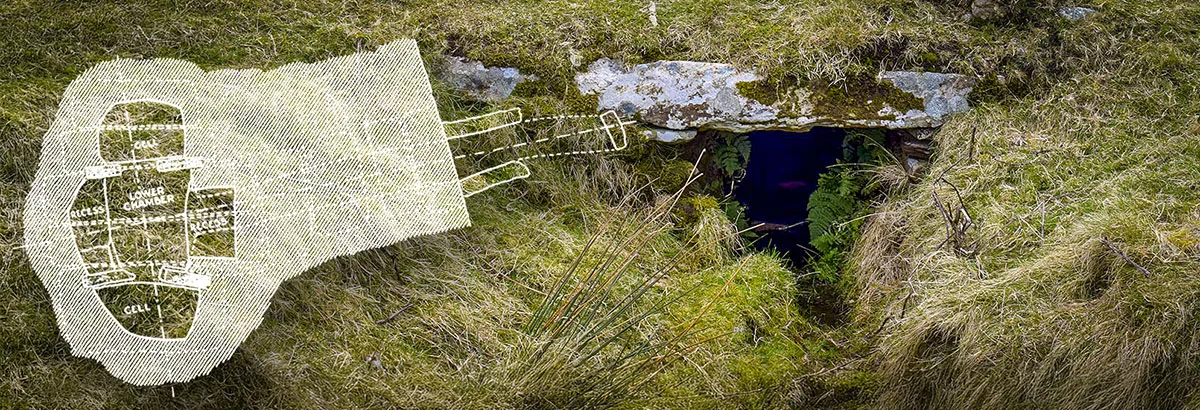
Huntersquoy on Eday belongs to Orkney's extraordinary tradition of Neolithic chambered tombs.
The monument is particularly interesting because it is associated with the architectural traditions often classified within the Orkney-Cromarty group of chambered cairns.
The Orkney-Cromarty Tradition
Archaeologists use architectural classifications to compare prehistoric monuments.
Orkney-Cromarty chambered cairns generally feature distinctive internal arrangements.
These may include:
a passage;
a main chamber;
internal compartments;
and stone divisions.
Tomb Architecture
The design allowed communities to organize the internal space.
Different compartments could have served different mortuary purposes.
The exact rituals conducted inside remain unknown.
Burial
The monument was associated with prehistoric funerary practices.
Multiple individuals could be represented within chambered tombs.
This suggests that the monuments were connected to collective memory and ancestry.
Eday's Prehistoric Landscape
Eday is one of Orkney's northern islands.
Its archaeological landscape contains evidence of prehistoric occupation.
The island's environment offered:
agricultural land;
grazing;
marine resources;
and access to surrounding islands.
Monument Building
Stone architecture was particularly suited to Orkney.
Local builders could obtain large quantities of suitable stone.
However, the construction of a chambered tomb still required considerable organization.
Social Meaning
Monuments such as Huntersquoy may have helped communities define their relationship with territory.
A visible tomb could function as an enduring landmark.
It could communicate that a community had ancestral ties to a particular place.
Conclusion
Huntersquoy: Eday's Orkney-Cromarty Tomb illustrates the architectural diversity of Neolithic Orkney.
Its importance lies in demonstrating how prehistoric communities combined stone engineering with collective burial practices and landscape-based identities.
The monument is part of a broader tradition that makes Orkney one of Europe's most important regions for Neolithic archaeology.