Introduction
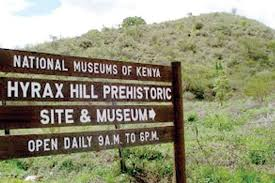
Overlooking the seasonal waters of Lake Nakuru within the Kenyan Rift Valley, Hyrax Hill is a vital, multi-component site that charts thousands of years of human technological and social evolution. First excavated by Mary Leakey in 1937, the site’s deep stratigraphy spans from the late Pastoral Neolithic period (ca. 3,000 years ago) through the Iron Age, serving as a critical global sequence for tracking the dawn of food production and sedentary lifestyles in East Africa. For generations, Hyrax Hill has provided the material baseline for defining early pastoral movements, completely dismantling older notions that early African herders were entirely nomadic and left no permanent mark on the landscape.
The Stratigraphy of Ancestral Veneration and Herd Management
The deep history of Hyrax Hill has been meticulously unpacked through the excavation of its prominent stone features and low earth mounds. The earliest Pastoral Neolithic layers are defined by a series of low stone burial cairns containing human skeletons accompanied by a distinct material toolkit: beautifully carved Savanna Pastoral Neolithic stone bowls, razor-sharp obsidian scrapers, and highly decorated pottery vessels used for milk processing.
As the stratigraphic layers transition into the later Iron Age horizons, the landscape exhibits a profound structural shift. The site reveals dozens of semi-subterranean "Sirikwa holes"—large, circular depressions engineered with stone-walled perimeters and narrow, single-file entrances designed specifically to pen livestock safely against predators. Excavations within these depressions have yielded substantial deposits of domesticated cattle and sheep-goat bones, alongside specialized bao game boards carved directly into nearby flat rock outcrops, providing an intimate look at the daily leisure and socio-economic life of these early herders.
Conclusion
The multi-disciplinary investigation of Hyrax Hill provides a foundational baseline for understanding the long-term history of pastoralism and climate adaptation in East Africa. It proves that thousands of years ago, early African communities were deeply anchored to specific landscapes, investing immense labor into ancestral veneration, stone tomb construction, and specialized livestock architecture. The rich artifact sequences and continuous occupational horizons documented at the site demonstrate a highly adaptable cultural tradition that successfully navigated changing lake levels and environmental shifts over millennia. Ultimately, Hyrax Hill stands as a powerful monument to early African agricultural roots, proving the deep antiquity of complex pastoral life in the Rift Valley.