Introduction
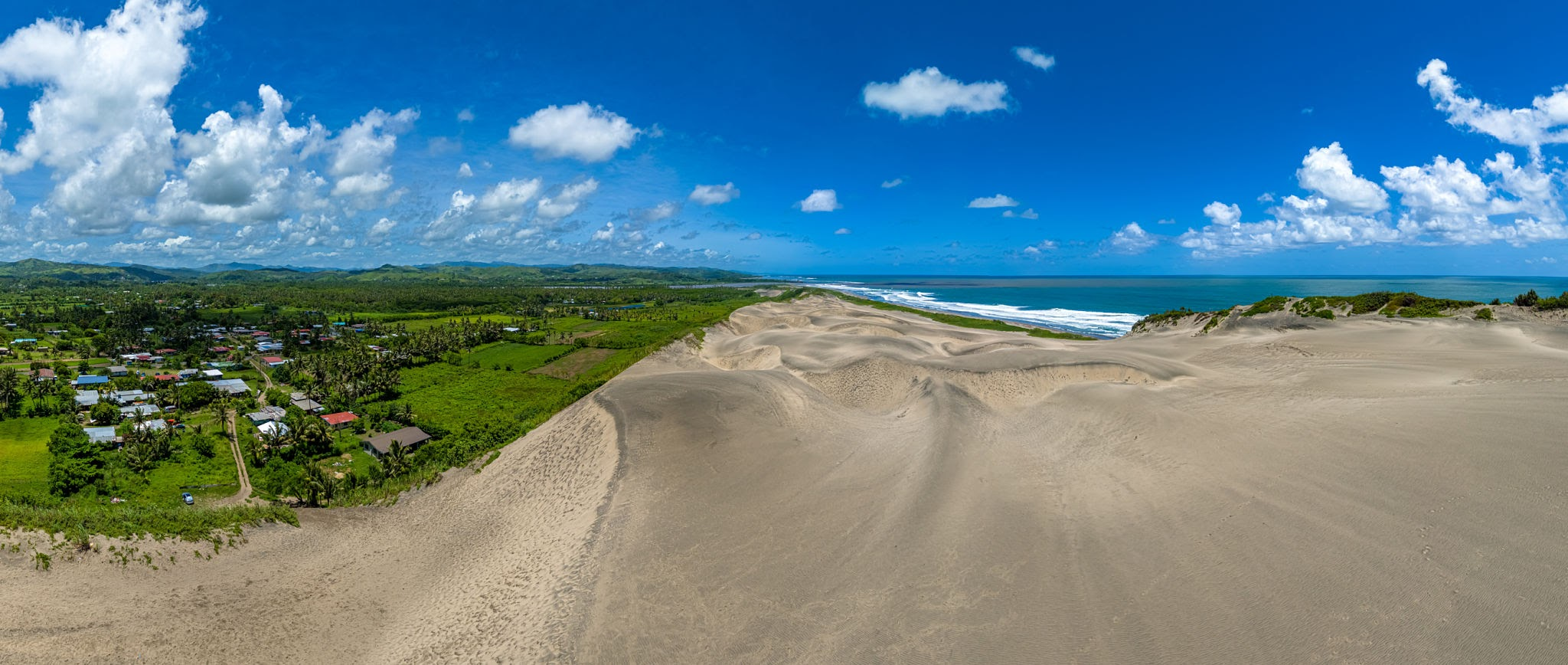
Rising up to 60 meters along the wind-swept southern coast of Viti Levu, the Sigatoka Sand Dunes preserve one of the most structurally complex and extensive archaeological sequences in the entire Pacific. This dynamic, shifting ecosystem contains an incredibly intact cultural record spanning nearly four millennia, marking the very dawn of human expansion into Remote Oceania. While early research treated Oceanic migrations as brief, untraceable events, the systematic excavation of Sigatoka has yielded the largest and best-preserved Lapita-era skeletal assemblage in the Pacific, providing an unparalleled look at the biology, health, and mortuary practices of the region's first seafaring pioneers.
Stratigraphic Horizons and Palaeodemographic Signatures
The immense historical significance of Sigatoka is documented within three distinct, deeply buried cultural horizons exposed by continuous wind erosion. The lowest and oldest layer, dating to approximately 1500 BCE, represents the initial Lapita settlement phase. Here, within highly compacted palaeosols (ancient soils), archaeologists unearhed a spectacular concentration of dentate-stamped pottery fragments, fire pits, and stone adzes.
Directly above this layer lies the monumental Lapita-era cemetery, containing the remains of over 60 individuals buried in highly structured, supine positions. Anthropological and isotopic analyses of these bones have completely transformed our understanding of early Pacific life. Stable isotope testing of teeth indicates that these first settlers possessed a remarkably varied diet, balancing marine foraging with the consumption of early cultivated root crops like taro and yam.
Osteological analysis revealed that these individuals were exceptionally robust and tall, exhibiting skeletal markers consistent with long-distance ocean voyaging, heavy continuous lifting, and intensive deep-water swimming. The burials were systematically aligned with the ancient coastline, indicating a deeply rooted spiritual and ancestral connection to the sea that guided their epic eastward expansion.
Conclusion
The multi-disciplinary investigation of the Sigatoka Sand Dunes provides a foundational baseline for the field of Pacific archaeology. It demonstrates that the initial colonization of Fiji was not a chaotic, accidental landfall, but a highly organized, permanent settlement managed by culturally resilient populations.
The deep stratigraphic horizons and well-preserved skeletal records documented at the site offer an irreplaceable window into early human adaptation and survival across the open ocean. Today, the enduring dunes of Sigatoka stand as a powerful monument to indigenous maritime initiative, revealing the profound human history buried beneath the shifting sands of the Pacific.