Introduction
Discovered accidentally during the expansion of a ferry berth on the western tip of Upolu, the underwater site of Mulifanua represents one of the most critical and technologically significant Lapita locations in the entire South Pacific. Inhabited around 1000 BCE, Mulifanua is the only confirmed early Lapita site found in the Samoan archipelago.
The site presents a unique archaeological landscape: due to tectonic subsidence and rising sea levels, the ancient village now rests completely submerged beneath several meters of coral sand and shallow lagoon water. The discovery of Mulifanua completely shattered previous migration models that placed the dawn of Samoan culture much later, proving that the earliest Lapita navigators colonized the Samoan islands during their initial, rapid push into Western Polynesia.
Submerged Stratigraphy and the Ceramic Record
Unlocking the secrets of Mulifanua required highly specialized underwater archaeological techniques, including controlled scuba excavations, hydraulic dredging, and precise underwater spatial mapping within the active lagoon. Beneath the modern seabed, researchers uncovered a pristine, waterlogged cultural layer packed with thousands of highly diagnostic ceramic fragments.
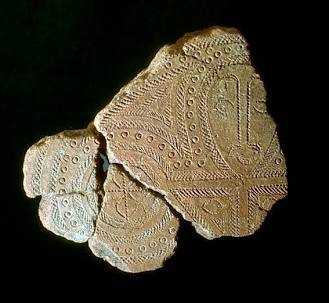
The recovered pottery assemblage stands out for its incredible aesthetic refinement, featuring classic early Lapita dentate-stamping—an intricate technique where geometric motifs, human faces, and abstract symbols were pressed into wet clay using fine-toothed bone or shell stamps before firing.
Petrographic and chemical analysis of the clay paste yielded fascinating insights into early Pacific economics: while most vessels were produced using local Samoan volcanic clays and tempers, a significant portion was manufactured using materials exotic to Upolu. This provides indisputable physical proof that the first inhabitants of Mulifanua maintained active, long-distance voyaging networks, trading ceramics, raw materials, and prestige goods with distant communities in Fiji and Tonga.
The anaerobic, waterlogged environment also successfully preserved organic materials, including carbonized coconut husks, marine shells, and fish bones, mapping out a maritime economy that expertly combined lagoon fishing with early agro-forestry.
Conclusion
The underwater unmasking of Mulifanua provides an indispensable baseline for reconstructing the deep history of Polynesian origins. It proves that Samoa was an active participant in the earliest waves of Lapita maritime migration, serving as a critical staging ground for the development of distinct Polynesian cultural traditions.
The exquisite ceramic craftsmanship and inter-island trade networks preserved within this submerged lagoon demonstrate a highly sophisticated and interconnected maritime society. Ultimately, the drowned village of Mulifanua stands as a powerful monument to early Pacific exploration, proving that the foundations of Samoan history are deeply intertwined with the global history of ocean navigation.