Introduction
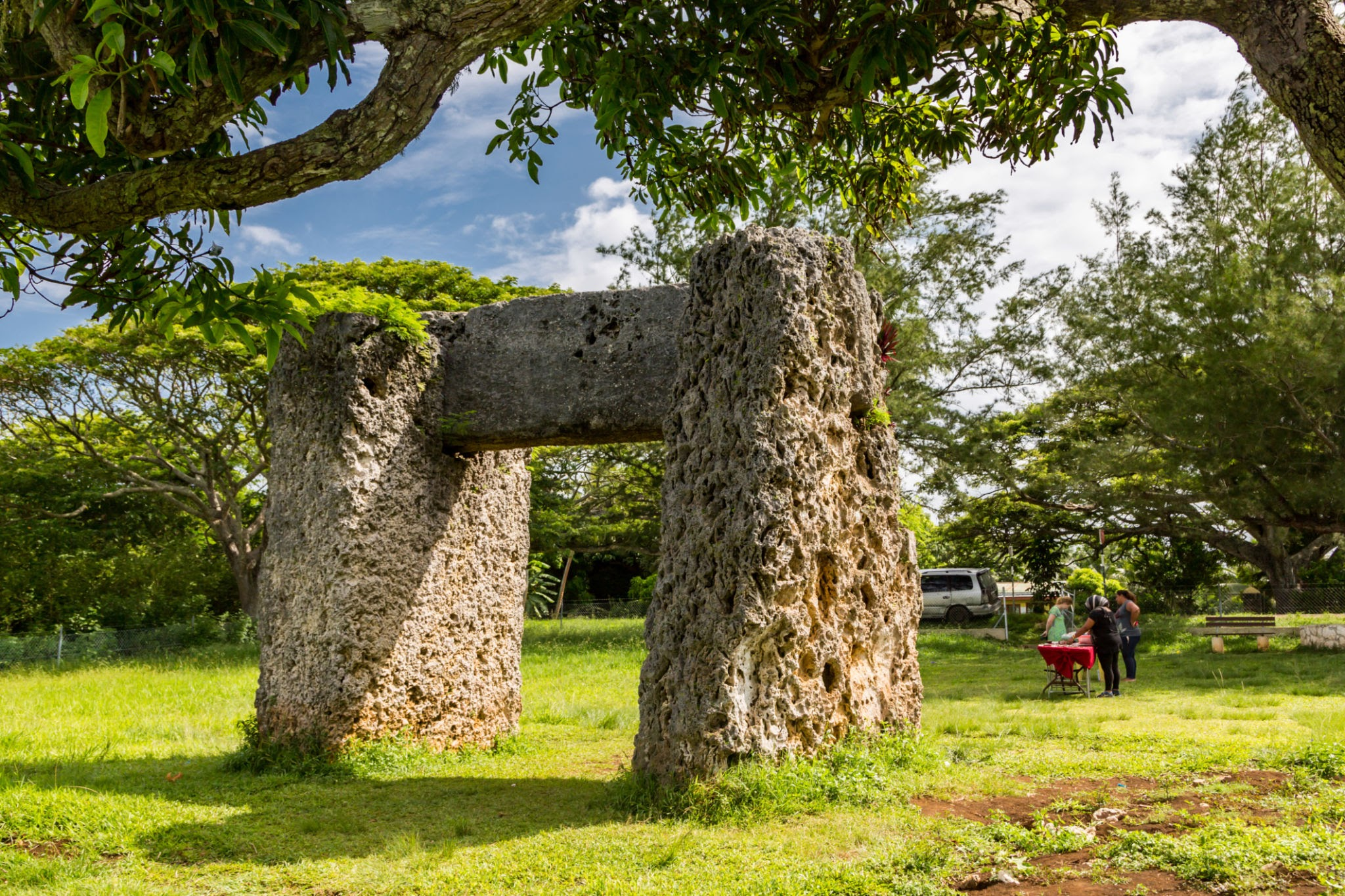
Standing prominently on the eastern fringe of Tongatapu, the Ha'amonga 'a Maui (The Burden of Maui) trilithon represents an absolute pinnacle of monumental stone engineering within the pre-colonial Tu'i Tonga Empire. Erected around 1200 CE during the reign of the 11th Tu'i Tonga, King Tu'itatui, this colossal coral limestone monument stands as a powerful symbol of centralized dynastic authority and territorial sovereignty.
For generations, Eurocentric explorers popularized far-fetched myths attributing the structure to wandering ancient Mediterranean civilisations. Modern architectural analysis and landscape archaeology have completely dismantled these colonial theories, confirming the monument as a fully indigenous masterpiece of stone cutting and structural engineering that anchored the sacred capital of Heketa.
Megalithic Engineering and Celestial Alignment
The construction of the Ha'amonga 'a Maui required an extraordinary mobilization of state labor and specialized engineering. The monument stands over 5 meters high, composed of two vertical coral limestone pillars weighing roughly 30 to 40 tons each, supporting a massive horizontal lintel stone weighing approximately 15 tons. To secure the lintel without modern mortar or metal clamps, Tongan stonemasons cut deep mortise grooves into the tops of the vertical pillars, allowing the perfectly squared lintel to lock securely into place using gravity alone.
Excavations around the base of the monument have revealed large extraction pits, proving that the massive stones were quarried directly from the nearby coastline using specialized wooden wedges, fire-splitting techniques, and woven fiber ropes.
Crucially, ethno-astronomical investigations led by King Tāufaʻāhau Tupou IV revealed that the monument also functioned as a highly precise solar calendar. Etched lines on the upper surface of the horizontal lintel align perfectly with the rising sun during both the summer and winter solstices. This dual purpose as a symbol of royal power and a celestial clock demonstrates that the Tu'i Tonga dynasty possessed an advanced understanding of mathematical astronomy, utilizing this knowledge to regulate agricultural cycles, harvest times, and religious ceremonies across their sprawling maritime domain.
Conclusion
The architectural and astronomical unmasking of the Ha'amonga 'a Maui trilithon fundamentally alters our understanding of political complexity in ancient Polynesia. It proves that medieval Tonga possessed a highly sophisticated, centralized state capable of directing complex engineering projects that required vast labor and precise geometry.
The monument's long-term stability and astronomical accuracy provide clear material proof of independent scientific and engineering excellence. Today, the majestic stone archway of Heketa stands as a powerful testament to Tongan statecraft, engineering, and cultural pride.