• MAIN PAGE
  • LATEST NEWS
    • Lost Cities
    • Archaeology's Greatest Finds
    • Underwater Discoveries
    • Greatest Inventions
    • Studies
    • Blog
  • PHILOSOPHY
  • HISTORY
  • RELIGIONS
    • Africa
    • Anatolia
    • Arabian Peninsula
    • Balkan Region
    • China - East Asia
    • Europe
    • Eurasian Steppe
    • Levant
    • Mesopotamia
    • Oceania - SE Asia
    • Pre-Columbian Civilizations of America
    • Iranian Plateau - Central Asia
    • Indus Valley - South Asia
    • Japan
    • The Archaeologist Editor Group
    • Scientific Studies
    • Aegean Prehistory
    • Historical Period
    • Byzantine Middle Ages
    • Predynastic Period
    • Dynastic Period
    • Greco-Roman Egypt
  • Rome
  • PALEONTOLOGY
  • About us
Menu

The Archaeologist

  • MAIN PAGE
  • LATEST NEWS
  • DISCOVERIES
    • Lost Cities
    • Archaeology's Greatest Finds
    • Underwater Discoveries
    • Greatest Inventions
    • Studies
    • Blog
  • PHILOSOPHY
  • HISTORY
  • RELIGIONS
  • World Civilizations
    • Africa
    • Anatolia
    • Arabian Peninsula
    • Balkan Region
    • China - East Asia
    • Europe
    • Eurasian Steppe
    • Levant
    • Mesopotamia
    • Oceania - SE Asia
    • Pre-Columbian Civilizations of America
    • Iranian Plateau - Central Asia
    • Indus Valley - South Asia
    • Japan
    • The Archaeologist Editor Group
    • Scientific Studies
  • GREECE
    • Aegean Prehistory
    • Historical Period
    • Byzantine Middle Ages
  • Egypt
    • Predynastic Period
    • Dynastic Period
    • Greco-Roman Egypt
  • Rome
  • PALEONTOLOGY
  • About us
No results found

Knock Roman Fort: Skye’s Antonine Wall Outpost

September 9, 2026

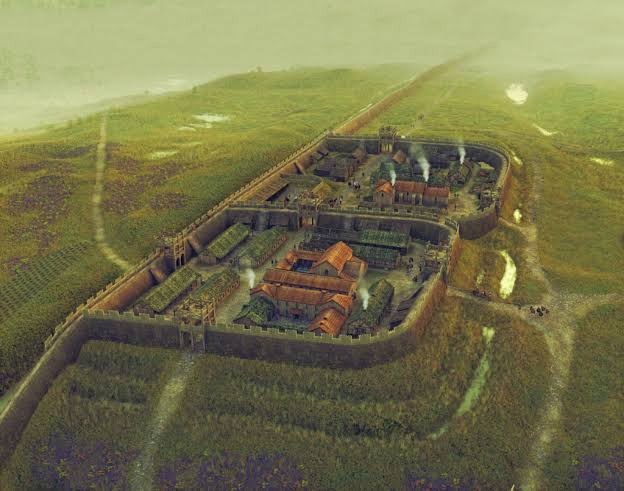
The title “Knock Roman Fort: Skye’s Antonine Wall Outpost” requires an important historical qualification.

The Antonine Wall was located across central Scotland, running roughly between the Firth of Forth and the Firth of Clyde. It did not extend to the Isle of Skye.

Consequently, Knock should not be described literally as an outpost of the Antonine Wall without strong archaeological evidence establishing such a connection.

Rome and Northern Scotland

Roman armies entered Scotland repeatedly during the first and second centuries CE.

Their campaigns sought to establish control over northern Britain, but Roman occupation was uneven and frequently temporary.

The Antonine Wall

The Antonine Wall was constructed during the reign of Emperor Antoninus Pius, beginning around AD 142.

It consisted of:

  • a turf rampart;

  • a substantial ditch;

  • forts;

  • fortlets;

  • roads;

  • and associated military infrastructure.

The wall represented an attempt to establish a northern frontier across central Scotland.

Roman Activity Beyond the Frontier

Roman military activity was not restricted to the wall itself.

Roman armies campaigned farther north.

Temporary marching camps, roads, forts, and other military installations demonstrate that Roman forces could operate beyond the frontier.

Skye and the Roman World

Skye was geographically distant from the Antonine Wall.

Nevertheless, the island existed within a broader environment affected by Roman expansion.

Roman coins and imported objects found in northern Scotland provide evidence for contact between local communities and the Roman world.

Archaeological Caution

It is important to distinguish:

Roman presence in Scotland

from

permanent Roman occupation of Skye.

The Roman military system did not establish Skye as an integrated province in the way it occupied southern Britain.

What a Roman Site Would Mean

If a securely identified Roman military installation were established on Skye, it would be extremely significant.

It could provide evidence for:

  • reconnaissance;

  • military movement;

  • diplomacy;

  • trade;

  • intelligence gathering;

  • or temporary occupation.

Conclusion

Knock Roman Fort: Skye’s Antonine Wall Outpost should therefore be approached cautiously.

The Antonine Wall itself did not extend to Skye, and the phrase “Antonine Wall outpost” can create a misleading geographical impression.

The broader subject remains fascinating because Roman military activity reached far into northern Britain, while communities on islands such as Skye interacted with the changing political and economic environment created by Rome.
← Armadale Castle: Sleat's Highland History Museum SiteDun Beag: Skye's Broch Tower →
Featured
image_2026-09-01_150407961.png
September 9, 2026
Dunadd Fort: Argyll's Inauguration Rock Carvings
September 9, 2026
Read more →
September 9, 2026
image_2026-09-01_150445885.png
September 9, 2026
Kilmartin Glen: Argyll's 5,000-Year Megalithic Landscape
September 9, 2026
Read more →
September 9, 2026
image_2026-09-01_150523753.png
September 9, 2026
Nether Largie: Argyll's Clyde Tomb Alignment
September 9, 2026
Read more →
September 9, 2026
image_2026-09-01_150612586.png
September 9, 2026
Ri Cruin: Argyll's Bronze Age Cairn Circle
September 9, 2026
Read more →
September 9, 2026
image_2026-09-01_150753980.png
September 9, 2026
Barnaluasgan: Argyll's Standing Stones
September 9, 2026
Read more →
September 9, 2026
image_2026-09-01_150644895.png
September 9, 2026
Ballymeanoch: Argyll's Kerbed Cairn
September 9, 2026
Read more →
September 9, 2026
read more

Powered by The archaeologist