• MAIN PAGE
  • LATEST NEWS
    • Lost Cities
    • Archaeology's Greatest Finds
    • Underwater Discoveries
    • Greatest Inventions
    • Studies
    • Blog
  • PHILOSOPHY
  • HISTORY
  • RELIGIONS
    • Africa
    • Anatolia
    • Arabian Peninsula
    • Balkan Region
    • China - East Asia
    • Europe
    • Eurasian Steppe
    • Levant
    • Mesopotamia
    • Oceania - SE Asia
    • Pre-Columbian Civilizations of America
    • Iranian Plateau - Central Asia
    • Indus Valley - South Asia
    • Japan
    • The Archaeologist Editor Group
    • Scientific Studies
    • Aegean Prehistory
    • Historical Period
    • Byzantine Middle Ages
    • Predynastic Period
    • Dynastic Period
    • Greco-Roman Egypt
  • Rome
  • PALEONTOLOGY
  • About us
Menu

The Archaeologist

  • MAIN PAGE
  • LATEST NEWS
  • DISCOVERIES
    • Lost Cities
    • Archaeology's Greatest Finds
    • Underwater Discoveries
    • Greatest Inventions
    • Studies
    • Blog
  • PHILOSOPHY
  • HISTORY
  • RELIGIONS
  • World Civilizations
    • Africa
    • Anatolia
    • Arabian Peninsula
    • Balkan Region
    • China - East Asia
    • Europe
    • Eurasian Steppe
    • Levant
    • Mesopotamia
    • Oceania - SE Asia
    • Pre-Columbian Civilizations of America
    • Iranian Plateau - Central Asia
    • Indus Valley - South Asia
    • Japan
    • The Archaeologist Editor Group
    • Scientific Studies
  • GREECE
    • Aegean Prehistory
    • Historical Period
    • Byzantine Middle Ages
  • Egypt
    • Predynastic Period
    • Dynastic Period
    • Greco-Roman Egypt
  • Rome
  • PALEONTOLOGY
  • About us
No results found

Lake Mungo: Australia's 42,000-Year Cremation Rites

June 24, 2026

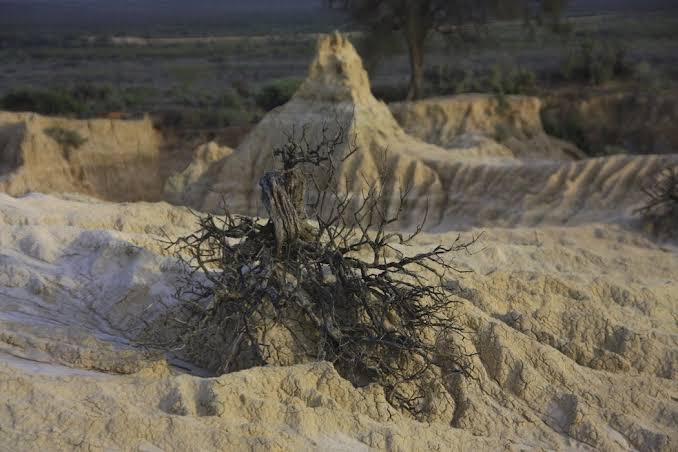
The arid, wind-swept lunette of Lake Mungo in the Willandra Lakes Region of western New South Wales houses the ultimate sacred and emotional monuments of ancient Australian prehistory. Excavations at the site uncovered the remains of two distinct individuals, cataloged as Mungo Lady and Mungo Man, securely dated to approximately 42,000 years ago using a combination of radiocarbon, luminescence, and thorium dating.

Mungo Lady represents the world's oldest known documentation of human cremation. Her ritual processing followed a strict, deeply moving multi-stage traditional protocol: her community first cremated her body using a high-temperature wood fire, systematically reclaimed the remaining bone fragments from the ash, manually crushed them into uniform pieces, and then buried the pulverized bone matrix within a dedicated, circular earth monument.

Adjacent to her grave, Mungo Man was laid to rest in an elongated pit, his body fully extended with his hands interlocked over his pelvis, completely saturated in a brilliant shroud of imported red ochre powder. These twin burials provide definitive proof that 42,000 years ago, the ancient inhabitants of Australia possessed a complex, profound understanding of the afterlife, executing elaborate, reverent mortuary rituals to honor their dead and bind their spirits to the landscape.
Wyrie Swamp: Australia's 20,000-Year Boomerangs →
Featured
image_2026-06-22_223748063.png
June 24, 2026
Lake Mungo: Australia's 42,000-Year Cremation Rites
June 24, 2026
Read more →
June 24, 2026
image_2026-06-22_223711115.png
June 24, 2026
Wyrie Swamp: Australia's 20,000-Year Boomerangs
June 24, 2026
Read more →
June 24, 2026
image_2026-06-22_223638840.png
June 24, 2026
Madjedbebe: World's Oldest Ochre Processing Site
June 24, 2026
Read more →
June 24, 2026
image_2026-06-22_223602824.png
June 24, 2026
Nauwalabila: Australia's 50,000-Year Stone Tools
June 24, 2026
Read more →
June 24, 2026
image_2026-06-22_223518130.png
June 24, 2026
Devil's Lair: Australia's 48,000-Year Ochre Use
June 24, 2026
Read more →
June 24, 2026
image_2026-06-22_223408714.png
June 24, 2026
Laili Cave: East Timor's 44,000-Year Colonizers
June 24, 2026
Read more →
June 24, 2026
read more

Powered by The archaeologist