Wyrie Swamp, located in the southeast of South Australia, represents a taphonomic miracle in the preservation of ancient organic technology. Because wooden artifacts decay rapidly in typical acidic or aerated soils, the deep history of human woodworking is largely lost to time, making this waterlogged site an invaluable repository of prehistoric engineering during the Last Glacial Maximum.
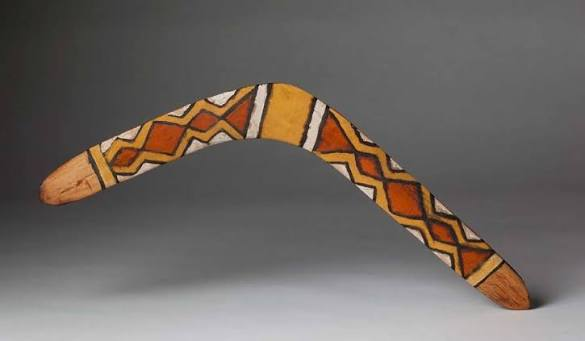
The unique, anaerobic, waterlogged peat conditions of Wyrie Swamp completely excluded oxygen, arresting the process of bacterial decay and perfectly preserving a diverse collection of wooden hunting tools dating back 20,000 years. Among the most extraordinary items recovered were several complete, beautifully preserved wooden boomerangs carved from the tough roots and branches of local Leptospermum tea-trees.
These boomerangs display sophisticated aerodynamic design, featuring distinct asymmetrical airfoil profiles designed to generate lift and stable flight trajectories. The collection includes both heavy, non-returning hunting boomerangs designed to retain high kinetic energy to fell water birds and kangaroos, and lighter variants, providing direct empirical proof that Pleistocene Aboriginal societies possessed a flawless understanding of aerodynamic principles and advanced woodworking techniques.