• MAIN PAGE
  • LATEST NEWS
    • Lost Cities
    • Archaeology's Greatest Finds
    • Underwater Discoveries
    • Greatest Inventions
    • Studies
    • Blog
  • PHILOSOPHY
  • HISTORY
  • RELIGIONS
    • Africa
    • Anatolia
    • Arabian Peninsula
    • Balkan Region
    • China - East Asia
    • Europe
    • Eurasian Steppe
    • Levant
    • Mesopotamia
    • Oceania - SE Asia
    • Pre-Columbian Civilizations of America
    • Iranian Plateau - Central Asia
    • Indus Valley - South Asia
    • Japan
    • The Archaeologist Editor Group
    • Scientific Studies
    • Aegean Prehistory
    • Historical Period
    • Byzantine Middle Ages
    • Predynastic Period
    • Dynastic Period
    • Greco-Roman Egypt
  • Rome
  • PALEONTOLOGY
  • About us
Menu

The Archaeologist

  • MAIN PAGE
  • LATEST NEWS
  • DISCOVERIES
    • Lost Cities
    • Archaeology's Greatest Finds
    • Underwater Discoveries
    • Greatest Inventions
    • Studies
    • Blog
  • PHILOSOPHY
  • HISTORY
  • RELIGIONS
  • World Civilizations
    • Africa
    • Anatolia
    • Arabian Peninsula
    • Balkan Region
    • China - East Asia
    • Europe
    • Eurasian Steppe
    • Levant
    • Mesopotamia
    • Oceania - SE Asia
    • Pre-Columbian Civilizations of America
    • Iranian Plateau - Central Asia
    • Indus Valley - South Asia
    • Japan
    • The Archaeologist Editor Group
    • Scientific Studies
  • GREECE
    • Aegean Prehistory
    • Historical Period
    • Byzantine Middle Ages
  • Egypt
    • Predynastic Period
    • Dynastic Period
    • Greco-Roman Egypt
  • Rome
  • PALEONTOLOGY
  • About us

LiDAR reveals lost ancient landscape in Andean Chocó

January 5, 2026

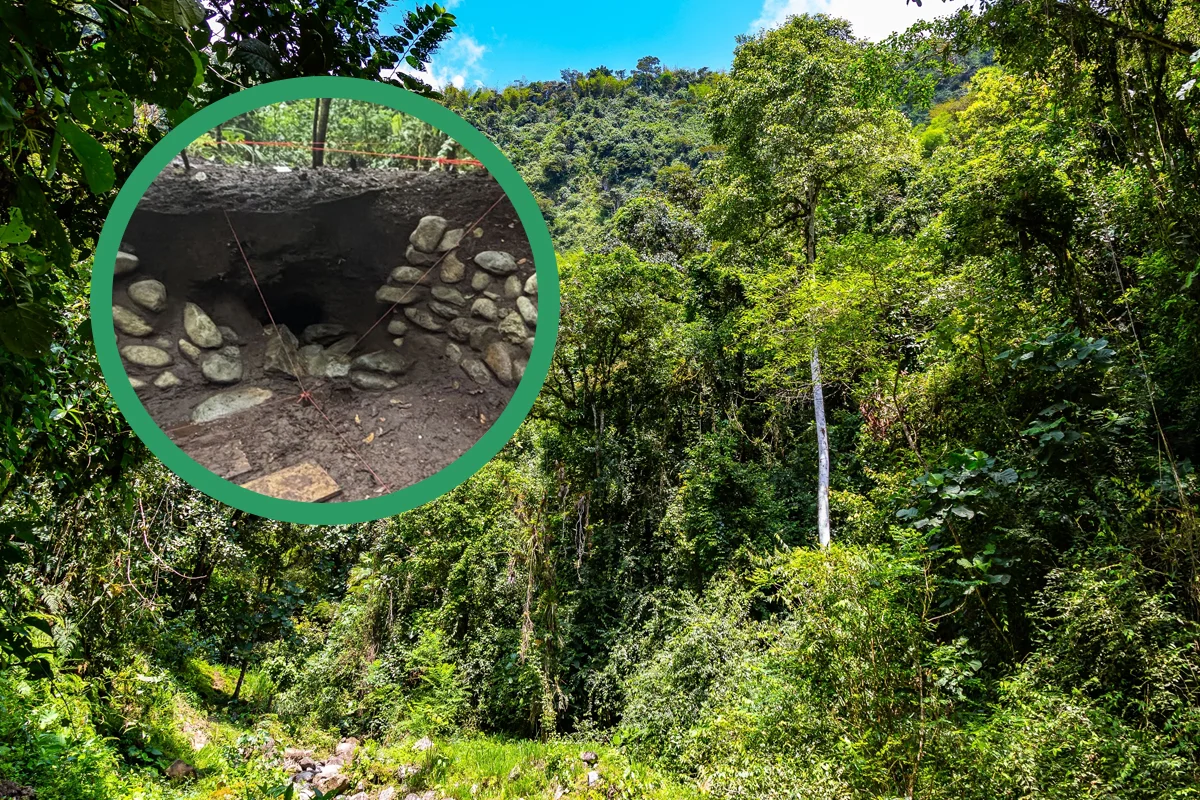
Deep beneath the dense rainforest of the Andean Chocó, northwest of Quito, an ancient pre-Hispanic landscape is coming to light through the use of LiDAR (Light Detection and Ranging). Archaeologists have identified hundreds of ancient mounds, terraces, and roads that had been hidden for centuries by thick vegetation, greatly expanding understanding of human settlement in one of Ecuador’s most biologically rich regions.

The findings stem from an archaeological investigation conducted in December 2025 by the Metropolitan Institute of Heritage (IMP) in the commune of San Francisco de Pachijal, within the parish of Pacto. The project was designed to document and safeguard cultural heritage in the Andean Chocó, where steep terrain and dense jungle have long restricted traditional archaeological surveys.

LiDAR technology uses laser pulses to penetrate forest canopies and produce highly detailed maps of the ground surface. What initially appeared to be a relatively small site containing around 40 mounds and 10 terraces was dramatically redefined once the LiDAR data were analysed.

The results revealed more than 200 mounds and over 100 terraces distributed across approximately 600 hectares.

This scale is particularly notable given that the surveyed area represents only about two per cent of the Andean Chocó, which spans more than 280,000 hectares. Researchers now suggest the region may hold one of the largest documented pre-Hispanic landscapes in northwestern Ecuador.

IMP consultant archaeologist Juan Jijón explained that the structures clearly reflect intentional human shaping of the environment. Circular and rectangular constructions linked by ancient roadways point to a carefully organised settlement system associated with productive, social, and ceremonial life.

Field investigations also identified a sunken rectangular structure near the San Francisco River, resembling architectural features found at the Tulipe Archaeological Complex in nearby Gualea and Nanegalito. This similarity indicates a sophisticated understanding of water management among the region’s former inhabitants.

Based on associated artefacts, specialists have attributed the remains to the Yumbo culture, a pre-Hispanic society known to have inhabited the northwestern Andes.

For IMP archaeologist Dayuma Guayasamín, the project’s importance extends beyond academic study. “Our goal is to protect these sites, understand how cultural landscapes developed, and strengthen Quito’s cultural heritage,” she said.
← Prosecutors investigate damage to Ajdabiya heritage sitesEgypt welcomes record 19 mln tourists in 2025, outpacing global growth →
Featured
image_2026-01-06_134320453.png
Jan 6, 2026
The First People Who Tried to Measure Time
Jan 6, 2026
Read More →
Jan 6, 2026
image_2026-01-06_133626200.png
Jan 6, 2026
Sacred Animals That Ruled Early Civilizations
Jan 6, 2026
Read More →
Jan 6, 2026
image_2026-01-06_132755604.png
Jan 6, 2026
The Ancient Engineers Who Built Impossible Machines
Jan 6, 2026
Read More →
Jan 6, 2026
image_2026-01-06_131900830.png
Jan 6, 2026
Cave Paintings That Shouldn’t Exist
Jan 6, 2026
Read More →
Jan 6, 2026
image_2026-01-06_131439569.png
Jan 6, 2026
The Mysterious Healing Temples of the Ancients
Jan 6, 2026
Read More →
Jan 6, 2026
image_2026-01-06_130309094.png
Jan 6, 2026
The Oldest Known Maps of the Earth
Jan 6, 2026
Read More →
Jan 6, 2026
read more

Powered by The archaeologist