Introduction
The Liège Province of eastern Belgium contains numerous archaeological sites preserving evidence of the Aurignacian culture, which flourished between approximately 43,000 and 26,000 years ago. During this period, the first populations of anatomically modern humans spread throughout western Europe, introducing revolutionary advances in stone technology, bone tool manufacture, artistic expression, and symbolic behavior. Sites throughout Liège Province—including caves such as Walou and Engis—provide important evidence of this technological transformation.
Blade Technology
The defining innovation of the Aurignacian industry was the systematic production of long, standardized stone blades. Flint cores were carefully prepared so that multiple elongated blades could be removed efficiently with minimal waste. Compared with earlier Neanderthal Mousterian tools, Aurignacian blades were thinner, sharper, and more versatile.
These blades served as the basis for numerous specialized implements, including knives, burins, end scrapers, perforators, and projectile points used for hunting, hide preparation, woodworking, and bone carving.
Bone and Antler Industries
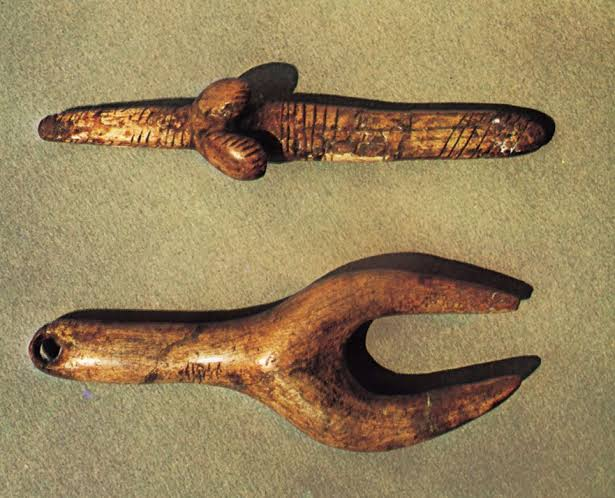
Aurignacian craftspeople expanded tool production beyond stone by manufacturing implements from bone, antler, and ivory. Excavations in Liège Province have uncovered awls, spear points, needles, and engraved objects demonstrating remarkable craftsmanship.
These organic tools allowed greater precision in sewing fitted clothing, constructing hunting equipment, and creating ornamental objects, providing modern humans with technological advantages during the harsh climatic conditions of the Upper Paleolithic.
Hunting and Settlement
Aurignacian hunter-gatherers occupied caves and rock shelters throughout Liège Province while following migrating herds of reindeer, horses, bison, and red deer. Seasonal camps contained hearths, butchered animal bones, stone-knapping debris, and evidence of hide processing.
The archaeological record indicates highly mobile communities capable of adapting to diverse environments while maintaining extensive cultural traditions across much of Europe.
Conclusion
The Aurignacian sites of Liège Province document one of the most significant technological revolutions in prehistoric Europe. Through advanced blade production, innovative bone industries, and increasingly sophisticated hunting strategies, these early Homo sapiens communities laid the foundations for the remarkable cultural achievements of the Upper Paleolithic.