Introduction
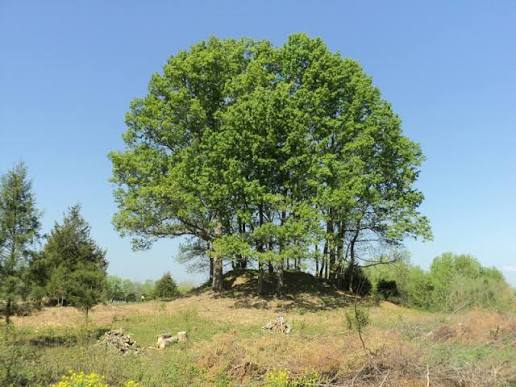
Located in present-day Nashville, Tennessee, the Lindsley Park Mounds represent one of the most important Woodland Period archaeological sites in the Middle Cumberland region. Constructed between approximately 200 BCE and 500 CE, these earthen burial mounds predate the Mississippian civilization by several centuries and are associated primarily with the Middle Woodland and Hopewell Interaction Sphere. The site served as a ceremonial cemetery where communities gathered to honor their dead through elaborate funerary rituals, demonstrating the growing social complexity of prehistoric societies long before the construction of Mississippian platform mounds.
Burial Mound Construction
The mounds were built by carefully placing prepared burials on the ground before covering them with successive layers of soil carried in woven baskets. Over time, repeated ceremonies and additional burials enlarged the mounds into prominent earthworks visible across the surrounding landscape.
Some graves contained log tombs or stone-lined burial chambers, while others were accompanied by carefully arranged grave offerings that reflected the social status and spiritual beliefs of the deceased.
Artifacts and Trade
Excavations have uncovered finely crafted pottery, polished stone tools, copper ornaments, shell beads, mica sheets, ceremonial pipes, and exotic materials imported from distant regions. Many of these items originated through the extensive Hopewell Interaction Sphere, a vast trade network connecting communities throughout eastern North America.
The presence of imported materials demonstrates that Middle Cumberland societies participated in long-distance exchange centuries before the rise of Mississippian civilization.
Religion and Mortuary Practices
The Lindsley Park Mounds functioned primarily as sacred burial grounds rather than permanent settlements. Funeral ceremonies included ritual offerings, communal feasts, and ancestor veneration. The careful placement of grave goods suggests widespread beliefs concerning the afterlife and the continued importance of ancestral spirits within community life.
Archaeological Importance
The Lindsley Park Mounds have provided archaeologists with important evidence regarding Woodland social organization, trade networks, burial customs, and ceremonial traditions. The site bridges the transition between earlier Archaic cultures and the later Mississippian civilizations that would dominate Tennessee centuries afterward.
Conclusion
The Lindsley Park Mounds preserve one of Tennessee's finest examples of Woodland Period ceremonial burial architecture. Their carefully constructed earthworks, elaborate grave goods, and participation in long-distance trade illustrate the remarkable cultural achievements of prehistoric communities long before the emergence of Mississippian chiefdoms.