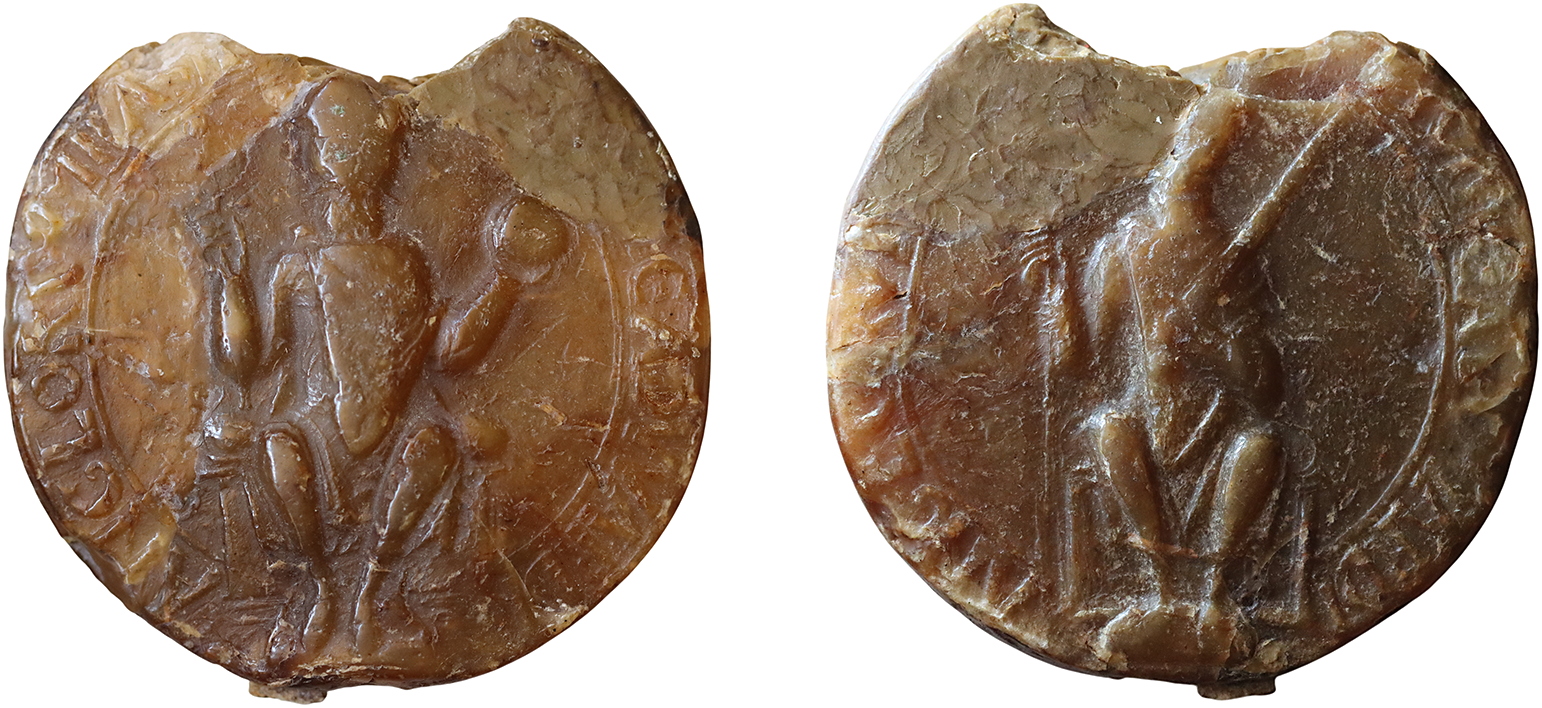
The rediscovery of a long-lost royal seal belonging to Edward the Confessor is being hailed as a major breakthrough in understanding the political evolution of pre-Norman England.
A “Lost” Seal Found Again
The so-called Saint-Denis seal, a rare wax impression from the 11th century, had been considered missing since the 1980s. It originally belonged to the collections of the French National Archives, where it had been preserved for nearly two centuries before disappearing from records.
In 2021, researcher Guilhem Dorandeu rediscovered the object while examining detached seal collections in Paris. Rather than being stolen or destroyed, the seal had simply been misclassified and stored separately, effectively hiding it in plain sight for decades.
Its recovery is especially important because only three authentic impressions of Edward’s royal seal are known to exist—and this is the best preserved among them.
A Powerful Symbol of Kingship
Dating to around 1053–1057, the seal represents a turning point in how royal authority was expressed in England.
Unlike earlier traditions, this is a double-sided (bifacial) seal, showing the king enthroned on both sides. He is depicted holding symbols of power:
A scepter
An orb
A sword
This design was highly unusual for England at the time. It reflects a deliberate effort to present kingship as more formal, visual, and authoritative—not just administrative, but symbolic.
The seal was attached to a writ-charter, a relatively new type of royal document used to issue orders and grant rights. This marks a shift away from older Anglo-Saxon practices, where authority relied more on witness lists than on physical authentication.
Byzantine Influence and Global Ambitions
One of the most striking details is the inscription: “Anglorum basileus.”
The word basileus—Greek for “king” or “emperor”—was traditionally used by rulers of the Byzantine Empire. Its use here suggests that Edward was consciously aligning himself with broader imperial traditions, not just local kingship.
The imagery reinforces this:
The sword, rarely shown in Western royal iconography at the time, mirrors Byzantine imperial imagery.
The overall composition echoes continental and eastern styles of rulership.
Together, these elements suggest that Edward’s court was internationally aware and engaged with the wider political culture of 11th-century Europe and beyond.
A Shift Toward Bureaucratic Governance
Beyond symbolism, the seal reveals a deeper transformation: the rise of a more structured administrative system.
The use of sealed writ-charters shows that England was moving toward:
Standardized legal documents
Recognizable royal authority
More centralized governance
This innovation brought English administration closer to continental European models and laid groundwork for later developments—especially after the Norman Conquest.
Why This Discovery Matters
The rediscovery of the Saint-Denis seal is more than just finding a lost object—it restores a key piece of evidence for understanding:
The evolution of kingship in England
The influence of international political ideas
The early development of bureaucratic governance
As the last Anglo-Saxon king before 1066, Edward’s reign sits at a crucial historical crossroads. This seal shows that even before Norman rule, England was already transforming—politically, culturally, and administratively—into a more connected and sophisticated kingdom.