In dense rainforests across the globe, ancient temples lie buried beneath vines and towering trees. For centuries, they remained invisible, swallowed by nature. Their rediscovery has reshaped our understanding of forgotten civilizations.
Cities Beneath the Canopy
One of the most famous rediscoveries is Angkor Wat, a vast temple complex once at the heart of the Khmer Empire. Though never entirely abandoned, much of the surrounding city was reclaimed by jungle. When European explorers documented it in the 19th century, the scale stunned the world.
In Central America, the ancient Maya city of Tikal lay hidden beneath thick forest growth until systematic excavation revealed its towering pyramids.
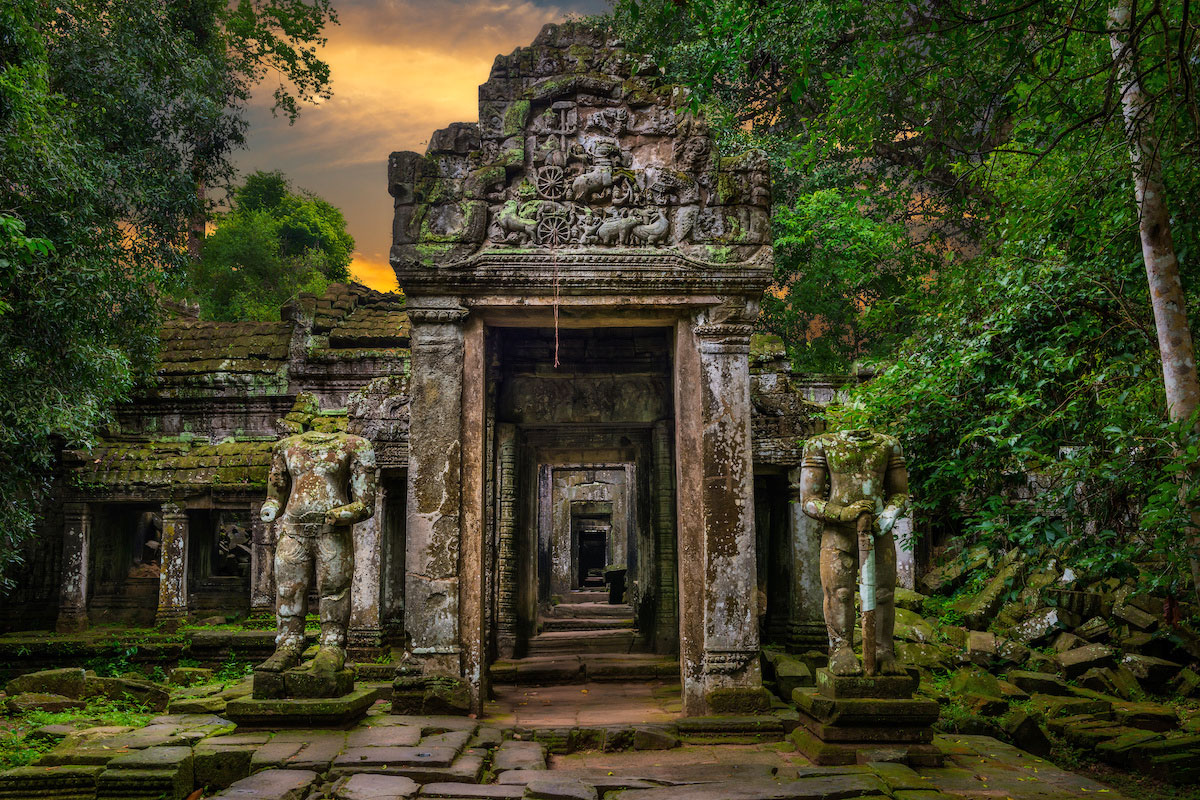
Similarly, Ta Prohm is now famous for massive tree roots wrapping around stone walls, a dramatic reminder of how nature reclaims human achievement.
How They Were Found
Many of these sites were rediscovered through local knowledge rather than pure accident. In recent years, airborne laser scanning (LiDAR) has allowed archaeologists to “see” through forest canopies, uncovering entire urban landscapes previously unknown.
What the Ruins Reveal
These jungle temples demonstrate that tropical regions supported large, sophisticated populations. Advanced water systems, road networks, and agricultural planning reveal organized societies with impressive engineering skills.
Far from being isolated monuments, these ruins show that complex civilizations flourished in places once thought inhospitable. The jungle did not erase their legacy—it preserved it.