Introduction
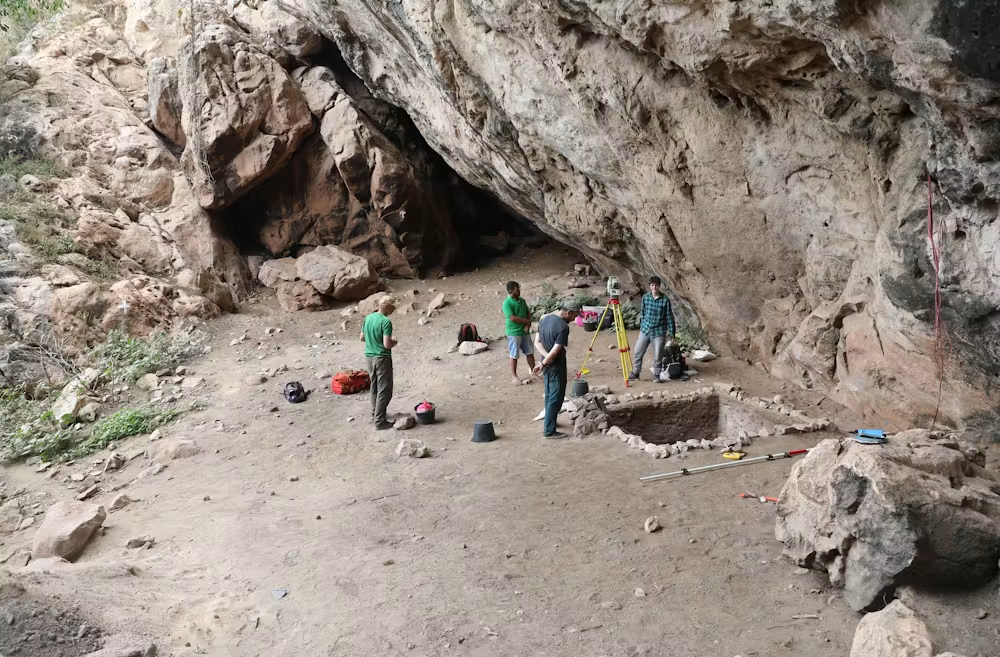
Understanding how early modern humans crossed the treacherous deep-water marine barriers of Wallacea to reach Australia has long been a central question in global archaeology. The limestone rock shelter of Laili, situated in the northern coastal foothills of Timor-Leste, has provided crucial data to resolve this mystery.
Excavations at Laili have revealed a continuous, exceptionally well-preserved sequence of human occupation extending back at least 44,000 years. This site stands as the oldest confirmed maritime colony in the southern Wallacean migration corridor, offering concrete proof of the advanced seafaring capabilities and coastal survival strategies utilized by humanity during their initial push toward Sahul (the Pleistocene landmass of Australia and New Guinea).
Maritime Migration Corridors and Broad-Spectrum Subsistence
To reach Timor during the Late Pleistocene, human populations had to navigate across the Wallace Line, a deep ocean boundary that never closed during glacial maximums, ensuring that these islands remained isolated from continental Asia.
This migration demanded intentional maritime crossings over open ocean channels exceeding 30 kilometers in width. The sudden appearance of dense occupation layers at Laili at 44,000 BP indicates that these pioneering colonists were not accidental castaways, but rather expert mariners possessing the seafaring technology and behavioral toolkits required to colonize entirely unfamiliar island environments.
The dietary remains excavated from Laili’s deep stratigraphic layers reveal a highly specialized broad-spectrum maritime economy. The pioneering colonists did not rely on large terrestrial game, which was virtually absent on the island; instead, they focused on extracting calories from the ocean and coastal canopy. The shelter floors are packed with thousands of marine shellfish fragments, fish bones, and a remarkable density of avian (bird) remains. This confirms that these early humans were skilled trackers capable of harvesting fast-moving arboreal prey and navigating the complex marine ecology of the coast, laying the adaptive foundations for the eventual settlement of Australia. Conclusion Laili Shelter provides a rare, vivid window into the lifeways of the earliest maritime wanderers of Southeast Asia. By demonstrating an absolute mastery over coastal and marine resources, the Pleistocene colonists of Timor proved that open ocean barriers were no longer an insurmountable obstacle, but rather highways for expansion. The deep-time records preserved within Laili's stone-tool and faunal assemblages confirm that the colonization of Wallacea was a deliberate, highly successful adaptation that fundamentally transformed the geographic distribution of our species.