Further evidence of ancient funerary practices has emerged at one of the largest Roman cemeteries ever excavated in the UK.
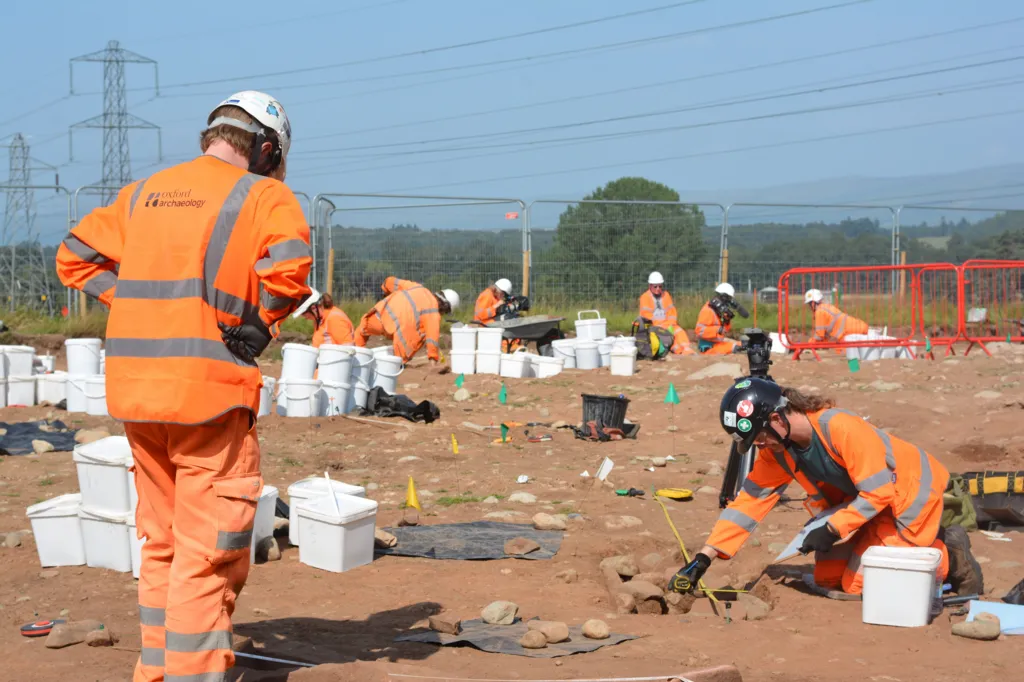
Excavations began last year along the A66, ahead of plans to widen the road between Penrith and Scotch Corner. While archaeologists had been aware of a Roman grave on the site near Penrith since the 1960s, this is the first time such extensive digging has been possible.
Dr Lauren McIntyre of Oxford Cotswold Archaeology said the team has so far uncovered around 340 graves. The excavations have revealed that both cremation and inhumation were practiced, suggesting that individuals had a degree of choice in how to conduct funerary rites for their loved ones.
McIntyre also noted that the cemetery is likely much larger than the area currently excavated. “It’s pretty massive,” she said.
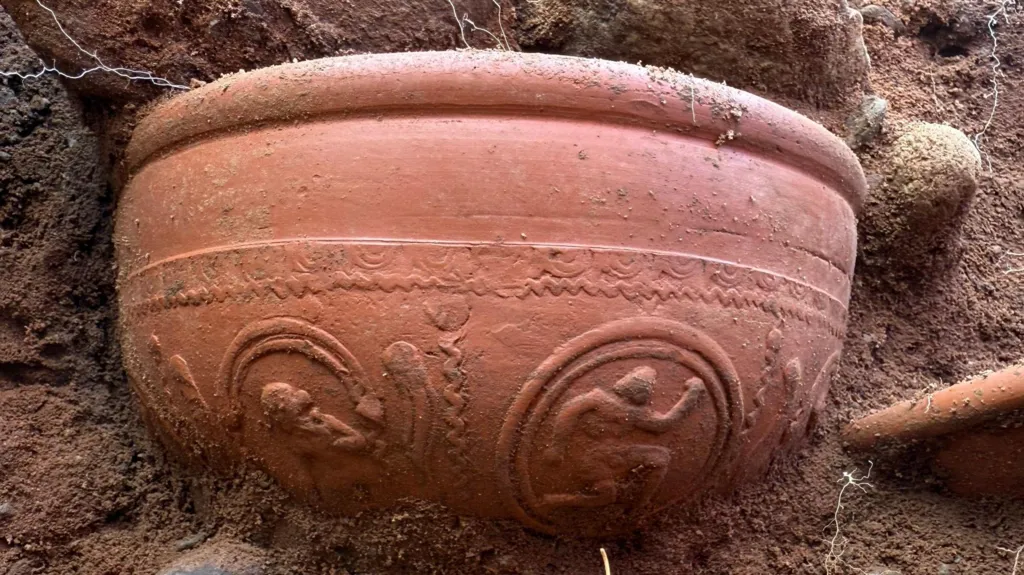
Several ceramic pots were found at the site near Penrith
McIntyre added that, given the site’s proximity to a Roman fort and settlement, it likely served both civilians and soldiers.
“There’s no indication that civilians were buried anywhere else,” she said.
Archaeologists also uncovered several ceramic pots, which may have held either cremated remains or grave goods such as wine or oil. Among the finds was a Cupid figurine, probably buried alongside cremated ashes.
The team’s next step is to analyse the collected ashes to determine the origins of the soldiers buried at the site. McIntyre noted that Roman soldiers were typically recruited from regions far from where they were stationed. She explained that isotopic analysis could help identify the areas where these individuals likely grew up.