• MAIN PAGE
  • LATEST NEWS
    • Lost Cities
    • Archaeology's Greatest Finds
    • Underwater Discoveries
    • Greatest Inventions
    • Studies
    • Blog
  • PHILOSOPHY
  • HISTORY
  • RELIGIONS
    • Africa
    • Anatolia
    • Arabian Peninsula
    • Balkan Region
    • China - East Asia
    • Europe
    • Eurasian Steppe
    • Levant
    • Mesopotamia
    • Oceania - SE Asia
    • Pre-Columbian Civilizations of America
    • Iranian Plateau - Central Asia
    • Indus Valley - South Asia
    • Japan
    • The Archaeologist Editor Group
    • Scientific Studies
    • Aegean Prehistory
    • Historical Period
    • Byzantine Middle Ages
    • Predynastic Period
    • Dynastic Period
    • Greco-Roman Egypt
  • Rome
  • PALEONTOLOGY
  • About us
Menu

The Archaeologist

  • MAIN PAGE
  • LATEST NEWS
  • DISCOVERIES
    • Lost Cities
    • Archaeology's Greatest Finds
    • Underwater Discoveries
    • Greatest Inventions
    • Studies
    • Blog
  • PHILOSOPHY
  • HISTORY
  • RELIGIONS
  • World Civilizations
    • Africa
    • Anatolia
    • Arabian Peninsula
    • Balkan Region
    • China - East Asia
    • Europe
    • Eurasian Steppe
    • Levant
    • Mesopotamia
    • Oceania - SE Asia
    • Pre-Columbian Civilizations of America
    • Iranian Plateau - Central Asia
    • Indus Valley - South Asia
    • Japan
    • The Archaeologist Editor Group
    • Scientific Studies
  • GREECE
    • Aegean Prehistory
    • Historical Period
    • Byzantine Middle Ages
  • Egypt
    • Predynastic Period
    • Dynastic Period
    • Greco-Roman Egypt
  • Rome
  • PALEONTOLOGY
  • About us

18th-century city and Byzantine necropolis uncovered in Egypt

February 24, 2026

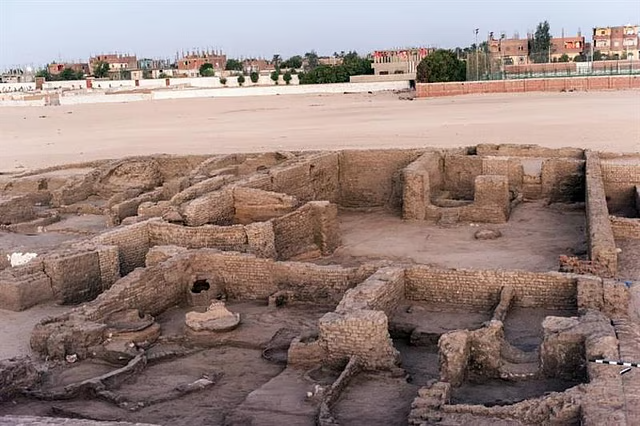
A joint Egyptian–French mission has uncovered two major layers of history at the Sheikh Al Arab Hammam site in Qena Governorate, shedding rare light on life in Upper Egypt across very different eras.

🏘️ An 18th-Century Mudbrick City

At Al Arki village, archaeologists revealed the remains of a mudbrick residential settlement dating to the time of Sheikh Al Arab Hammam, a prominent regional figure of the 1700s. According to Egypt’s Ministry of Tourism and Antiquities, the site is especially important because written records about this area are scarce.

Excavations uncovered:

  • Six residential houses with service buildings

  • Part of an industrial zone

  • Mudbrick domes on some homes, palm-trunk roofing on others

  • White lime plaster traces, indicating varied architectural techniques

Artefacts paint a vivid picture of daily life: bronze coins, pottery fragments, jewellery, textile remains — even children’s toys. It doesn’t feel like an isolated outpost; it feels lived-in and active.

⚱️ A Coptic Necropolis Beneath

Even more fascinating, beneath the 18th-century settlement lay part of a Coptic necropolis from the Byzantine period.

The burial ground was identified after a limestone coffin lid — reused as paving near a city entrance — hinted at something older below. Geophysical surveys confirmed the presence of tombs.

The necropolis includes:

  • Simple ground burials

  • Mudbrick burial enclosures

  • Linen wrappings and Coptic-style tunics decorated with geometric, floral, and animal motifs

  • Crosses and inscriptions

  • A copper stamp used to decorate baked goods

The discovery bridges two major historical periods — Byzantine and Islamic — in one layered site. Experts say it offers crucial insight into funerary practices, local industry, and population patterns over centuries.

Bio-archaeological studies, led in part by researchers from the French Institute of Oriental Archaeology, will now examine the remains of around 23 individuals to assess diet, health, age, and possible mummification practices.

There’s something powerful about this kind of layered excavation. An 18th-century neighborhood built unknowingly atop centuries-older Christian burials. Daily life above, sacred memory below. Upper Egypt just keeps stacking its stories on top of each other.
← Anthropological Analysis Reveals Mixed-Race Inhabitants of Heraclea SinticaSerbia Mass Grave Shock: 2,800-Year-Old Burial Reveals Targeted Killing of Women and Children →
Featured
image_2026-02-25_000055963.png
Feb 24, 2026
Ancient tooth proteins reveal the history of mass violence at an Iron Age burial site
Feb 24, 2026
Read More →
Feb 24, 2026
image_2026-02-24_233628731.png
Feb 24, 2026
Help Save Leicestershire’s Bronze Age Torc
Feb 24, 2026
Read More →
Feb 24, 2026
image_2026-02-24_233208443.png
Feb 24, 2026
Anthropological Analysis Reveals Mixed-Race Inhabitants of Heraclea Sintica
Feb 24, 2026
Read More →
Feb 24, 2026
image_2026-02-24_232404955.png
Feb 24, 2026
18th-century city and Byzantine necropolis uncovered in Egypt
Feb 24, 2026
Read More →
Feb 24, 2026
image_2026-02-24_231651251.png
Feb 24, 2026
Serbia Mass Grave Shock: 2,800-Year-Old Burial Reveals Targeted Killing of Women and Children
Feb 24, 2026
Read More →
Feb 24, 2026
image_2026-02-24_231408115.png
Feb 24, 2026
Derelict cafe just off the A11 set for demolition
Feb 24, 2026
Read More →
Feb 24, 2026
read more

Powered by The archaeologist