Medieval Underground Tunnel Unearthed within Neolithic Burial Complex in Germany
A remarkable archaeological discovery in central Germany has revealed a rare medieval underground tunnel hidden within a much older Neolithic burial complex, shedding new light on how ancient landscapes were reused across millennia.
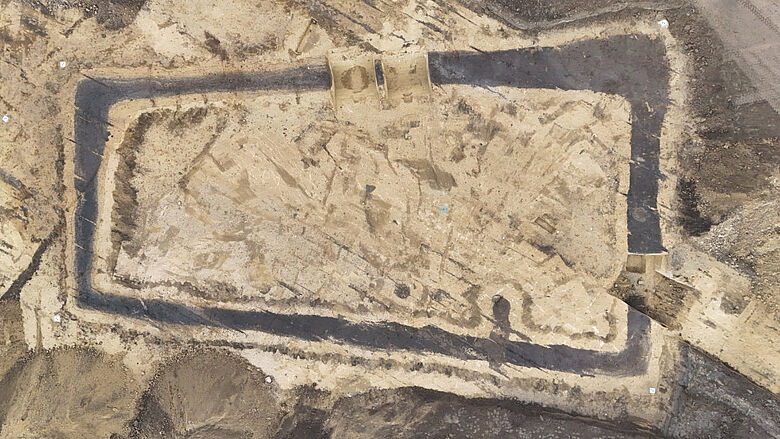
During excavations near the village of Reinstedt in Saxony-Anhalt, researchers uncovered a late medieval Erdstall—a man-made underground passage system—cut directly into a Neolithic trapezoidal ditch dating back to the 4th millennium BCE. The discovery was made by the State Office for Heritage Management and Archaeology of Saxony-Anhalt during investigations ahead of a planned wind energy project.
A Site Used for Over 4,000 Years
The excavation area, located on a low hill known as the Dornberg east of Reinstedt, had already proven archaeologically rich. Findings include:
A Neolithic trapezoidal ditch from the Baalberg culture
Poorly preserved late Neolithic burial remains
Traces of a possible Bronze Age burial mound
Together, these discoveries demonstrate that the site was repeatedly used for ritual and funerary purposes over thousands of years.
What makes the new find extraordinary is the discovery of a medieval underground structure cut directly into this much older Neolithic feature. Such a structure, known as an Erdstall, consists of narrow tunnels carved by hand into compact soil, often loess. These features are rare in northern Germany and have long puzzled archaeologists.
What Is an Erdstall?
Erdställe (plural) are artificial underground passage systems typically dating to the late Middle Ages. Their purpose remains debated:
Some scholars interpret them as hiding places during times of conflict
Others suggest they may have served ritual or symbolic functions
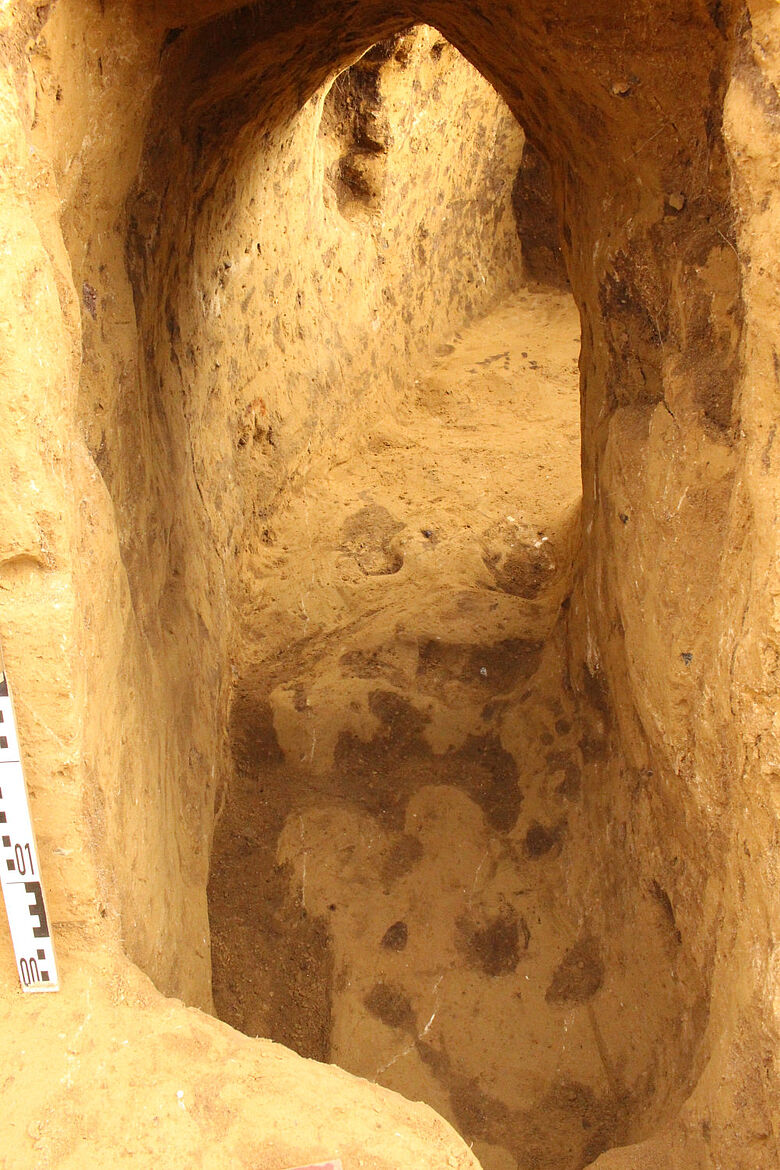
In Reinstedt, archaeologists initially mistook the feature for a grave due to its elongated shape and the presence of a large stone slab. However, further excavation revealed sloping fill layers, medieval pottery fragments, stones, and preserved voids—clear indicators of an underground tunnel system.
This discovery highlights the long-term significance of the Reinstedt site, revealing how landscapes can accumulate layers of human activity over thousands of years—from Neolithic rituals to medieval subterranean constructions.
Inside the Medieval Tunnel
The tunnel, which curves toward the northwest, measures approximately 1–1.25 meters in height and 50–70 centimeters in width. Parts of the passage feature a pointed gable-shaped ceiling, while the entrance area includes a carved step and a niche in the wall.
Among the most intriguing finds inside the tunnel were:
A horseshoe
Fragments of late medieval ceramic vessels
A fox skeleton
Numerous small mammal bones
At the lowest level, archaeologists uncovered a thin charcoal layer. The absence of reddening in the surrounding soil—only slight hardening—suggests that the fire burned briefly rather than continuously.
A cluster of large stones stacked at the narrowest part of the entrance indicates the tunnel may have been deliberately sealed, possibly after its final use.
Why Build a Tunnel in a Prehistoric Grave Site?
One of the most compelling questions raised by the discovery is why a medieval community chose to dig an underground tunnel inside a visible Neolithic burial monument.
Archaeologists propose two main explanations:
Landmark Function – The ancient ditch system may still have been recognizable above ground in the Middle Ages, making it an ideal reference point for a hidden refuge.
Avoidance of Pagan Sites – The site’s association with prehistoric burials may have caused it to be avoided by the general population, creating a perfectly undisturbed hiding place during uncertain times.
A Rare Window Into Layered History
The Reinstedt Erdstall demonstrates how landscapes can accumulate meaning and function over thousands of years. It is not only a rare example of medieval underground architecture but also a striking case of how later societies interacted with, reused, and reinterpreted prehistoric monuments.
As renewable energy development continues across Europe, such discoveries highlight the importance of archaeological surveys to preserve cultural heritage before construction begins.
Further analysis of the site is ongoing, with findings contributing valuable insights into medieval tunnel construction, long-term land use, and the cultural significance of prehistoric monuments in Central Europe.