Introduction
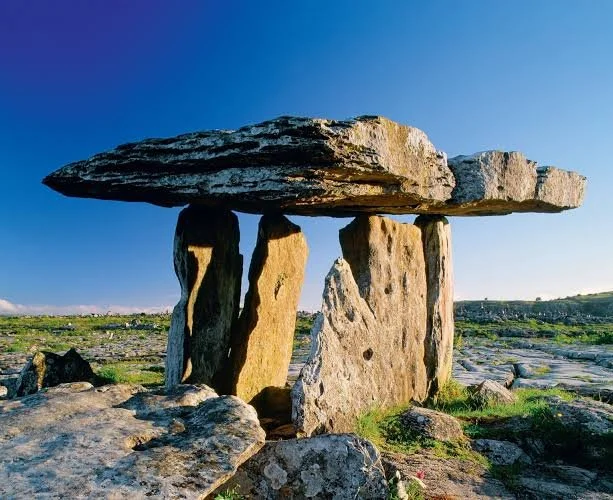
Across Atlantic Europe, prehistoric communities constructed monumental stone structures that continue to shape how people understand the ancient past. Passage graves, stone chambers, standing stones, and other megalithic monuments demonstrate substantial investment in building, planning, and the organization of communal activity.
Among the most intriguing architectural features are narrow entrances and carefully defined thresholds. A doorway can separate the outside world from an enclosed interior, control movement, frame a view, or create a particular experience for someone entering a monument.
The idea of threshold rituals offers a way to investigate these architectural choices. However, a megalithic doorway does not automatically prove that a ceremony occurred there. Archaeologists must examine its construction, orientation, associated deposits, patterns of access, and wider cultural context before proposing a ritual function.
What Is a Megalithic Monument?
Megalithic monuments are structures built using large stones. Across Atlantic Europe, they include passage graves, chambered tombs, stone circles, standing stones, and other forms of monumental architecture.
Their dates, purposes, and construction methods vary by region. Some were primarily associated with burial, while others may have supported gatherings, ceremonial activities, territorial marking, or several functions over time.
These monuments required knowledge of stone selection, transportation, placement, and structural stability. Their construction may also have depended on shared labor and coordination between households or communities.
The term "megalithic" therefore describes a broad architectural tradition rather than a single cultural system with identical beliefs throughout Atlantic Europe.
The Doorway as a Boundary
A doorway is more than an opening in a wall. It marks a transition between spaces.
In ordinary buildings, thresholds can distinguish private from public areas, control access, or separate different activities. In monumental structures, the same architectural feature can create a carefully managed entrance experience.
A narrow passage may require visitors to move in single file. A low entrance may require a person to bend. A doorway aligned with a chamber can direct attention toward a particular feature inside.
These effects can be practical, symbolic, or both. The challenge is determining which interpretations are supported by the archaeological evidence.
Passage Graves and Controlled Access
Some Atlantic European monuments contain long passages leading to internal chambers. Their architecture creates a distinction between the exterior landscape and the enclosed interior.
In certain cases, access may have been restricted by the dimensions of the passage, the presence of blocking stones, or the way the chamber was constructed.
Such arrangements could have practical purposes, including structural stability and protection of human remains. They could also have influenced who entered the monument and how visitors experienced the space.
However, the presence of a restricted entrance does not prove that access was limited to priests, leaders, or an elite group. Such claims require evidence about the monument's use and the society that built it.
Light and Orientation
Some megalithic monuments are oriented in ways that produce striking relationships with sunlight at particular times of year. These alignments have generated considerable interest because they may indicate deliberate astronomical observation.
The most famous examples include monuments whose internal spaces receive sunlight during particular seasonal periods. Yet each proposed alignment requires careful measurement and chronological analysis.
A doorway facing a certain direction may reflect topography, available building space, prevailing weather, or other practical considerations. Researchers must also consider whether the alignment was intentional and whether the relevant architectural elements belong to the same construction phase.
Astronomical significance should be established through a clear pattern of evidence rather than inferred from a single coincidence.
Burial, Ancestors, and Monumental Space
Many passage graves contain human remains, demonstrating that at least some megalithic monuments had funerary functions.
A doorway in such a monument may have regulated movement into a place associated with the dead. The act of entering could have been connected with remembrance, offerings, burial ceremonies, or other practices.
Nevertheless, the specific beliefs associated with prehistoric burials are difficult to reconstruct. Archaeologists should not assume that all communities understood death, ancestors, or the afterlife in the same way.
Human remains and grave goods can reveal patterns of treatment, but they rarely provide a complete account of the ceremonies or beliefs that accompanied burial.
Repeated Movement and Ritual Experience
A threshold can influence movement through a monument. Visitors may pause, change direction, lower their bodies, or pass through a narrow space before reaching an interior chamber.
Repeated movement through the same architectural sequence could create a shared experience. If access occurred during ceremonies, the building itself may have helped organize the event.
Yet an architectural experience does not necessarily establish ritual. Narrow doorways can arise from construction constraints, available materials, or the dimensions of an existing chamber.
Researchers must compare the doorway with other features and evidence of use before interpreting it as a ceremonial threshold.
Offerings and Deposits Near Entrances
Deposits near entrances can sometimes provide clues about how monuments were used. These might include pottery, animal remains, charcoal, selected objects, or other materials.
If deposits occur repeatedly in a particular position and are securely associated with the monument's use, they may suggest structured activity.
However, artifacts near a doorway could have arrived through ordinary disposal, later disturbance, animal activity, or natural processes.
The date of a deposit is also important. A monument might have remained meaningful for centuries after its original construction, and later visitors could have introduced objects unrelated to its earliest use.
Atlantic Europe Was Not a Single Cultural Region
The megalithic traditions of Ireland, Britain, Brittany, Iberia, and other Atlantic regions show both similarities and differences.
Architectural forms may reflect contact, shared knowledge, independent experimentation, or a combination of these processes.
It would be misleading to assume that every doorway had the same symbolic meaning simply because monuments share a broad architectural category.
Local landscape, burial customs, construction traditions, and chronology must guide interpretation.
Conservation and Modern Interpretation
Megalithic monuments are vulnerable to weathering, vegetation, tourism pressure, and inappropriate restoration. Changes to entrances or surrounding surfaces can alter how the monument is experienced and may damage archaeological evidence.
Conservation should preserve the structure while documenting any necessary intervention.
Public interpretation should also communicate uncertainty. Visitors can learn about proposed ritual meanings without being told that a hypothesis is a proven fact.
Conclusion
Megalithic doorways offer an important opportunity to investigate how prehistoric architecture shaped movement, access, and the experience of monumental space. In Atlantic Europe, entrances to chambered tombs and other stone structures may have separated different activities or created meaningful transitions between exterior and interior environments.
Some doorways may have participated in ritual practices, especially where their arrangement is supported by associated burials, repeated deposits, or evidence of structured movement. Yet the architecture alone cannot reveal the full beliefs of the people who built it.
A careful archaeological approach examines construction, chronology, orientation, and use together. Through this method, thresholds become more than architectural details: they become evidence for asking how communities organized spaces, managed access, and potentially gave particular places significance beyond their practical function.