Introduction
Textiles are among the most informative forms of archaeological evidence, yet they rarely survive for long in ordinary burial environments. Fibers made from plants or animals can decay through microbial activity, moisture, oxygen exposure, and other environmental processes.
In certain settings, however, textiles may survive long enough to reveal details about weaving, clothing, trade, dyeing, and cultural identity. Coastal caves are one possible environment where unusual conditions can preserve organic materials. Salt may influence preservation, but its effects are complicated and depend on the concentration of salts, humidity, temperature, and the material itself.
The study of salt-preserved textiles therefore requires a careful distinction between genuine preservation mechanisms and the assumption that salt always protects organic remains.
Why Textiles Are Archaeologically Valuable
Textiles provide information that stone, pottery, and metal objects cannot always reveal. Their fibers can indicate the use of plant or animal materials, while weave structures reveal technical knowledge and production choices.
Patterns may show how threads were arranged or how separate pieces were joined. Seams, repairs, and wear can provide clues about how an item was used and maintained.
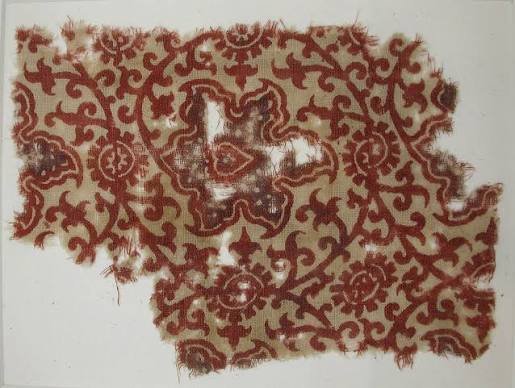
Textiles may also preserve evidence of dyes, finishing techniques, and decorative methods. These details can contribute to understanding the economy of a community, including the production of fibers, spinning, weaving, and the sourcing of colorants.
Because textiles are fragile, even a small fragment can be exceptionally valuable.
Coastal Caves as Preservation Environments
Caves can protect objects from direct sunlight, rainfall, and some forms of physical disturbance. Their internal environments may be relatively stable, although conditions vary substantially from one cave to another.
A coastal cave may also be affected by sea spray, salt-rich air, groundwater, and changes in humidity. These conditions can influence both the survival and deterioration of organic materials.
A cave's apparent dryness does not necessarily mean it provides a suitable preservation environment. Salt can attract moisture under certain conditions, and repeated cycles of wetting and drying may damage fibers.
Researchers must therefore measure the cave's environmental conditions and examine the specific context in which a textile was found.
How Salt Affects Organic Fibers
Salt has complex effects on preservation. In some environments, high concentrations of dissolved salts can reduce the availability of water for certain microorganisms. This may slow some forms of biological activity.
However, salt is not a universal preservative. When salts crystallize inside or around a material, they can exert pressure and cause physical damage. Changes in humidity can cause salts to dissolve and recrystallize, weakening delicate fibers.
Different textile materials respond differently. Wool, linen, cotton, and other fibers have distinct chemical and physical properties. The effects of salt also depend on whether it is present as a surface deposit, dissolved in groundwater, or embedded within the fibers.
A claim that salt preserved a textile must therefore be supported by analysis of the object and its burial environment.
Identifying Ancient Fibers
Microscopy can help identify textile structure and, in favorable cases, distinguish between plant and animal fibers. Researchers examine the shape, surface characteristics, and organization of the threads.
More specialized analytical methods may provide additional information about fiber composition or degradation.
However, preservation can alter the features used for identification. Soil minerals may coat the fibers, and microbial activity may remove diagnostic structures.
Researchers must also distinguish original fibers from modern conservation materials, especially when textiles have been handled or treated since excavation.
Reconstructing Weaving Patterns
The arrangement of threads forms the structure of a textile. Basic weave types include plain weave, twill, and more complex patterns created through different arrangements of warp and weft threads.
A preserved fragment may reveal how the cloth was produced, how tightly it was woven, and whether different techniques were combined.
Researchers can document thread thickness, density, twist direction, and the relationship between yarns. These features may help compare textiles from different sites.
Yet a shared weave does not necessarily indicate that two textiles were produced in the same workshop. Similar techniques can spread widely or develop independently.
Dyes and Color Reconstruction
Ancient textiles could be colored with materials derived from plants, insects, minerals, and other sources. Dyeing techniques varied according to available resources and the properties of the fibers.
Some colorants bind more effectively to certain materials than others. Additional substances, sometimes called mordants, may help dyes attach to fibers or alter the resulting color.
Identifying a dye requires more than examining the textile's present appearance. Colors can fade, shift chemically, or be obscured by salt deposits and soil staining.
Chemical analysis may identify compounds associated with particular dye sources, but degradation can make identification difficult. In some cases, researchers may only be able to identify a broad class of colorant rather than a specific plant or insect.
Trade and the Movement of Textiles
Textiles can travel long distances. Cloth may be exchanged as a finished product, while fibers and dyes can move separately through trade networks.
A textile found in a coastal cave might have been locally produced, imported, reused, or carried by a traveler. Its location alone does not establish where it was manufactured.
Researchers can investigate possible origins through fiber identification, weaving techniques, dye analysis, and comparison with securely documented textiles from other regions.
Even when a material source is identified, the route by which the textile traveled may remain uncertain. Goods often passed through several intermediaries before reaching their final destination.
Clothing, Status, and Identity
Textiles may reflect differences in wealth, occupation, climate adaptation, or social convention. Fine weaving and costly dyes can indicate substantial investment in production.
However, not every richly colored textile was a status object, and not every plain textile belonged to a poor individual. Materials may have been inherited, repaired, reused, or repurposed.
Clothing can also communicate identity through patterns, construction, and customary styles. Yet interpreting a particular design as an ethnic or religious marker requires contextual evidence.
Archaeologists should avoid projecting modern meanings onto ancient textile patterns without historical support.
Dating Textiles
Textiles can sometimes be dated directly through radiocarbon analysis, provided that a suitable sample can be taken and contamination is controlled. Associated materials and the stratigraphic context may offer additional chronological information.
The context is especially important in caves, where objects may be displaced by water, animals, visitors, or later occupation.
A textile found near a dated artifact is not necessarily the same age. Direct dating and careful contextual analysis provide a stronger foundation for interpretation.
Conservation Challenges
Textiles that survive in salt-rich environments may deteriorate rapidly when excavated. Changes in moisture, temperature, and salt concentration can destabilize the fibers.
Conservation specialists may need to control humidity, remove harmful deposits carefully, and support fragile structures during handling. Salt removal is not always simple because aggressive treatment can damage the textile itself.
Documentation before treatment is essential. Photographs, microscopic images, and detailed records preserve information that might be altered during conservation.
Conclusion
Salt-preserved textiles in coastal caves can offer rare evidence of ancient weaving, dyeing, clothing, and exchange. Their patterns and fibers may reveal technical skill and help reconstruct aspects of everyday life that are often invisible in the archaeological record.
Yet salt does not automatically preserve textiles. Under some conditions, it may contribute to deterioration through moisture retention and crystallization. The survival of a textile depends on a combination of environmental, chemical, and burial factors.
A reliable investigation therefore combines fiber identification, weave analysis, dye chemistry, dating, and environmental reconstruction. When these methods are applied carefully, even a small fragment of cloth can illuminate the production choices, material networks, and cultural practices of the people who made and used it.