Salt has been an important resource throughout human history. It has contributed to food preservation, supported the preparation of animal products, and played roles in trade, craft production, and cultural practices. Although salt is widely available in some environments, obtaining it required specialized knowledge and labor in others. Coastal communities developed different methods for collecting and producing salt, taking advantage of seawater, tidal flats, shallow lagoons, and naturally saline soils. Archaeological evidence of seasonal salt harvesting can reveal how people organized their work around environmental cycles and how an apparently ordinary mineral became an important part of local and regional economies.
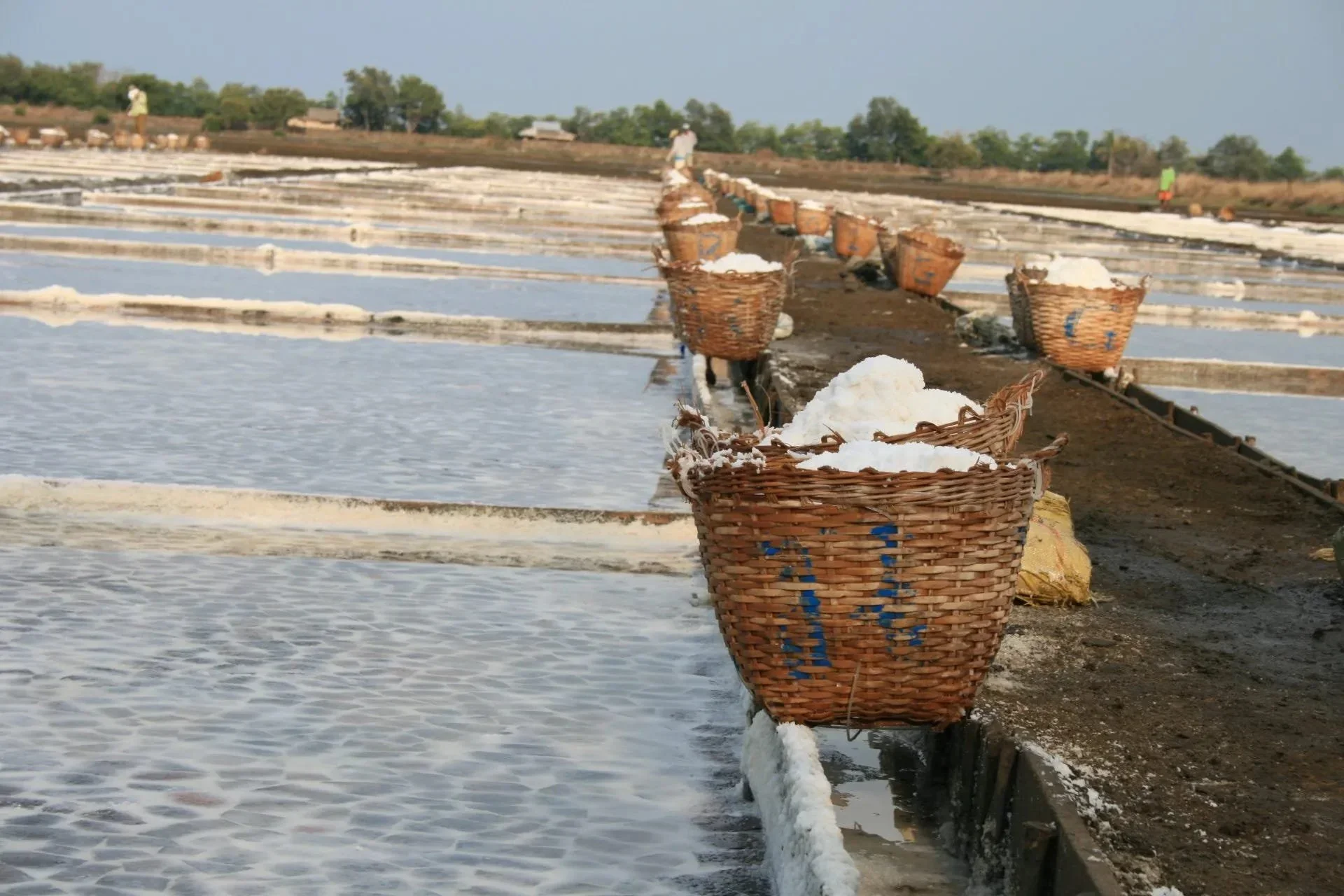
Seawater contains dissolved salts that remain behind when the water evaporates. In warm, dry, and windy conditions, shallow pools of seawater can lose water relatively quickly, allowing salt crystals to form. Communities could exploit this process by using natural tidal flats or by creating shallow evaporation areas where seawater could be concentrated. In other environments, people might heat brine in containers to accelerate evaporation, although this approach required substantial fuel and suitable equipment. The method used depended on climate, geology, access to fuel, and the amount of salt needed.
Seasonality was particularly important because salt production depends on environmental conditions. Periods of low rainfall and high evaporation generally favor the concentration of seawater, while heavy rain can dilute brine and disrupt salt crystallization. Tidal patterns determine when coastal areas are flooded, and seasonal changes in wind and temperature can influence how quickly water evaporates. Communities with long experience of their local coastlines could schedule harvesting around these patterns, adjusting their activities as weather and water conditions changed.
The archaeological evidence for salt production can take several forms. Shallow basins, channels, embankments, and prepared surfaces may indicate areas where seawater was collected or concentrated. Concentrations of broken pottery, especially vessels that show signs of repeated heating, may be associated with the evaporation of brine. Hearths, ash deposits, and fuel remains can provide evidence of heating installations, while mineral residues may help identify the processing of saline water. However, no single feature proves that salt was produced, because similar structures and artifacts could have served other purposes.
Pottery can be particularly informative in sites where brine was heated. Repeated exposure to high temperatures may leave thermal alterations on vessels, while deposits can accumulate on interior surfaces during the evaporation process. Chemical analysis may identify traces consistent with saline solutions, although salt is highly soluble and can be lost through burial and exposure to groundwater. Researchers must also consider contamination from the surrounding soil and later use of the same containers for other activities.
Landscape reconstruction is essential for understanding coastal salt harvesting. Ancient shorelines often differ from modern ones because of sediment accumulation, erosion, sea-level change, and tectonic movement. A site now located inland may once have been close to a lagoon or tidal inlet. Conversely, a modern coastal feature may not have existed in its current form when the archaeological activity took place. Sediment analysis and geological mapping can help reconstruct the conditions that made salt production possible.
Seasonal harvesting may leave evidence of repeated but intermittent occupation. Workers could have visited a coastal site during favorable months, established temporary shelters, prepared evaporation areas, and returned to permanent settlements after the harvest. Archaeologists might identify such activity through short-lived hearths, limited domestic debris, and production installations that were used repeatedly. Yet intermittent occupation must be distinguished from other forms of seasonal activity, including fishing, shellfish gathering, and livestock management.
Salt production could also influence the organization of labor. Gathering seawater, maintaining evaporation basins, collecting fuel, monitoring weather, and transporting the finished product all required time and coordination. The scale of production might range from household needs to larger operations that supplied neighboring settlements. Differences in installation size, fuel consumption, and the volume of processing debris may help researchers estimate the intensity of production, although such estimates are often uncertain.
The economic importance of salt depended on local circumstances. In coastal areas where salt could be obtained relatively easily, it might have been used primarily for household consumption and food preservation. In places where production required specialized equipment or substantial fuel, salt could become a valuable commodity. Coastal communities might exchange it for grain, livestock, pottery, metal goods, or other resources that were less readily available nearby. Archaeological evidence of transport containers and connections with inland settlements may help reveal how salt moved through these networks.
Salt also had social and cultural significance. It could be associated with hospitality, food preparation, ritual offerings, and the preservation of resources for difficult seasons. Written records and historical accounts sometimes describe the regulation, taxation, or trade of salt, but such evidence varies across regions and periods. Archaeologists must avoid assuming that later systems of salt production or taxation existed in the same form in earlier societies.
Environmental impacts are another consideration. Large-scale evaporation may require substantial fuel if brine is heated, potentially placing pressure on nearby woodland. The construction of basins and channels can alter coastal surfaces, while repeated extraction may affect local water management. The scale of these effects would depend on the production method and intensity of harvesting. Evidence of fuel use and landscape modification can help assess whether salt production was a small household activity or a more extensive industry.
The archaeology of seasonal salt harvesting reveals how coastal communities adapted their work to the rhythms of the environment. Through the study of processing installations, pottery, sediments, fuel remains, and settlement patterns, researchers can investigate when salt was produced, how people organized harvesting, and whether the finished material circulated beyond the local area. Although the evidence can be difficult to interpret, salt-production sites offer a valuable perspective on the relationship between environmental knowledge, seasonal labor, and the development of ancient economies.